

Effect of forest fires showcased in Abha art exhibition

1 / 5
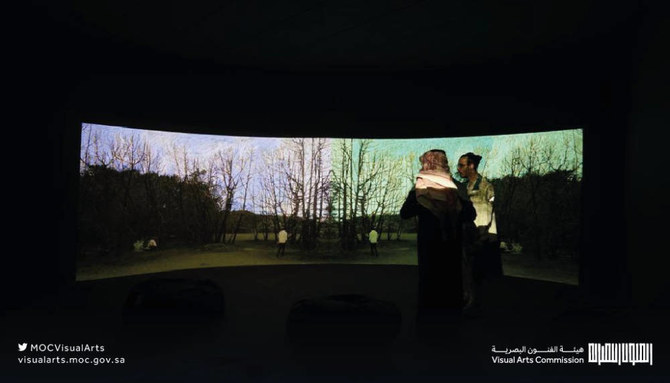
The exhibition, which opened on March 19 and runs until April 9, takes place in the historic Al-Muftaha village in Abha. (Supplied)
2 / 5
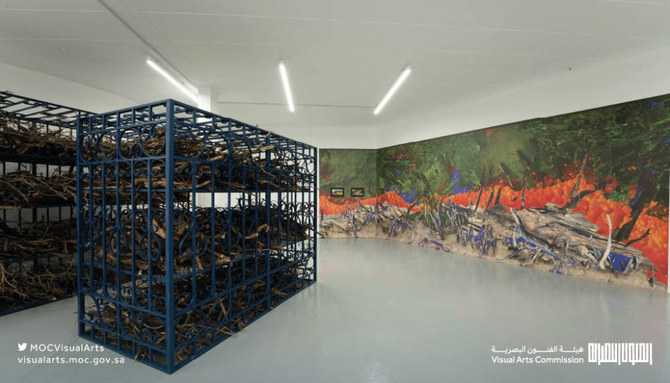
The exhibition, which opened on March 19 and runs until April 9, takes place in the historic Al-Muftaha village in Abha. (Supplied)
3 / 5
The exhibition, which opened on March 19 and runs until April 9, takes place in the historic Al-Muftaha village in Abha. (Supplied)
4 / 5
The exhibition, which opened on March 19 and runs until April 9, takes place in the historic Al-Muftaha village in Abha. (Supplied)
5 / 5
The exhibition, which opened on March 19 and runs until April 9, takes place in the historic Al-Muftaha village in Abha. (Supplied)
Short Url
Updated 28 March 2022
Follow

Effect of forest fires showcased in Abha art exhibition

  • Through his work presented in the exhibition, Al-Ahmad said: “I tried to invent, or to take an external practice related to, agricultural engineering or garden practices, and insert them as an element to help the trees recover faster

JEDDAH: An art exhibition titled “Find Me Through the Fog” highlights the crises of the forest fires in Abha in 2020 through the work of eight local artists.

The exhibition, which opened on March 19 and runs until April 9, takes place in the historic Al-Muftaha village in Abha.

It showcases different aspects of the forest ecosystem, and the outcome of the fires.

Hatem Al-Ahmad, a multidisciplinary artist participating in the exhibition, told Arab News: “The driving force for the work and the project, in general, is, for me at least, how to take a positive stance with nature that surrounds us, especially the forests.
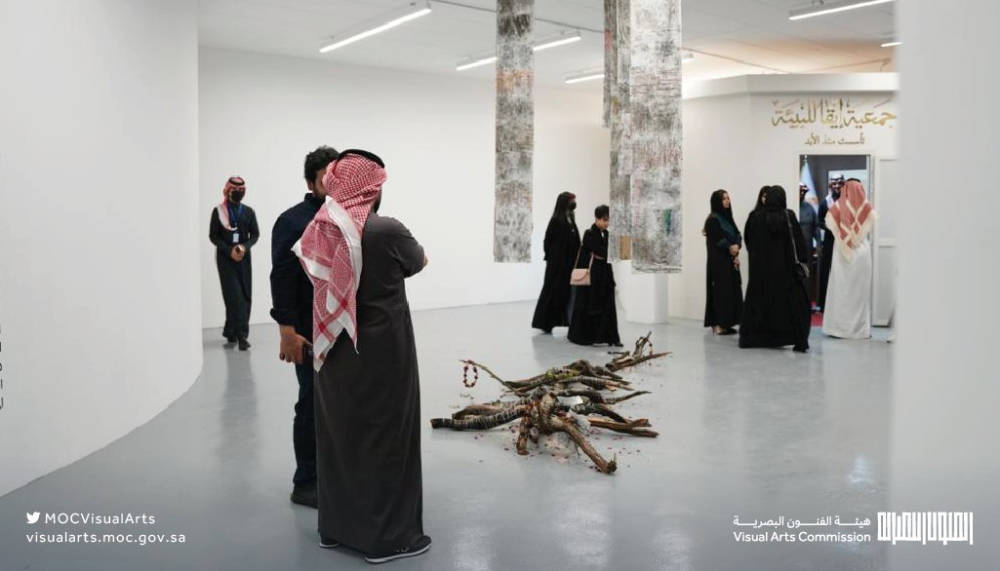
“I had the important question, as an artist: Can I be a person who thinks after the event? In my work I don’t care about what happened in the past, I care about how we act in the present and what is our responsibility towards this environment.”

The fires destroyed an area of more than 4.7 million square meters before being brought under control by the Saudi Civil Defense. Tens of thousands of perennial trees — including wild olives, neems, junipers, and acacias, some of which were more than 50 years old — were destroyed.

Through his work presented in the exhibition, Al-Ahmad said: “I tried to invent, or to take an external practice related to, agricultural engineering or garden practices, and insert them as an element to help the trees recover faster.
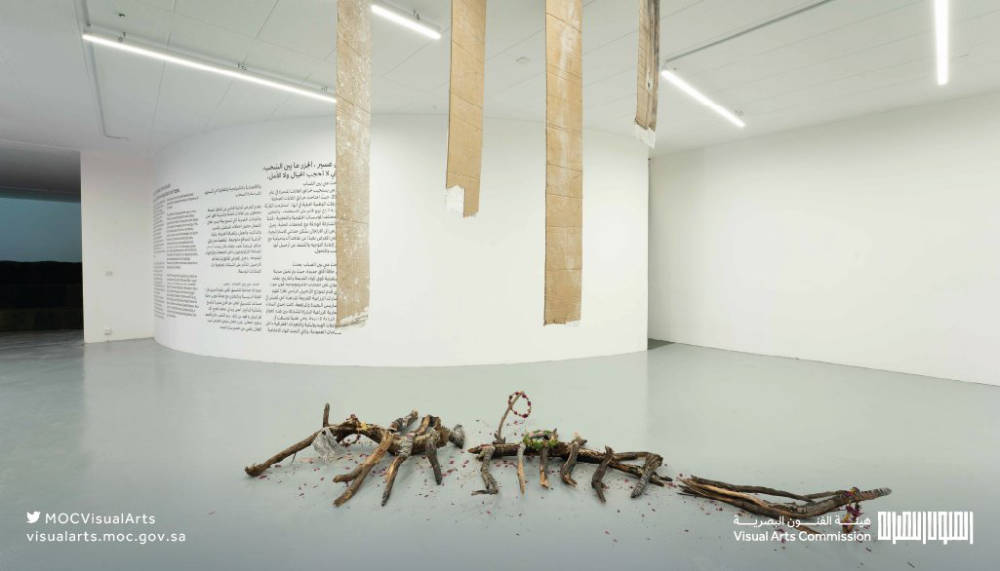
“I worked with a two-part compound, one called copper sulfate, and the other calcium hydroxide compound; once combined with each other, it gives us something to help the trees recover from the cracks, the fires, and the damage done, and help speed up the healing process,” he said.

“I felt that I had to stand a positively with our surrounding environment and help with its recovery. ”

The exhibition is part of the Visual Arts Commission’s effort to provide local artists with the platform to shed light on environmental challenges surrounding the forests ecosystem, with the aim of raising awareness of the impacts resulting from the fires, and the importance of conservation efforts to preserve the forests in the region.

“When you’re on a visit to the fire location or you’re looking at these fires, you can feel the pain that an important part of the environment, the forests, is missing or parts of it. I felt it was our responsibility as artists to focus on the concept of the accident and what happened to the forests but with different points of view,” said Al-Ahmad.

“My point of view was whether I, as an artist, could provide two types of service, a community service that supports in raising the awareness among the volunteers who were part of the recovery project, and the second part was, as an artist, I have the ability to show solidarity and compassion with my environment. And I was able to accomplish the two concepts throughout this project,” he added.

The exhibition also showcases the work of artists Mohammed Al-Faraj, Alaa Tarbzouni, Fahad bin Nayef, Ayman Zedani, Saeed Gabaan, Aziz Jamal, and Reem Al-Nasser. It includes a children’s digital catalog designed by local artist Sara Abdu.


Threat to Kingdom’s security is ‘red line’ that will be ‘addressed and neutralized,’ Saudi envoy says

Updated 14 January 2026
Follow

Threat to Kingdom’s security is ‘red line’ that will be ‘addressed and neutralized,’ Saudi envoy says

  • Abdulaziz Alwasil tells UN Security Council the situation in southern Yemen is ‘a just cause with social and historic dimensions’ that can only be resolved through dialogue
  • Recent military activity in the south was unilateral, resulting in an escalation that harms the interests of Yemeni people and undermines efforts to address issues in the south, he said

NEW YORK CITY: Any attempt to threaten Saudi Arabia’s national security is a “red line” and will be met with decisive action, the Kingdom’s ambassador to the UN told the Security Council on Wednesday.

Speaking during a meeting of the council to discuss Yemen, Abdulaziz Alwasil said the situation in the south of the country is “a just cause with social and historic dimensions” that can only be resolved through dialogue.

“We stress that any attempt to threaten our national security is a red line, and we will not hesitate to take the necessary actions and steps to address it and neutralize it,” he added.

Alwasil reaffirmed Saudi Arabia’s support for Yemeni President Rashad Al-Alimi, the Presidential Leadership Council, and the Yemeni government in their efforts to achieve security, stability, development and peace while preserving national unity.

He said military activity by Southern Transitional Council forces in Hadramout and Al-Mahra on Dec. 2, 2025, was unilateral, did not have the approval of the Presidential Leadership Council, and was not carried out in coordination with the Coalition to Restore Legitimacy in Yemen.

It had resulted in an unjustified escalation that harmed the interests of the Yemeni people, undermined efforts to address the issues in the south, and ran counter to the coalition’s objectives, Alwasil added.

The Kingdom, working with its coalition partners, the Presidential Leadership Council and the Yemeni government, had moved to contain the situation by dispatching a military force to coordinate arrangements with the Southern Transitional Council in Aden, he said.

The aim was to ensure the return of the southern council’s forces to their previous positions outside of Hadramout and Al-Mahra, and the handover of camps to legitimate government forces and local authorities in line with agreed procedures, Alwasil added.

He expressed regret over the military operations that took place in Hadramout and Al-Mahra, close to Saudi Arabia’s southern border, which he said posed a direct threat to the Kingdom’s national security, as well as the security of Yemen and regional stability. Such steps were extremely dangerous, he added, and contradicted the principles on which the Coalition to Restore Legitimacy in Yemen had been founded.

Alwasil welcomed a prisoner and detainee exchange agreement signed in Muscat on Dec. 23, which he described as an important humanitarian measure to alleviate suffering and build confidence.

He praised Oman for hosting and sponsoring the consultations and supporting negotiations, and commended the efforts of UN’s special envoy for Yemen, Hans Grundberg, the International Committee of the Red Cross and all others that has played a part.

Regarding the political efforts to resolve the crisis, Alwasil said Saudi Arabia welcomed President Al-Alimi’s call for an inclusive conference in Riyadh to bring together all stakeholders to discuss just solutions to the situation in southern Yemen.

Preparations for the conference have begun, he added, in cooperation with the Yemeni government and southern representatives, reflecting the close ties between the two countries and their shared interests in stabilizing Yemen.

He urged all southern stakeholders to participate actively and constructively in the talks, to help find comprehensive and just solutions that meet the legitimate aspirations of the people of southern Yemen.

Alwasil called on all Yemeni forces and stakeholders to cooperate and intensify their efforts to reach a lasting political settlement that would ensure security and stability.

He described the southern issue as “a just cause with social and historic dimensions,” adding that “the only way to address it is through dialogue that leads to a comprehensive political solution” based on nationally and internationally agreed terms of reference.