Pakistan could hold early elections, interior minister says as PM calls March 27 rally

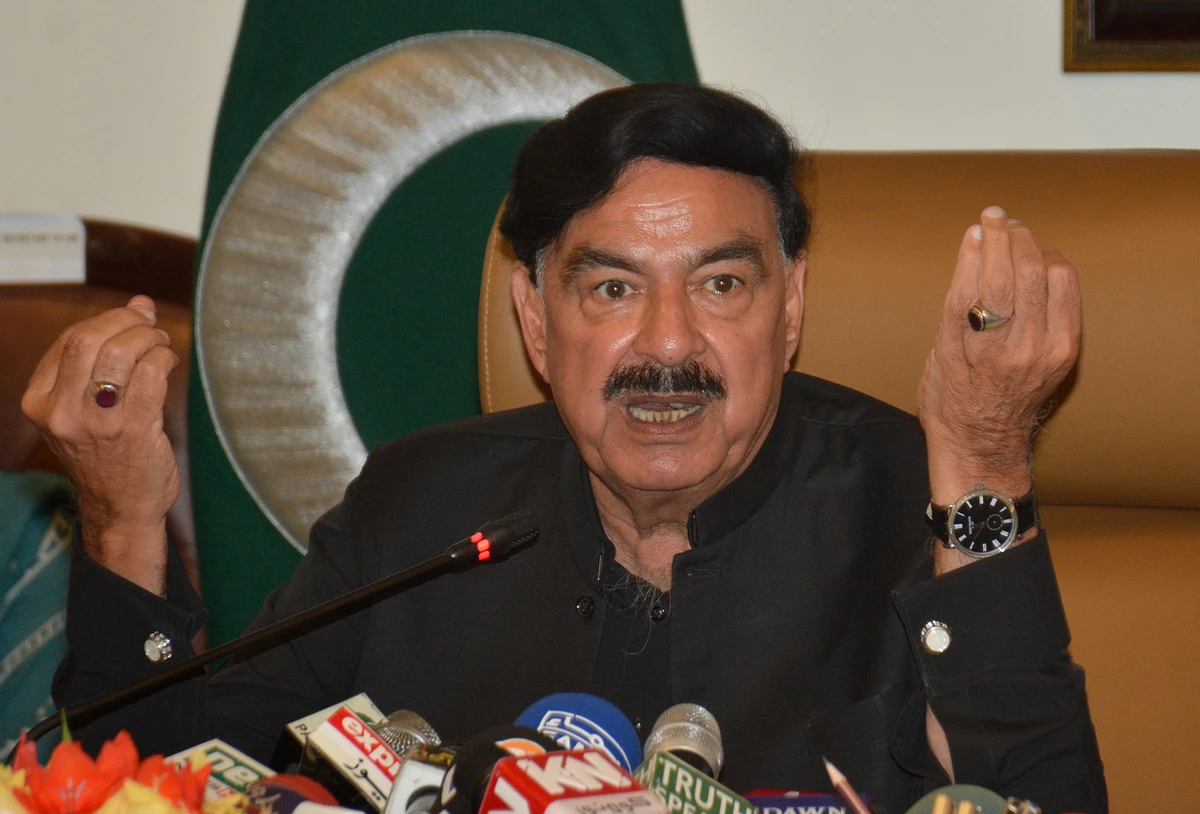
Pakistan's interior minister Sheikh Rasheed Ahmed speaks to media in Lahore, Pakistan, on March 24, 2022. (PID)
Short Url
Updated 24 March 2022
Follow

Pakistan could hold early elections, interior minister says as PM calls March 27 rally

  • Parliament will convene on Friday to start proceedings into no-confidence motion against PM Khan
  • Motion could take seven days to go for voting to decide whether Khan will be removed

ISLAMABAD: Pakistani interior minister Sheikh Rashid Ahmed said on Thursday there was a chance of early elections in the country as parliament is expected to vote later this month in a no-confidence move against Prime Minister Imran Khan.
Pakistan’s parliament will convene on Friday to start proceedings into the no-confidence motion which could take seven days to go for voting to decide whether Khan will be removed.
Opposition parties filed the motion on March 8, saying Khan has lost his parliamentary majority after some 20 of his party lawmakers defected, calling on the prime minister to step down. The opposition accuses Khan of mismanagement of the economy and bad governance.
Before the opposition filed the no-trust request in parliament, several senior opposition leaders had called for Khan to announce early elections, a demand his ruling Pakistan Tehreek-e-Insaf has repeatedly rejected.
“Pakistan could hold early elections,” Ahmed told reporters in a surprise statement in Islamabad. “Everyday, things are getting better,” he added in what was seen as a reference to risks of constitutional, administrative and economic crises in Pakistan over the no-confidence vote.
In a pre-recorded video message to the nation on Thursday, PM Khan invited Pakistanis to attend a rally in support of his government, scheduled to be held in the capital on March 27, saying the Qur’an had ordered Muslims to stand with the “good against evil.”
Khan last week announced he would hold a “one-million” strong rally ahead of the parliamentary no-confidence vote.
The date for the vote has not yet been set but Khan’s government and the opposition have both announced rallies in Islamabad ahead of the event.
“I want the whole nation to come out with me on March 27 to give one message: that we are not with wrong,” Khan said in the video message. “Allah has ordered in the Qur’an … that Muslims stand with the good, and stand against wrongdoing and evil, this is how society stays alive.”
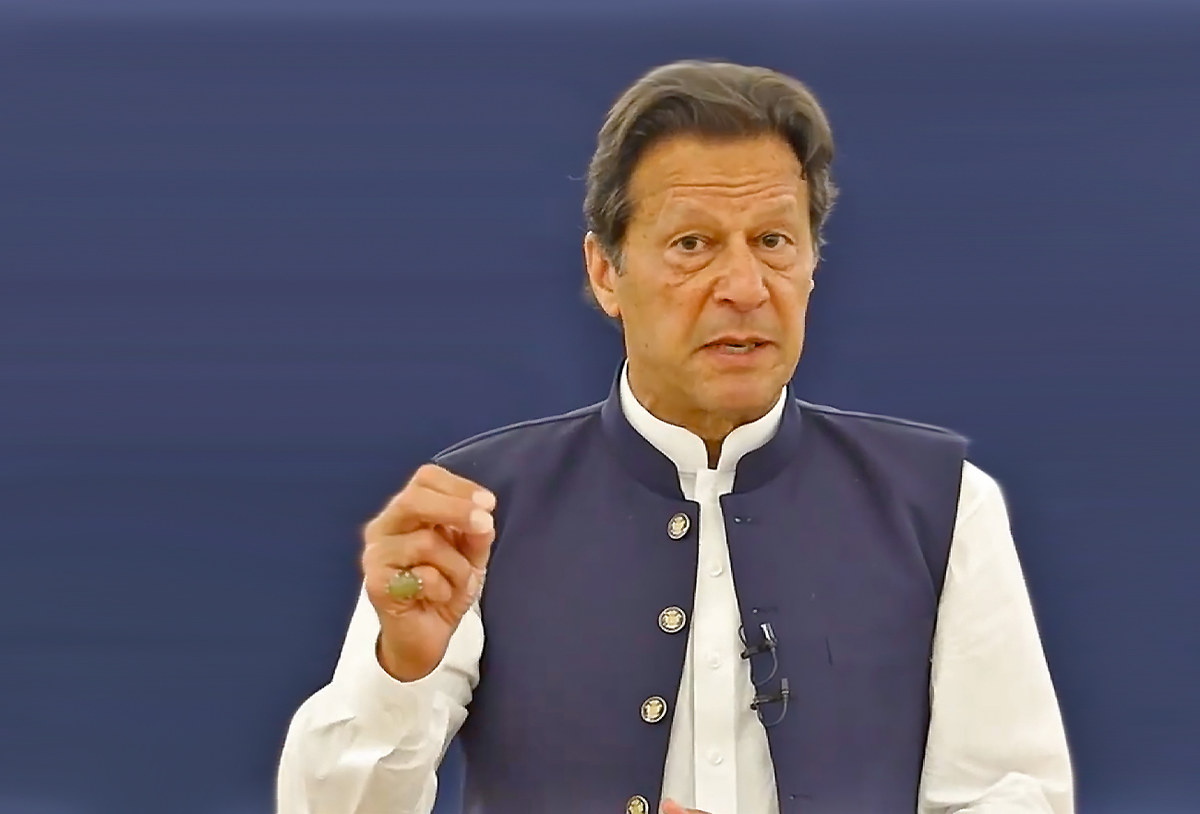


Pakistan Prime Minister Imran Khan addresses his supporters in a pre-recorded video message in Islamabad, Pakistan, on March 24, 2022. (Screengrab from the video message)

He called the opposition a “gang of thieves” and said they had tried to buy the “conscience” of lawmakers, referring to legislators from his party who have openly announced they will vote against Khan and members of allied parties who have publicly spoken against his policies recently.
On Wednesday, Khan told journalists he would not resign in the face of the no-confidence motion: “My prediction is that we will win the no-confidence match.”
The opposition needs the support of 172 lawmakers in the country’s 342-member National Assembly for the no-trust vote to prevail. The ruling Pakistan Tehreek-e-Insaf (PTI) party has accused the opposition of bribing its lawmakers to vote against Khan.
The government now hopes it can get defecting lawmakers disqualified through a court ruling, making it difficult for the opposition to secure a simple majority to bring it down.
The opposition says it has the required numbers to win the no-trust vote, though its leaders are still holding meetings with the government’s allied parties to convince them to abandon the coalition.
UN torture expert decries Pakistan ex-PM Khan’s detention

Updated 12 December 2025
Follow

UN torture expert decries Pakistan ex-PM Khan’s detention

  • Khan’s party alleges government is holding him in solitary confinement, barring prison visits
  • Pakistan’s government rejects allegations former premier is being denied basic rights in prison

GENEVA: Pakistan’s former prime minister Imran Khan is being held in conditions that could amount to torture and other inhuman or degrading treatment, the United Nations’ special rapporteur on torture warned Friday.

Alice Jill Edwards urged Pakistan to take immediate and effective action to address reports of the 73-year-old’s inhumane and undignified detention conditions.

“I call on Pakistani authorities to ensure that Khan’s conditions of detention fully comply with international norms and standards,” Edwards said in a statement.

“Since his transfer to Adiala Jail in Rawalpindi on September 26, 2023, Imran Khan has reportedly been held for excessive periods in solitary confinement, confined for 23 hours a day in his cell, and with highly restricted access to the outside world,” she said.

“His cell is reportedly under constant camera surveillance.”

Khan an all-rounder who captained Pakistan to victory in the 1992 Cricket World Cup, upended Pakistani politics by becoming the prime minister in 2018.

Edwards said prolonged or indefinite solitary confinement is prohibited under international human rights law and constitutes a form of psychological torture when it lasts longer than 15 days.

“Khan’s solitary confinement should be lifted without delay. Not only is it an unlawful measure, extended isolation can bring about very harmful consequences for his physical and mental health,” she said.

UN special rapporteurs are independent experts mandated by the Human Rights Council. They do not, therefore, speak for the United Nations itself.

Initially a strong backer of the country’s powerful military leadership, Khan was ousted in a no-confidence vote in 2022, and has since been jailed on a slew of corruption charges that he denies.

He has accused the military of orchestrating his downfall and pursuing his Tehreek-e-Insaf (PTI) party and its allies.

Khan’s supporters say he is being denied prison visits from lawyers and family after a fiery social media post this month accusing army leader Field Marshal Asim Munir of persecuting him.

According to information Edwards has received, visits from Khan’s lawyers and relatives are frequently interrupted or ended prematurely, while he is held in a small cell lacking natural light and adequate ventilation.

“Anyone deprived of liberty must be treated with humanity and dignity,” the UN expert said.

“Detention conditions must reflect the individual’s age and health situation, including appropriate sleeping arrangements, climatic protection, adequate space, lighting, heating, and ventilation.”

Edwards has raised Khan’s situation with the Pakistani government.