KARACHI: Ahead of a meeting of foreign ministers from Islamic countries to be held in Islamabad tomorrow, Tuesday, veteran Pakistani journalists who covered the 2nd summit of the Organization of Islamic Conference, held in Lahore in 1974, recalled how the event had given rise to new hopes for unity in the Muslim world, especially as it was at the conference that Pakistan finally recognized Bangladesh.
The OIC, with 57 member states, is the second largest intergovernmental organization in the world after the United Nations and considered the collective voice of Muslims around the world.
Pakistan will be hosting the 48th session of the OIC Council of Foreign Ministers on March 22-23, which coincides with the Pakistan Day parade held every year on March 23 to commemorate the Lahore Resolution, which was adopted on the same day in 1940 and laid the foundation for a Muslim-majority state in South Asia. The visiting OIC delegates have been invited to attend the parade as “guests of honor.”
Pakistan along with Saudi Arabia has been a key founding member of the OIC and hosted the second OIC summit in Lahore on February 20-22, 1974.
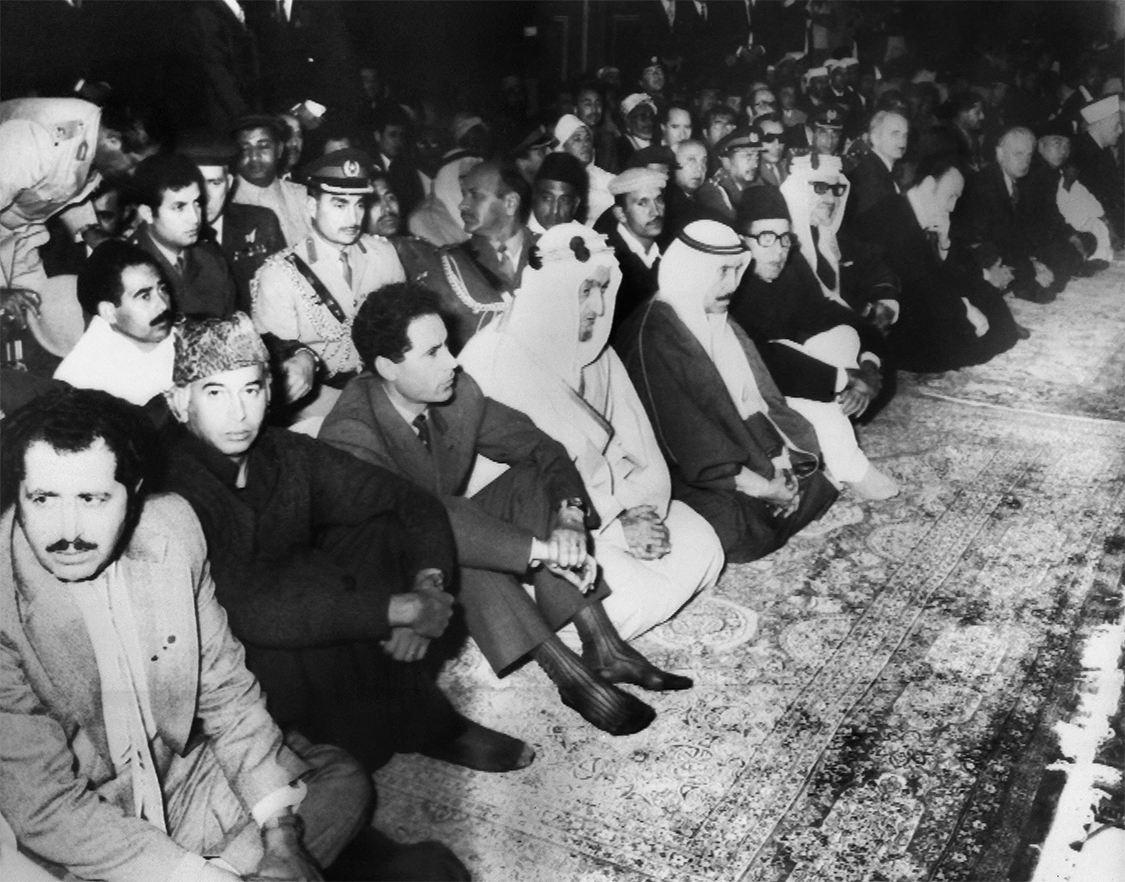
A picture taken in Lahore on February 22, 1974, shows Faisal bin Abdul-Aziz Al Saud, King of Saudi Arabia (4th L), Emir of Kuwait Sheikh Sabah Al Salim Al Sabah (5th L), Libyan Colonel Moammar Kadhafi (3rd L) and Pakistani President Ali Bhutto (2nd L) during the prayer prior to the opening ceremony of the 2nd Islamic Summit Conference (OCI). (AFP)
Hussain Naqi, one of around 350 reporters and photographers who covered the summit, told Arab News the 1974 summit had set Muslim nations on a path of unity, self-reliance and cooperation.
“The conference indeed was the high point of Muslim unity and it helped resolve a pending issue of the recognition of Bangladesh,” he said.
Pakistan had initially not invited Bangladesh to attend the summit. The two Muslim countries used to be two halves of the same nation until Bangladesh broke away after the 1971 war.
Zafar Ahmed, a senior photojournalist who covered the summit for Daily Hilal-e-Pakistan, recalled the events surrounding the decision to recognize Bangladesh.
“The lawmakers from Sindh [province] were flown into Lahore through C-130 aircraft, whereas legislators of other provinces also came in for a briefing by [then Prime Minister Zulfqar Ali] Bhutto,” Ahmed said. “On the evening of February 19, Bhutto announced he had decided to recognize Bangladesh on the advice of Pakistan’s friends [heads of Muslim states].”
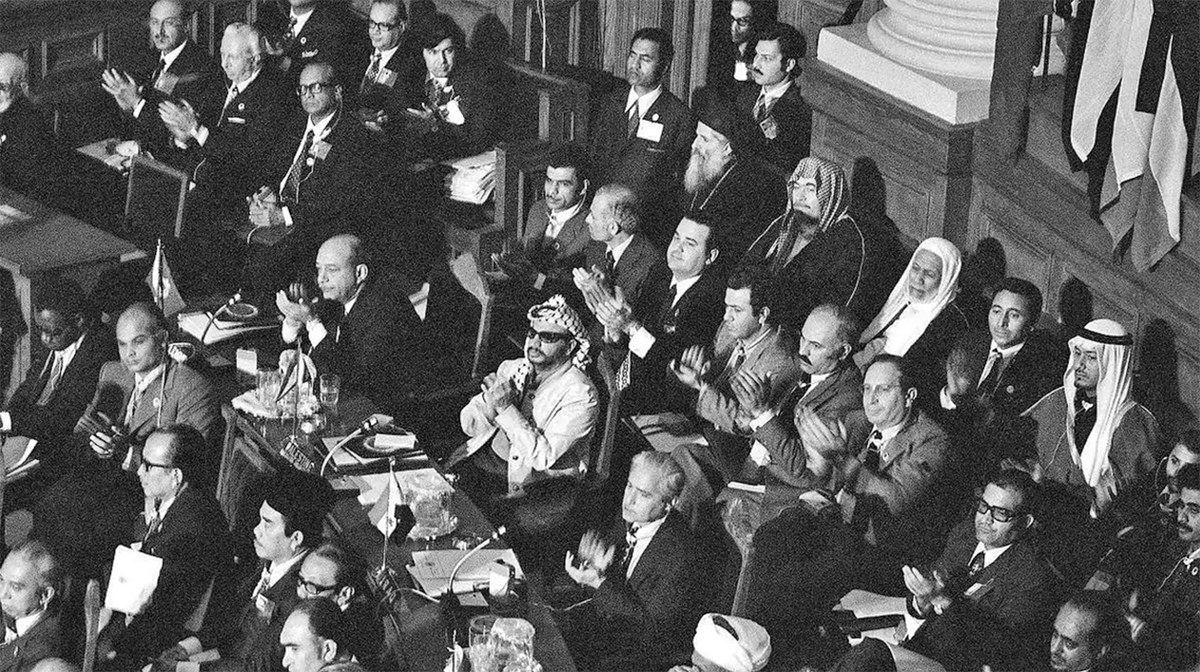
Delegates listen to a speech during the opening of the Islamic Summit in Lahore, Pakistan, on Feb. 23, 1974. (AP)
He said the plane of the then Algerian president was flown to bring Bangladeshi president Sheikh Mujeeb-ur-Rehman to Lahore.
It was a cold evening, Ahmed said, as he and four other photojournalists arrived at the airport to capture the historic moment.
“It was in the morning at around 8:30am the next day that we noticed some movement and Sheikh Mujeeb eventually arrived at 10:05am,” Ahmed, who stayed at the airport through the night, said.
The Bangladeshi president was received by then Pakistan president Fazal Ilahi Chaudhry as Bhutto, then the chairperson of the OIC conference, was presiding over a session.
“On the last day, Sheikh Mujeeb addressed the summit, which was held at the Punjab Assembly,” Ahmed added.
Ahmed said top leaders of the Muslim world, including Yemen’s Muammar Qaddafi, Egypt’s Anwar Sadat and the UAE’s Rashid bin Saeed Al-Maktoum, was present at the summit but it was Saudi Arabia’s King Faisal who was “the highlight of the event.”
“It was the participation by King Faisal,” he said, “which made news and moved the whole world.”
Ali Ahmed Khan, another veteran journalist then with the BBC Urdu service, said the conference had conveyed a message of Muslim unity and cooperation.
“It was a demonstration of Muslim unity against Western colonialism,” Khan said, “and gave hope to the people of Muslim countries that the forum will resolve their issues, with the Palestine issue at the top.”