

What does it take for a business to go from #BrandLove to #Boycott?

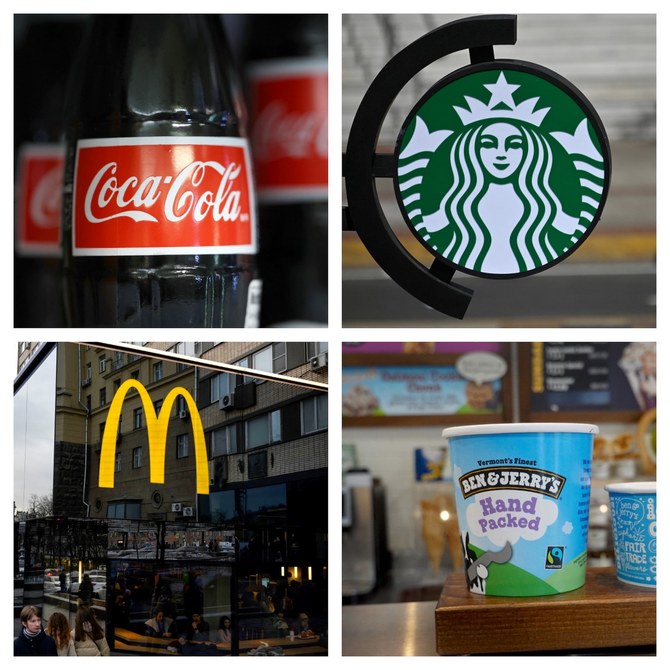
Both of the soda giants, along with McDonald’s, Starbucks and others, had announced the suspension of their businesses in Russia. (AFP)
Short Url
Updated 15 March 2022
Follow

What does it take for a business to go from #BrandLove to #Boycott?

  • The online perception of a brand can change in a heartbeat but whether this means consumers will actively boycott it is another matter

DUBAI: Last weekend, users took to social media to call out big brands that continued to operate in Russia after its invasion of Ukraine, causing hashtags such as #BoycottCocaCola and #BoycottPepsi, among others, to trend on Twitter.

Within a few days, both of the soda giants, along with McDonald’s, Starbucks and others, had announced the suspension of their businesses in Russia.

This is not the first time that consumers have called out brands over their actions, or lack of action. Last year, ice cream maker Ben and Jerry’s announced it would stop selling its products in the Occupied Palestinian Territory. In an opinion piece for The New York Times, founders Bennett Cohen and Jerry Greenfield said they are “proud Jews” and that “it’s possible to support Israel and oppose some of its policies.”

The decision prompted both praise and hate online, with some consumers accusing the business of antisemitism — either way, Ben and Jerry’s was very much in the public eye.


“Ben and Jerry’s has a very long history of political positioning and commitment to a variety of progressive causes,” Robert Haigh, strategy and insights director at Brand Finance, told Arab News. He added that Unilever acquired the company in 2000 and so the dynamic might eventually change.

“For the sake of continuity of the Ben and Jerry’s brand, they continue to be relatively outspoken and committed to (causes), whereas Unilever is a bit more measured in what they seek to do,” which raises questions about brand’s independence and authenticity, he said.

Authenticity is paramount for brands in their conversations with customers and in the causes they choose to support, and how politically active an organization should be is a “very contentious subject,” according to Seth Hand, the managing director of communications marketing firm Edelman Middle East.

“However, one thing to keep in mind is that your actions need to be authentic to who you are as an organization and in line with your values,” he added.

This sentiment was echoed by Alisa D’Souza, founder and PR consultant of Alisa PR.

“Brands need to establish their core values; they need to know who they are, define their identity, be strong in their core values and know what their company stands for,” she said.

Consumers increasingly expect brands to join in the conversation and stand for something. According to a study carried out by Edelman in 2021, for which researchers surveyed consumers from 14 countries, including the UAE and Saudi Arabia, 86 percent of people said that they expect brands to take actions that go beyond their product lines and business.

On Twitter, almost half (48 percent) of those surveyed agreed that it is “more important now for brands to support economic, social, political or cultural issues, even when the issue doesn’t directly impact them, (than it was) a year ago.”

For the brands, it really comes down to a question of ethics and morality versus profit, even though the perceived morality of a business is increasingly linked to its profits.

There are some who argue that the sole priority of a business is to serve the interests of its owners or shareholders, said Haigh.

“Other people often say, and I think this is increasingly prevalent, that businesses have a broader set of stakeholders that they do, and should, cater to,” he added.

Hand pointed out that in the past, many organizations prioritized profit over purpose.

“Even today, not every organization views purpose as a key business priority,” he added: “However, the digital world has changed the paradigm of communications, and consumers now have significant power to hold organizations to account and expect them to use their power and influence to advocate for positive change in society.”

Many consumers, and employees, want brands to play a larger role in addressing issues such as climate change, economic inequality, workforce reskilling and racial injustice. Nearly 60 percent of consumers choose brands based on their values and beliefs, according to the 2022 Edelman Trust Barometer.

However, Haigh cautioned brands to be wary of embarking on “mission-driven brand building.”

“No one relishes this but there are limits on the extent to which you can build your brand on that basis,” he said. “As beneficial as it can be, there is a limit to how much the average consumer cares.”

Consumers might express outrage on social media about the actions of a brand, or lack thereof, but does this necessarily mean that they will actually stop buying its products in protest?

“What people do online and offline can differ dramatically,” said Alex Malouf, a communications professional and board member of the Public Relations and Communications Association MENA.

“They may tweet a negative take on a brand but they often don’t follow through.”

For the brands themselves, the decision to publicly align with a cause — political or otherwise — can result in a backlash.

In 2019, Procter and Gamble’s male-grooming brand Gillette updated its 30-year old advertising slogan from “The Best A Man Can Get” to “The Best Men Can Be” in an effort to address the issue of toxic masculinity. The change sparked fury from some online, with several commentators calling for the company to post an apology and threatening a boycott.

Nike faced a similar situation as a result of an advertising campaign featuring former NFL quarterback Colin Kaepernick, whose decision to take a knee during the playing of the national anthem before games as a protest against racism and police brutality was a polarizing issue in US society.

“Nike made a very overt domestic political statement by aligning themselves to him,” said Haigh.

The campaign generated a lot of controversy, including some people who filmed themselves burning their Nike shoes and posted the videos on social media.

On the other hand, said Haigh, “there is a very large constituency of people for whom the Nike brand was re-energized” as it aligned itself with a younger, more progressive audience.

In 2015, UAE-based telecoms company Etisalat came under fire for its star-studded #EtisalatChallenge campaign. The premise was simple enough: It challenged users to find a better price than Etisalat offered, and promised to match or better it.
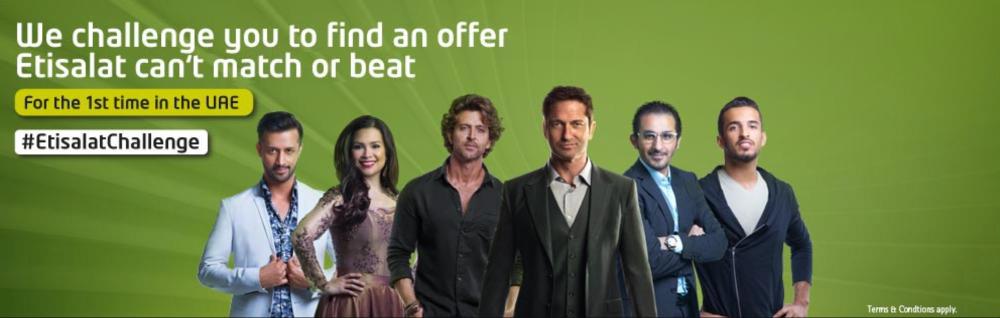
What could possibly be the problem with that? Well, for one thing there are only two telecoms companies in the UAE, Etisalat and du, both of which are partly government-owned.

Etisalat’s campaign hashtag was swiftly hijacked by social-media audiences who instead used it to complain about the brand and “challenge” it to fix issues and problems customers were experiencing.

“Despite the obvious backfiring of the campaign, Etisalat has persevered with the #EtisalatChallenge,” Malouf wrote on his blog at the time.


“In today’s unpredictable world, reputations can be made — or lost — in a heartbeat,” according to Hand.

Although brands should invest in crisis communications planning, this should be part of a broader reputation-building strategy, he said.

“Organizations that truly value their reputations proactively work to create trust with their stakeholders, embody strong values, communicate transparently and address key societal issues,” he added.

A look back at how Arab News marked its 50th anniversary

Updated 31 December 2025
Follow

A look back at how Arab News marked its 50th anniversary

  • In a year crowded with news, the paper still managed to innovate and leverage AI to become available in 50 languages
  • Golden Jubilee Gala, held at the Diplomatic Quarter in Riyadh, now available to watch on YouTube

RIYADH: In 2025, the global news agenda was crowded with headlines concerning wars, elections and rapid technological change.

Inside the newsroom of Arab News, the year carried additional weight: Saudi Arabia’s first English-language daily marked its 50th anniversary.

And with an industry going through turmoil worldwide, the challenge inside the newsroom was how to turn a midlife crisis into a midlife opportunity. 

For the newspaper’s team members, the milestone was less about nostalgia than about ensuring the publication could thrive in a rapidly changing and evolving media landscape.

“We did not want just to celebrate our past,” said Faisal J. Abbas, editor-in-chief of Arab News. “But more importantly, we were constantly thinking of how we can keep Arab News relevant for the next five decades.”

Faisal J. Abbas, editor-in-chief of Arab News. (Supplied)

The solution, he added, came down to two words: “Artificial intelligence.”

For the Arab News newsroom, AI was not a replacement for journalism but as a tool to extend it.

“It was like having three eyes at once: one on the past, one on the present, and one on the future,” said Noor Nugali, the newspaper’s deputy editor-in-chief.

Noor Nugali, deputy editor-in-chief of Arab News. (Supplied)

One of the first initiatives was the 50th anniversary commemorative edition, designed as a compact historical record of the region told through Arab News’ own reporting.

“It was meant to be like a mini history book, telling the history of the region using Arab News’ archive with a story from each year,” said Siraj Wahab, acting executive editor of the newspaper.

The issue, he added, traced events ranging from the outbreak of the Lebanese civil war in 1975 to the swearing-in of Donald Trump, while also paying homage to former editors-in-chief who shaped the newspaper’s direction over five decades.

The anniversary edition, however, was only one part of a broader strategy to signal Arab News’ focus on the future.

To that end, the paper partnered with Google to launch the region’s first AI-produced podcast using NotebookLM, an experimental tool that synthesizes reporting and archival material into audio storytelling.

The project marked a regional first in newsroom-led AI audio production.

The podcast was unveiled during a special 50th anniversary ceremony in mid-November, held on the sidelines of the Arab Media Forum, hosted by the Dubai Future Foundation. The event in the UAE’s commercial hub drew regional media leaders and officials.

Remarks at the event highlighted the project as an example of innovation in legacy media, positioning Arab News as a case study in digital reinvention rather than preservation alone.

“This is a great initiative, and I’m happy that it came from Arab News as a leading media platform, and I hope to see more such initiatives in the Arab world especially,” said Mona Al-Marri, director-general of the Government of Dubai Media Office, on the sidelines of the event.

“AI is the future, and no one should deny this. It will take over so many sectors. We have to be ready for it and be part of it and be ahead of anyone else in this interesting field.”

Behind the scenes, another long-form project was taking shape: a documentary chronicling Arab News’ origins and its transformation into a global, digital-first newsroom.

“While all this was happening, we were also working in-house on a documentary telling the origin story of Arab News and how it transformed under the current editor into a more global, more digital operation,” said Nugali.

The result was “Rewriting Arab News,” a documentary examining the paper’s digital transformation and its navigation of Saudi Arabia’s reforms between 2016 and 2018. The film charted editorial shifts, newsroom restructuring and the challenges of reporting during a period of rapid national change.

The documentary was screened at the Frontline Club in London, the European Union Embassy, Westminster University, and the World Media Congress in Bahrain. It later became available on the streaming platform Shahid and onboard Saudi Arabian Airlines.

The grand slam of the anniversary year was the Golden Jubilee of Arab News gala, held in late September in Riyadh’s Diplomatic Quarter. (AN photo)

It was also nominated for an Association for International Broadcasting award.

In early July, a special screening of the documentary took place at the EU Embassy in Riyadh. During the event, EU Ambassador to Saudi Arabia Christophe Farnaud described the film as an “embodiment” of the “incredible changes” that the Kingdom is undergoing.

“I particularly appreciate … the historical dimension, when (Arab News) was created in 1975 — that was also a project corresponding to the new role of the Kingdom,” Farnaud said. “Now the Kingdom has entered a new phase, a spectacular phase of transformation.”

Part of the documentary is narrated by Prince Turki Al-Faisal, the former Saudi ambassador to the US, who in the film delves into the paper’s origins.

Prince Turki Al-Faisal, the former Saudi ambassador to the US. (AN photo)

The grand slam of the anniversary year was the Golden Jubilee of Arab News gala, held in late September in Riyadh’s Diplomatic Quarter.

Hosted by the Dean of Diplomatic Corps in Saudi Arabia and Ambassador of Djibouti to Riyadh Dya-Eddine Said Bamakhrama, the evening featured a keynote address by Prince Turki, who spoke about Arab News’ founding under his father, the late King Faisal, and its original mission to present the Kingdom to the English-speaking world.

The Dean of Diplomatic Corps in Saudi Arabia and Ambassador of Djibouti to Riyadh Dya-Eddine Said Bamakhrama (far left). (AN photo)

Arab News was established in Jeddah in 1975 by brothers Hisham and Mohammed Ali Hafiz under the slogan to give Arabs a voice in English while documenting the major transformations taking place across the Middle East.

The two founders were honored with a special trophy presented by Prince Turki, Assistant Media Minister Abdullah Maghlouth, Editor-in-Chief Abbas, and family member and renowned columnist Talat Hafiz on behalf of the founders. 

During the gala, Abbas announced Arab News’ most ambitious expansion yet: the launch of the publication in 50 languages, unveiled later at the World Media Congress in Madrid in cooperation with Camb.AI.

The grand slam of the anniversary year was the Golden Jubilee of Arab News gala, held in late September in Riyadh’s Diplomatic Quarter. (AN photo)

The Madrid launch in October underscored Arab News’ aim to reposition itself not simply as a regional paper, but as a global platform for Saudi and Middle Eastern perspectives.

The event was attended by Princess Haifa bint Abdulaziz Al-Mogrin, the Saudi ambassador to Spain; Arab and Spanish diplomats; and senior editors and executives.

As the anniversary year concluded, Arab News released the full video of the Golden Jubilee Gala to the public for the first time, making the event accessible beyond the room in which it was held.

For a newspaper founded in an era of typewriters and wire copy, the message of its 50th year was clear: longevity alone is not enough. Relevance, the newsroom concluded, now depends on how well journalism adapts without losing sight of its past.