

Fitch downgrades Russia oil, gas firms on default risk

Short Url
Updated 12 March 2022
Follow

Fitch downgrades Russia oil, gas firms on default risk

PARIS: Credit rater Fitch on Saturday downgraded 28 Russian natural resources companies including state gas giant Gazprom, warning they risk defaulting on payments under sanctions imposed for Russia’s invasion of Ukraine.

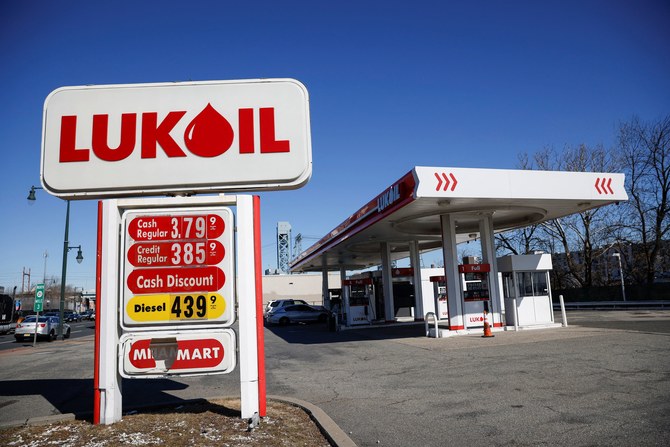
Fitch Ratings said in a statement it had lowered the rating on the companies, which also include oil producer Lukoil and miner Rusal, from B to CC. The latter rating implies some form of default on their payments was “probable.”

It cited a Russian decree on March 5 that authorized Russian companies to settle debts to certain blacklisted foreign companies in rubles rather than foreign currency.

The move, announced as the ruble plunged, was a response to international sanctions imposed on Russia because of its Feb. 24 invasion.

The decree, “against the backdrop of an escalating sanctions regime, could impose insurmountable barriers to many corporates’ ability to make timely payments on foreign- and local-currency debt to certain international creditors,” Fitch said.

Another major rating agency, Moodys, also downgraded Gazprom and Lukoil this week. Three major raters have classed Russia as at risk of defaulting on its long-term sovereign debt due to sanctions.

A credit rating cut makes it harder for a company or country to borrow money at manageable rates.

In an escalation of the sanctions, the US and Britain said on March 8 they were cutting off Russian oil imports.

“Ongoing ratcheting up of sanctions, including restrictions in energy trade and imports, increase the probability of a policy response by Russia, and further weaken its economy, eroding the operating environment for its corporates,” Fitch added.


Kuwait forecasts 54.7% rise in fiscal deficit as oil revenues weaken 

Updated 11 sec ago
Follow

Kuwait forecasts 54.7% rise in fiscal deficit as oil revenues weaken 

JEDDAH: Kuwait expects its fiscal deficit to widen sharply in the 2026–2027 budget year as lower oil income weighs on public finances, with the shortfall projected to rise 54.7 percent to 9.8 billion dinars ($31.9 billion). 

Announcing the draft budget, Finance Minister Yaqoub Al-Refaei estimated total expected revenues at 16.3 billion dinars, marking a 10.5 percent decline compared with the previous fiscal year. 

Kuwait is pushing Vision 2035 reforms to diversify its economy and boost non-oil growth but remains exposed to oil price volatility despite moderate inflation and strong non-oil expansion. 

“The minister disclosed that oil revenues were budgeted at 12.8 billion dinars, a 16.3 percent contraction compared to the current budget ending March 31, 2026,” the Kuwait News Agency, known as KUNA, reported. 

Highlighting a positive trend for fiscal diversification, non-oil revenues are projected to rise 19.6 percent to 3.5 billion dinars. 

He noted that total expenditure is expected to reach 26.1 billion dinars, with salaries and subsidies accounting for 76 percent, capital spending 11.8 percent, and other expenditures 12.2 percent. The FY 2026–2027 budget is based on a conservative oil price estimate of $57 per barrel. 

The minister, however, stressed that Kuwait’s fiscal break-even price — the price needed to balance the budget — is significantly higher, at $90.5 per barrel. 

The draft budget, covering April 1, 2026, to March 31, 2027, includes capital spending of 3.1 billion dinars, with significant allocations for infrastructure and strategic projects, according to a release by the Ministry of Finance. 

Of this, 318 million dinars will fund the Ministry of Public Works for developments such as Mubarak Al-Kabeer Port, the Umm Al-Hayman plant expansion, the North Kabd station, and the expansion of Kuwait International Airport’s Terminal 2. 

Additional allocations support the health ministry’s cancer control center, as well as the Defense and Interior ministries for military equipment. 

Higher spending is also driven by a 741.2 million-dinar increase in the public treasury’s contribution to social insurance to cover pension fund deficits. 

Conversely, support for fuel used in power generation and refined products declined by 449.2 million dinars due to falling global oil prices. 

The ministry highlighted that the budget would create 14,518 new positions, reflecting efforts to boost employment while continuing to diversify revenue sources.