Even mild COVID-19 can reduce brain size: Study

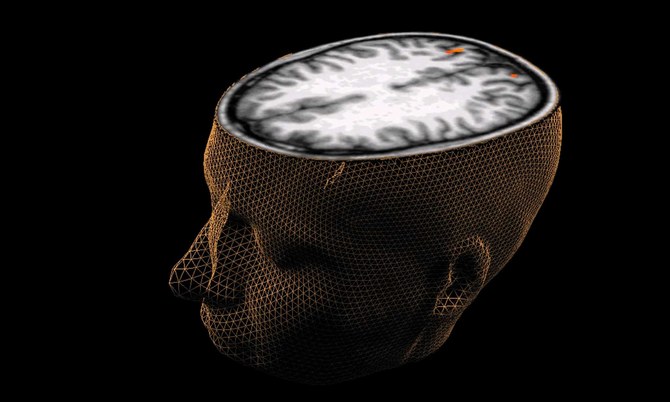
MRI imaging was used to study the brains of people who had recovered from COVID-19. (File/Reuters)
Short Url
Updated 07 March 2022
Follow

Even mild COVID-19 can reduce brain size: Study

  • Patients in UK recorded 0.2-2% loss in brain size
  • Largest reduction in areas responsible for taste, smell

LONDON: Even mild forms of COVID-19 can cause a reduction in brain size, according to scientists in the UK.

They scanned the brains of over 400 people who had previously had COVID-19, most of them mild cases.

They found that the overall brain size in infected participants had shrunk between 0.2 and 2 percent, and patients experienced losses in grey matter in the olfactory areas, linked to smell, and regions linked to memory.

The apparent effect of this was that those who had recently recovered from COVID-19 found it a bit harder to perform complex mental tasks.

The study was published on Monday in the science journal Nature. Lead author of the study Professor Gwenaelle Douaud, from Oxford University’s Wellcome Centre for Integrative Neuroimaging said: “We were looking at essentially mild infection, so to see that we could really see some differences in their brain and how much their brain had changed compared with those who had not been infected was quite a surprise.”

The study used biological information from a separate project, the UK Biobank, which has followed the health of 500,000 people for about 15 years and has a database of scans recorded before the pandemic — providing a unique opportunity to study the long-term health impacts of the virus.

Scientists also do not know whether there is any variation in the effect that COVID-19 variants have on the brain — the research was carried out when the original virus and alpha variant were most common.

Researchers also do not know yet whether these changes are permanent, but Douaud said: “We need to bear in mind that the brain is really plastic — by that we mean it can heal itself — so there is a really good chance that, over time, the harmful effects of infection will ease.”


José María Balcázar becomes Peru’s eighth president in a decade

Updated 4 sec ago
Follow

José María Balcázar becomes Peru’s eighth president in a decade

  • José María Balcázar has become Peru’s new interim president, replacing another interim leader who was removed over corruption allegations just four months into his term
  • Balcázar was elected late Wednesday with a majority in the 130-member legislature, defeating three other candidates
LIMA: Peru’s Congress late Wednesday elected legislator José María Balcázar as the country’s eighth president in a decade, replacing another interim leader who was ousted the previous day over corruption allegations just four months into his term.
Balcázar, an 83-year-old former judge representing the leftist Perú Libre party, defeated three other candidates with a majority of the 130-member legislature.
The revolving-door presidency in Peru reflects a political crisis fueled by a lack of legislative majorities for leaders. Lawmakers have frequently used a broad interpretation of a constitutional article regarding “permanent moral incapacity” to remove sitting presidents.
Balcázar, a retired judge with nearly 30 years of experience in the judiciary, was sworn in shortly after the vote by the president of the Congress, Fernando Rospigliosi.
He will govern for five months before handing over power to the winner of upcoming elections. Peruvians will choose a new president and legislature on April 12. If no presidential candidate receives more than 50 percent of the vote, the two front-runners will advance to a runoff in June.
Balcázar’s successor will confront a surge in murders and extortion that continues to devastate small business owners and the working class.
Various political groups are demanding firm guarantees for a transparent election.
Balcázar told journalists that he will ensure that the upcoming elections are “unquestionable,” that macroeconomic policies will remain unchanged, along with sound monetary policy “so that economic agents can work without concern,” and that he will seek to refocus the fight against organized crime.
Congress had voted Tuesday to remove conservative interim President José Jerí after four months in office. The current Congress, which began its term in 2021, has now impeached three heads of state: Pedro Castillo, Dina Boluarte and Jerí.
In October 2025, Jerí was serving as president of Congress and was next in the line of succession to replace Boluarte, who had no vice presidents.
His own removal followed revelations regarding his undisclosed meetings with Chinese business owners, including a state contractor. Jerí asserted he was merely coordinating a Peruvian-Chinese festival.
The Public Prosecutor’s Office has launched two preliminary investigations into Jerí over allegations of illegal sponsorship of private interests and influence-peddling to the detriment of the state.