Al-Faisal Museum for Arab-Islamic Art reopens in Riyadh with exhibition of rare manuscripts

1 / 6
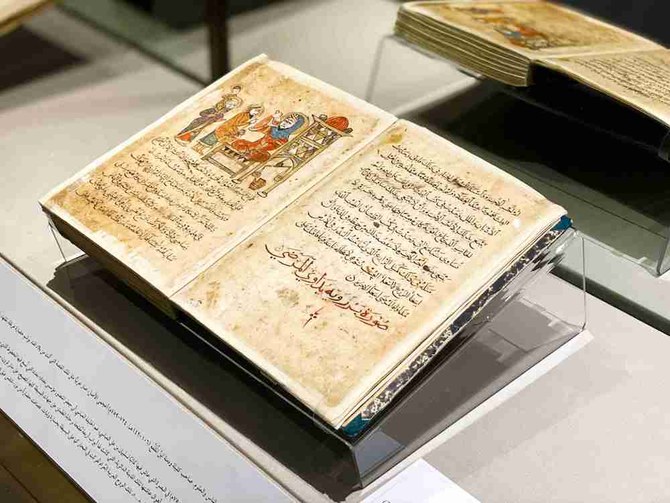
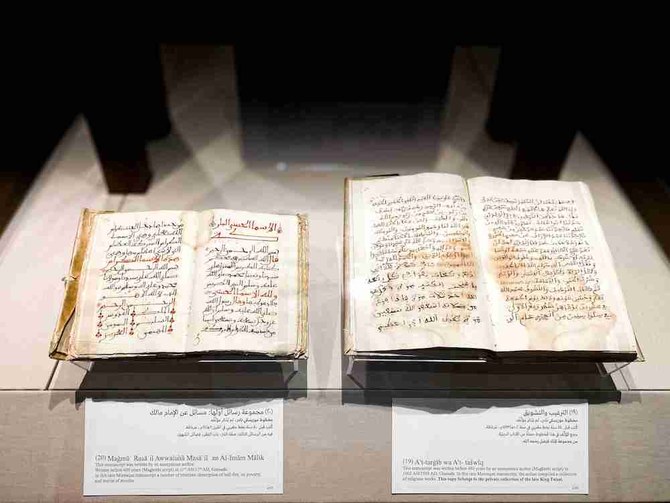
An exhibit in Asfar: Treasures of the King Faisal Center for Research and Studies exhibition. (Supplied)
2 / 6
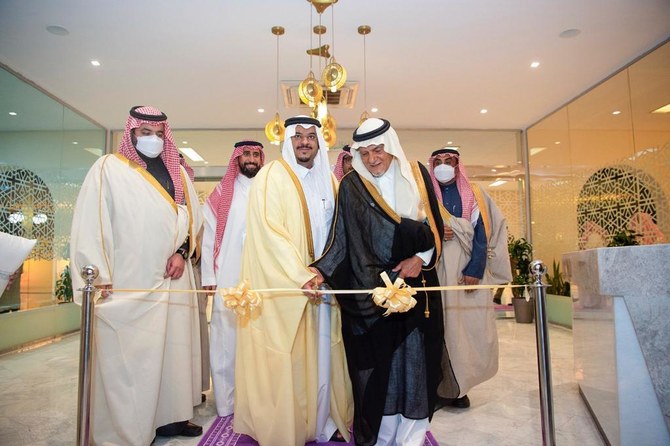
Prince Mohammed bin Abdulrahman, (L), the deputy governor of Riyadh, and Prince Turki Al-Faisal (R), chair of the museum’s board of directors, cutting the ceremonial ribbon together at the reopening on Sunday, Feb. 27, 2022. (Supplied)
3 / 6
An exhibit in Asfar: Treasures of the King Faisal Center for Research and Studies exhibition. (Supplied)
4 / 6
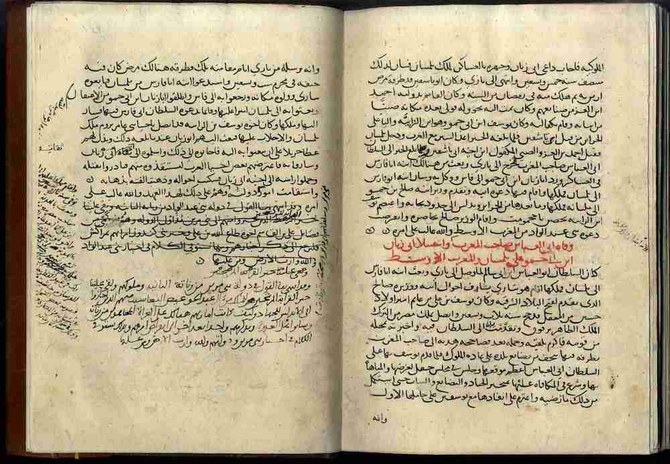
Ibn Khaldun’s Kitab al-Ibar (Book of Lessons), with the author’s handwritten comments. (Supplied)
5 / 6
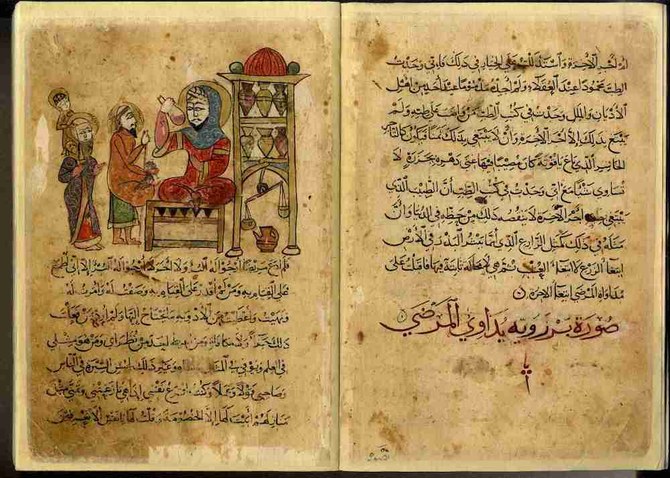
The second oldest copy of Kalila and Dimna (1346/747 AH, Baghdad). (Supplied)
6 / 6
Short Url
Updated 02 March 2022
Follow

Al-Faisal Museum for Arab-Islamic Art reopens in Riyadh with exhibition of rare manuscripts

  • The new exhibition aims to acquaint visitors with some of the most “outstanding” manuscripts and printed works owned by the center

RIYADH: The Al-Faisal Museum for Arab-Islamic Art reopened in Riyadh on Monday, following renewal work that began last year, with a new exhibition showcasing 36 rare manuscripts from a collection of more than 28,500.

The exhibition is titled Asfar: Treasures of the King Faisal Center for Research and Studies. Prince Turki Al-Faisal, chair of the museum’s board of directors, said during a reopening ceremony on Sunday that the new exhibition aims to acquaint visitors with some of the most “outstanding” manuscripts and printed works owned by the center.

It was inaugurated by Prince Mohammed bin Abdulrahman bin Abdulaziz, the deputy governor of Riyadh, who emphasized the importance of Arab-Islamic heritage and praised the work the center is doing to help preserve it.
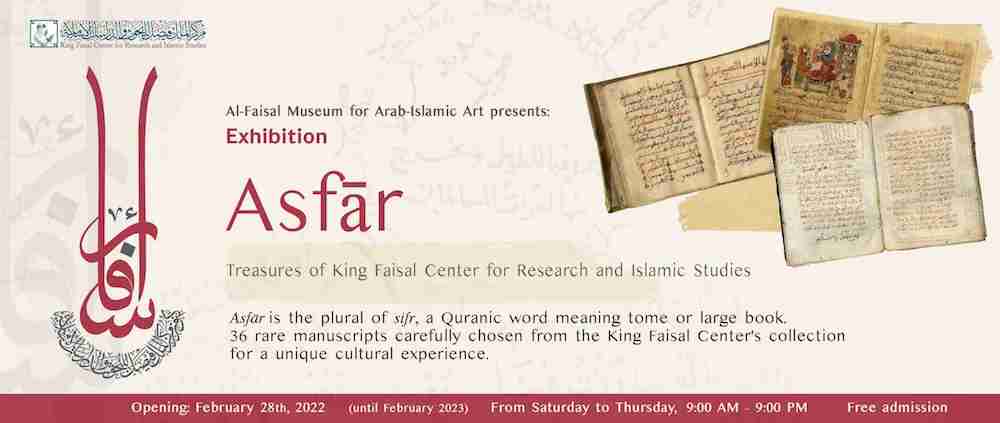
The 36 manuscripts on display are divided into six thematic chapters: The Journey of Knowledge, Millennium-Old Manuscripts, Women and the Endowment of Knowledge, By the Author’s Hand, Rare Manuscripts, and Gutenberg’s World.

The exhibits include: “Kalila and Dimna” (1346), which contains ancient animal fables translated into Arabic by Ibn Al-Maqaffa and is believed to be the second-oldest version in the world; a 14th century edition of the Qur’an from Cairo, written during the Mamluk era; a copy of only the second edition of the Qur’an printed in Europe, dating from 1694 (the first copy of the Qur’an in Europe was printed in Venice in the 15th century); “The Description of Egypt” from 1809, one of only five copies of the first edition of the encyclopedia; and a copy of “Book of Lessons” (“Kitab Al-Ibar”), written in 15th century Cairo by Ibn Khaldun, a prominent Muslim intellectual, that contains the author’s handwritten comments.

The Museum has also refreshed the display in its permanent gallery, which now includes 92 examples of Arab-Islamic art under the title Narrative of Arab-Islamic Civilization. Another exhibition, Takwin: Sciences and Innovation, showcases manuscripts related to scientific fields.

The museum is open Saturday to Thursday, from 9:00 a.m. to 9:00 p.m. Admission is free.


Ramadan in Madinah: A blend of tradition and modernity

Updated 21 February 2026
Follow

Ramadan in Madinah: A blend of tradition and modernity

  • Ramadan iftar tables in the neighborhoods have evolved into a community initiative that promotes solidarity and neighborliness

MADINAH: In the holy city of Madinah, Ramadan highlights a seamless blend of ancestral traditions and modern celebrations, as residents decorate homes and streets with lanterns.

Women play a central role in creating this spiritual atmosphere, transitioning from handmade ornaments to curated prayer spaces and Ramadan diaries for children.

Social solidarity remains the city’ cornerstone, manifested through the exchange of Ramadan baskets and the organization of massive communal iftar meals at the Prophet’s Mosque and in local neighborhoods.

Ramadan iftar tables in the neighborhoods have evolved into a community initiative that promotes solidarity and neighborliness.

The project has been undertaken by “Mujtamaei,” the Neighborhood Centers Association in Madinah Region, in partnership with the Madinah Regional Municipality, and covers 97 locations across residential districts.

The initiative organizes daily iftar gatherings that bring together residents, volunteers, and partner entities, reflecting strong community cohesion and fostering volunteerism and social connection among neighborhood residents and visitors during the holy month.

The program provides more than 80,000 iftar and sahoor meals, benefiting over 40,000 individuals, with 1,600 volunteers overseeing site organization and service delivery in accordance with quality and safety standards.

The project is part of a community development system that expands annually, focusing on increasing volunteer participation and strengthening partnerships, thereby reinforcing social values and revitalizing the spirit of neighborliness in Madinah.