



QUETTA: The import to Pakistan of a much-loved dry fruit, the shinay, from Afghanistan has been hit by weather changes and new taxes imposed by the Taliban regime in Kabul, Pakistani officials and traders have said, leading to reduced supplies of a nut that has been a winter staple in the southwestern Balochistan province for decades.
The small, round, green-colored nut is produced in Afghanistan’s mountainous Farah province, from where its winter import to Balochistan begins around mid-September and October. This season, around 900 sacks, weighing 65kg each, were imported to Balochistan, a 55 percent decrease from the 2,000 sacks imported last season, traders said. Sale of the dry fruit goes on from December to February.
Arab News shared questions for this piece with the Taliban spokesperson in Afghanistan but did not receive a reply despite repeated attempts and reminders.
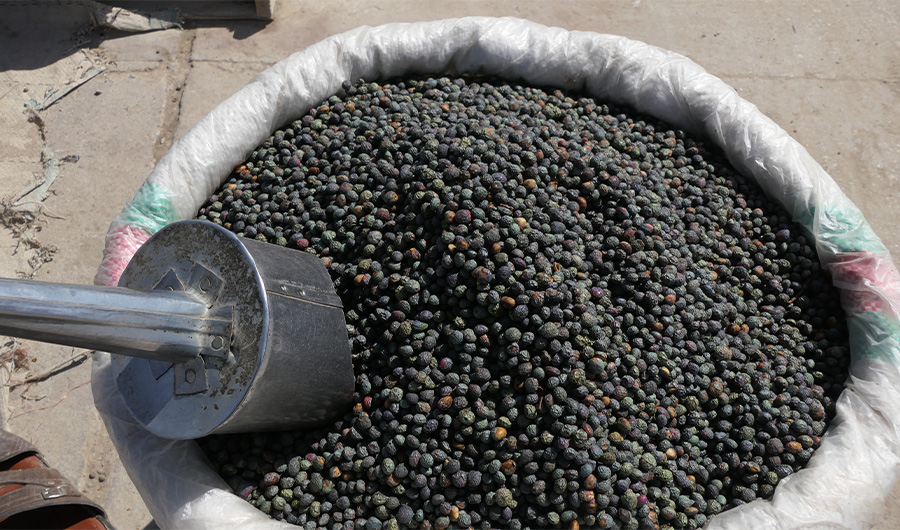
A local vendor displays shinay for customers in Quetta, Pakistan, on February 19, 2022. (AN Photo)
The Quetta Chamber of Commerce and Industry (QCCI) said it did not have exact data for shinay imports. Balochistan Agriculture Minister Asadullah Baloch, Agriculture Director-General Masood Baloch and Agriculture did not respond to repeated requests for comments for this story.
Hajji Abdul Nanai, 40, who has been importing shinay from Afghanistan for 11 years, told Arab News traders associated with the shinay trade were facing losses this season as its purchase price had gone up because of new duties imposed by the Taliban government and production had declined due to less seasonal rains and snowfall in Afghanistan.
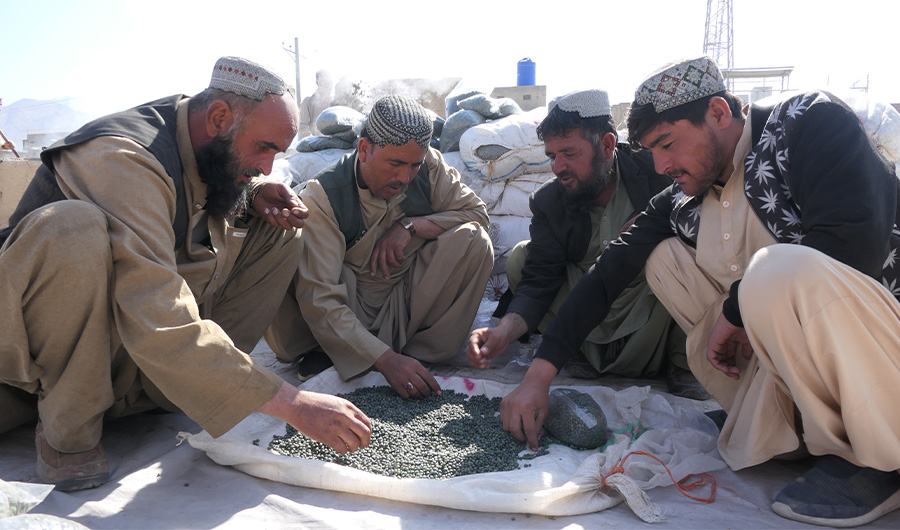
Trader Haji Abdul Nanai, second on the left, sorts out shinay dry fruit from a parcel at Quetta's main shinay market, Pakistan, on February 19, 2022. (AN Photo)
“In this season, the prices of the nut have gone up because the Taliban regime in Afghanistan started collecting taxes on shinay export,” Nanai told Arab News as he unpacked sacks at a Quetta market and sorted through parcels of shinay earlier this month.
Nanai lamented that he had imported only 100 sacks of shinay in mid-October 2021, compared to almost double the number, 180 sacks, last season.
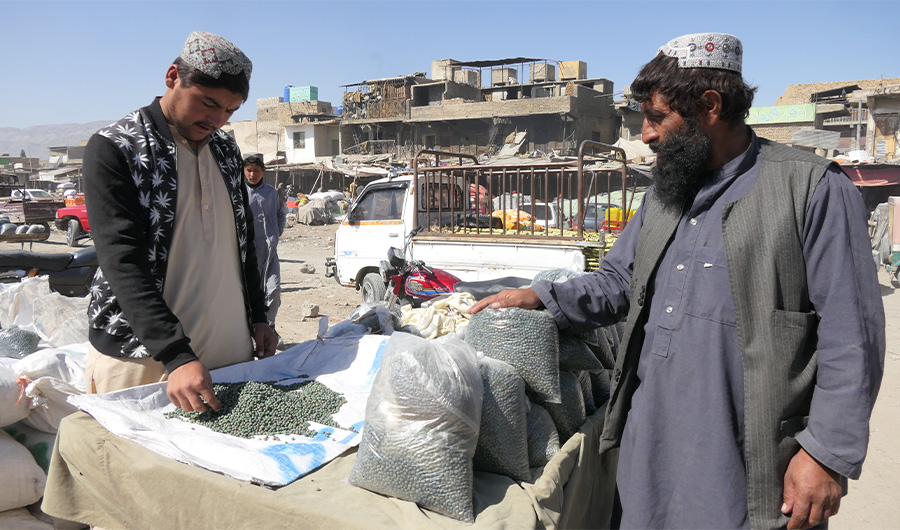
A local vendor displays shinay for customers in Quetta, Pakistan, on February 19, 2022. (AN Photo)
Seller Sharaf-ud-Din, who has been selling shinay on a pushcart for the last nine years, said he had purchased less quantity of the dry fruit this year compared to past years because of an increase in prices.
“In the past, I used to purchase one sack of shinay from the wholesale market in Quetta, but this season I have bought just 10kg as dealers have increased the prices due to frequent closures of the Pak-Afghan border crossing in Chaman,” he told Arab News. “This season, many dealers imported the dry fruit via the Torkham and Nushki borders.”
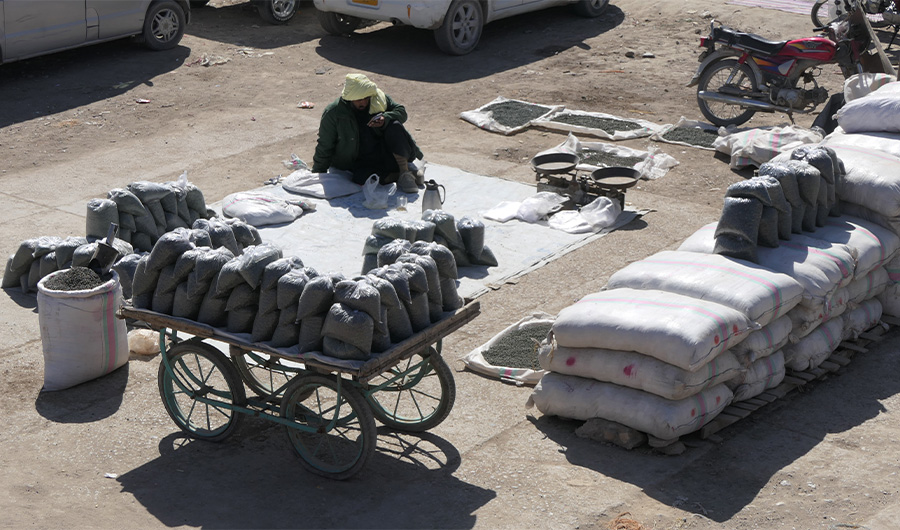
A local shinay dealer displays the small green shinay dry fruit to attract vendors at Quetta’s main Shinay Market, Pakistan, on February 19, 2022. (AN Photo)
He also said in December-February 2021, the average price of the nuts was Rs600 per 50 grams ($3.39), which had risen to Rs900 ($5.08) this season.
Badar-ud-Din Kakar, former senior vice president of the Quetta Chamber of Commerce and Industry (QCCI), said, shinay once used to be produced in Balochistan’s remote areas bordering Afghanistan, but its produce plunged “decades ago” as people cut down the fruit’s trees for firewood.
He said he had expected import of the dry fruit would flourish under the new Taliban regime in Afghanistan as it scrambled to find ways to stabilize the country’s crumbling economy. Instead, the Taliban had imposed new duties, pushing up prices.
“But now the Taliban government in Afghanistan has been strictly focusing on its export as part of efforts to stabilize the dwindling economy,” Kakar said. “They have started collecting duty on the export of shinay and other goods, including minerals and scrap.”
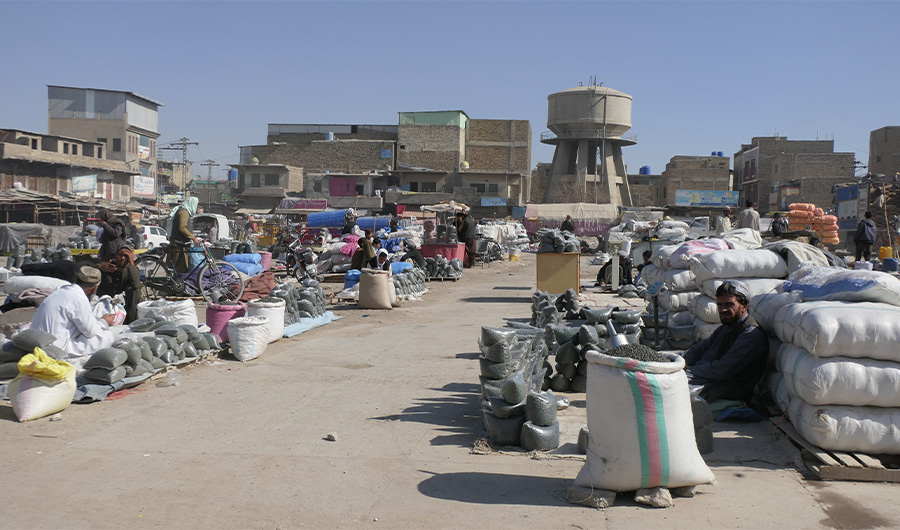
Traders display dry fruit at the Double Road Adda Market in Quetta, Pakistan, on February 19, 2022. (AN Photo)
Hajji Hashim Khan Achakzai, president of the Chaman Chamber of Commerce, also said the import of the dry fruit had reduced since the Taliban government imposed a new regime of taxes.
Local shinay dealers in Afghanistan’s western Farah province where the nut is cultivated, and Kandahar where it is packaged for Pakistan, cited bad weather conditions for this season’s reduced production and higher prices.
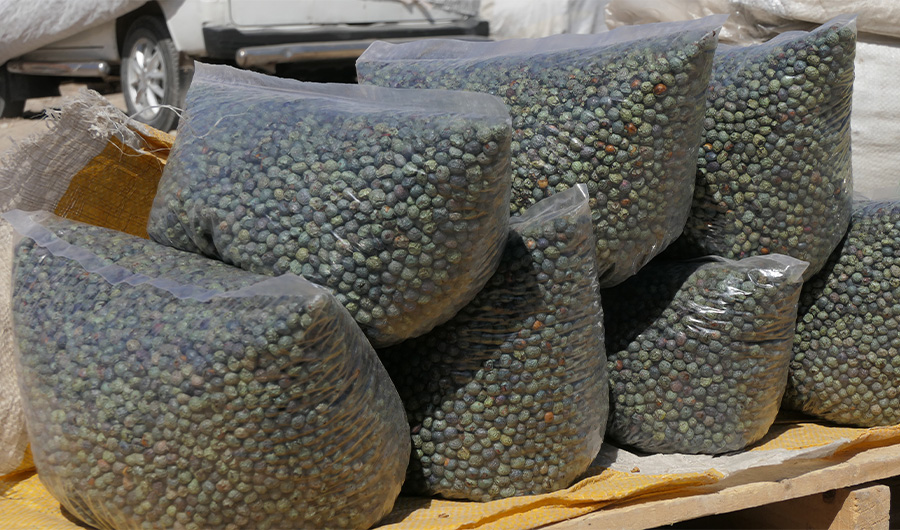
The shinay dry fruit, imported from Afghanistan, on display in Quetta, Pakistan, on February 19, 2022. (AN Photo)
Bashir Khan, 30, a shinay exporter in Kandahar, said the dry fruit’s production in the Farah and Ghor provinces of Afghanistan had dropped down to three tons this season compared to seven last year.
“We travel to the mountainous regions to pick shinay from trees,” he told Arab News, “but the market has witnessed decline in the production of the natural nut due to lack of rain and snowfall which is imperative for the growth of shinay trees and seeds.”


