

Pakistan launches Turkey-made speedboat to boost adventure tourism in picturesque north

In this undated photo, test trials of a new jetboat are being conducted in Turkey before delivery to Pakistan. (Photo courtesy Milad Ul Salman)
Short Url
Updated 26 February 2022
Follow

Pakistan launches Turkey-made speedboat to boost adventure tourism in picturesque north

  • The Rs800 million purpose-built boat project will start operations in May
  • Gilgit-Baltistan hosts over 10 million foreign and local tourists every year

KARACHI: From May 2022, tourists visiting Attabad Lake and the Hunza River in Pakistan’s mountainous northern areas will be able to ride what tourism promoters say is one of the fastest jet boats in the world, introduced for the first time in Pakistan by an overseas investment group, the Pak Greenland Corporation, to promote adventure tourism.
The purpose-built jet boat arrived in Hunza, Gilgit-Baltistan (GB), from Turkey early this month and will offer quick trips between the Shishkat and Hussaini Bridge (Passu Cone) in Upper Hunza.
Gilgit-Baltistan is one of the top tourist hotspots in Pakistan and hosts over 10 million foreign and local tourists every year, contributing around Rs 300 million per annum to the local economy, according to GB Invest, a public-private organization that works for investment promotion in the region.
The region is also home to K-2, the second-highest mountain in the world, after Mount Everest.
“We will start operations from May this year because still the Attabad Lake is covered with ice and we are waiting for the ice to melt,” Milad Ul Salman, manager of the Pak Greenland Corporation, told Arab News on Saturday.
“The boat is specially designed to operate in the Hunza River where a high level of sand flows with the water. The boat has a capacity to ferry 22 passengers at a time and will cover a distance of 5-6 kilometers upstream from Shishkat to Passu Cone in 15 minutes.”
The speedboat, with two powerful 12,400 CC engines and advanced safety features, has the ability to move at high speeds in shallow waters in lakes and rivers.
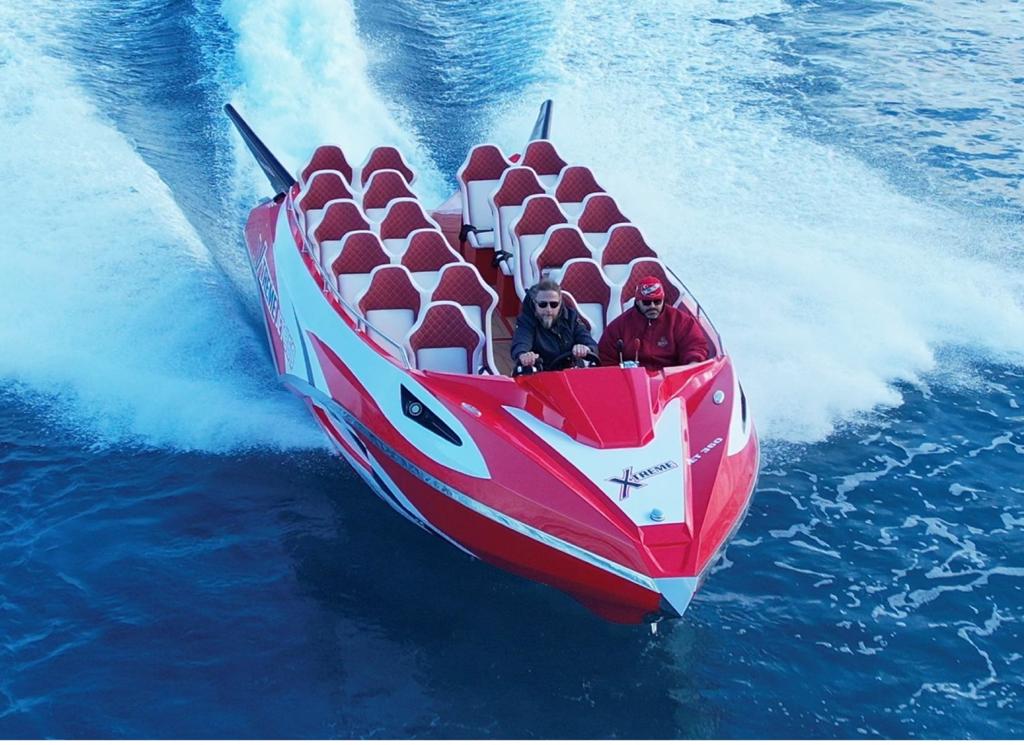


 In this undated photo, test trials of a new jetboat are being conducted in Turkey before delivery to Pakistan. (Photo courtesy Milad Ul Salman)

“The boat is fitted with a jet engine that is made by the American Mercury Marine,” Salman said, saying the reflectors were made in Finland. “The boat was manufactured in Turkey where its test trials were conducted.”
He said the project cost was around Rs800 million.
“Such boats are operating in advanced countries like Australia, New Zealand, Japan, and US mainly for tourists,” Salman said. “This boat is among the fastest boats developed for passengers that can move at a speed of 80 kilometer per hour against the run-of- the -river.”
Pakistani tourism experts hope the speed boat will help boost tourism in Pakistan’s northern areas.
“Arrival of the speedboat in Attabad will add huge value in terms of attracting more tourists to Hunza,” Izzat Bibi, CEO of Chkar.com, an online marketplace to book a home or private vacation rental in Pakistan, and a member of the prime minister’s youth council, told Arab News.
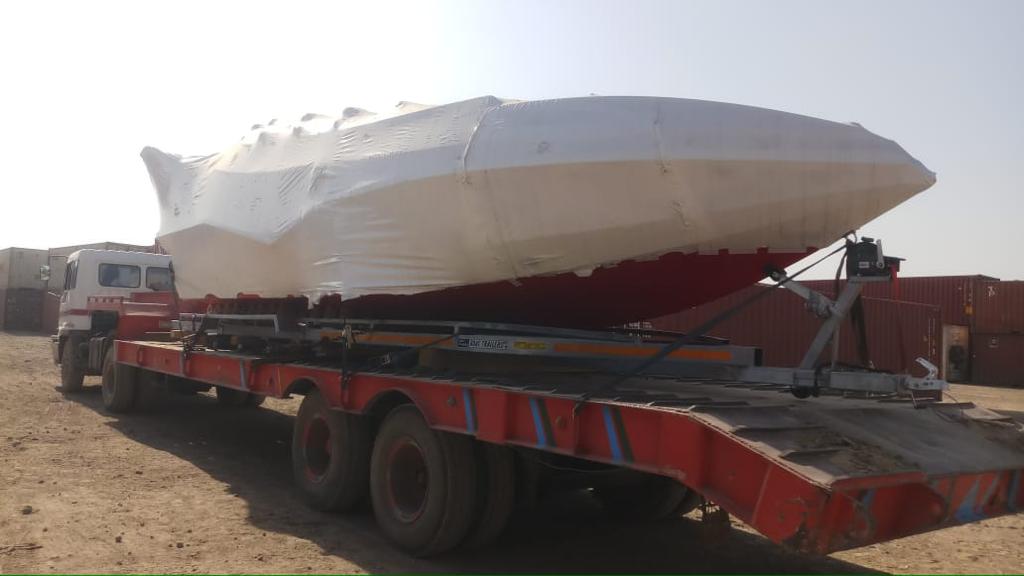


In an undated photo, a jetboat is being transported from Karachi to Hunza after its arrival from Turkey. (Photo courtesy Milad Ul Salman)

“It is so great seeing people making investments for the comfort of tourists and offering more experiences and adventurous activities. It will make tourists spend more time in that region and benefit the local economy.”
“Pakistan has great tourism potential from deserts in the south to some of the highest peaks, beautiful landscape and lakes in the north,” Bibi said. “The tourism industry of Pakistan is rapidly growing but it is our responsibility to make it sustainable. Our culture, values, international conferences, events and adventur activities can attract more international tourists to Pakistan.”



Pakistan says economy stabilizing as it looks to 2026 growth

Updated 4 sec ago
Follow

Pakistan says economy stabilizing as it looks to 2026 growth

  • Inflation averages 5 percent, remittances hit $16.1 billion as government cites signs of recovery
  • IT exports, industry and development spending highlighted as focus shifts to next year’s targets

ISLAMABAD: Pakistan’s economy has shown signs of stabilization in the first half of the current fiscal year, Planning Minister Ahsan Iqbal said on Thursday, as the government looks ahead to sustaining growth momentum into 2026 after several years of economic volatility.

Briefing the media on economic performance through November, Iqbal said key indicators including inflation, industrial output, exports, remittances and fiscal revenues had improved, creating what he described as a more stable base for forward planning.

Pakistan has spent much of the past two years navigating high inflation, external financing pressures and fiscal tightening under an IMF-backed reform program. While growth remains modest, officials say recent data suggests the economy has moved out of crisis mode and into a consolidation phase.

“During July to November of fiscal year 2025–26, stability has returned to Pakistan’s economy,” Iqbal said, adding that average inflation during the period stood at around 5 percent, compared with 7.9% last year, easing pressure on households and businesses.

Large-scale manufacturing posted growth of 4.1 percent, which Iqbal described as “clear evidence of recovery in industrial activity.”

The planning minister said government revenues also improved, with Federal Board of Revenue collections reaching Rs4,733 billion ($16.9 billion) during July–November, reflecting a 10.2% increase.

External inflows remained resilient, with workers’ remittances rising 9.3% to $16.1 billion, while IT services exports increased 19% to $1.8 billion over the same period, he said.

On the public investment side, Iqbal said Rs196 billion ($700 million) were released under the development budget during the quarter, of which Rs92 billion ($329 million) had already been spent. He added that cost rationalization in development projects between July and October saved Rs3.3 billion ($11.8 million) billion in public funds.

In November, the planning minister said, the Central Development Working Party approved 10 development projects, while six major schemes were referred to the Executive Committee of the National Economic Council.

Iqbal said the approved projects were expected to create 994 immediate jobs, with nearly 24,859 direct and 40,873 indirect employment opportunities projected overall.

Looking ahead, he said all future development schemes would be required to comply with green building codes to ensure environmental protection and sustainable growth.

He also highlighted skills and innovation initiatives, saying that under the “Uraan Pakistan” program, partnerships with Oxford and Cambridge universities were being pursued to promote research, technology and innovation.

Under an IT industry revival plan, he said more than 20,000 young people were being trained in advanced technologies, with over 14,000 new jobs expected to be created.

The government has said maintaining macroeconomic stability while gradually lifting growth remains its central challenge as Pakistan moves into 2026, with officials emphasising disciplined spending, export growth and job creation as key priorities.