New regional Twitter campaign highlights platform’s safety measures

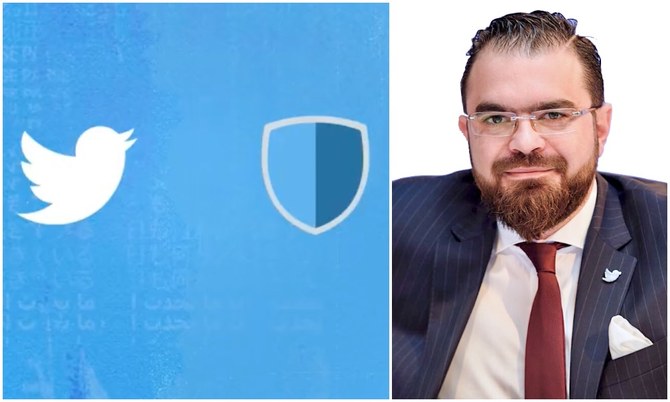
George Salama, the director of public policy and government relations for Twitter MENA, told Arab News about the ew Arabic hashtag that translates as #TwitterSafetyCampaign as part of its activities to mark Safer Internet Day. (Supplied)
Short Url
Updated 18 February 2022
Follow

New regional Twitter campaign highlights platform’s safety measures

  • Aim is ‘to ensure the community is aware of the available solutions that will encourage a better experience for everyone,’ said platform chief
  • Regional vice president of the Internet Society Middle East said the internet is still a sort of ‘wild west’ and we must work together to discourage harmful behavior

DUBAI: This month, Twitter MENA launched a new Arabic hashtag that translates as #TwitterSafetyCampaign as part of its activities to mark Safer Internet Day on Feb. 8.

The campaign is an extension of the platform’s Middle East and North Africa Safety Campaign, which began in 2019 with the aim of enabling and empowering users to identify and report spam.

“Through this MENA Safety Campaign, our priority is to ensure that the community is aware of the available solutions that will encourage a better experience for everyone on Twitter,” George Salama, the director of public policy and government relations for Twitter MENA, told Arab News.

The new campaign features several videos highlighting safety features to inform users about the tools that are available on the platform to help ensure a safer experience. Twitter also introduced a new emoji of hands cradling the world, triggered by the hashtag #SaferInternetDay.


The campaign also included a Spaces discussion session featuring speakers from diverse backgrounds who talked about ways to combat disruptive online behaviors, the first-hand experiences of public figures, and insights into the efforts Twitter is making to tackle abuse, misinformation and spam.

The session was moderated by radio host Dalal Al-Mhamad and the guests included Salama; Abdullah Alsabeh, who is a tech expert and influencer; Lujain Daghstani, a quality of life counselor and social activist; and Nermine El-Saadany; the regional vice-president of the Internet Society Middle East.

“The Internet has revolutionized the way we live our lives,” El-Saadany told Arab News. “However, it still remains a sort of ‘wild west’ in that anonymity can lead people to act differently than in the real world

“It is, therefore, crucial that we work together, as a community, to discourage harmful behavior and instead encourage positive change.”

Twitter’s campaign garnered support from celebrities and influencers such as actress and singer Rana Samaha, squash player Nour El-Sherbini and tech influencers Mohamed Hadaidi and Saad Al-Dhawi.

It was also endorsed by Dubai Police and non-profit organizations, including the Internet Society Middle East; SMEX, which defends the digital rights of people and communities in the MENA region; and 7amleh, which advocates for digital rights in Palestine.

“We have made meaningful progress in our efforts to promote healthy conversations and surface authoritative information on Twitter,” Salama said. “We’re committed to working with our partners in tech, government and civil society to continue this work to help build a safer internet.”

According to the most recent statistics from Twitter, the platform removed 4.7 million tweets that violated its rules between Jan. 1 and June 30, 2021. It also permanently suspended 453,754 accounts for violating its child sexual exploitation policy and 44,974 for promoting terrorism and violent organizations.

“We have clear policies in place on abusive behavior, hateful conduct and violent threats on the service,” Salama added. “This work is constantly evolving as new challenges emerge, and we recognize we have to work hard to stay ahead of those who intend to undermine the public conversation.”


Trending: BBC report suggests sexual abuse and torture in UAE-run Yemeni prisons

Updated 02 February 2026
Follow

Trending: BBC report suggests sexual abuse and torture in UAE-run Yemeni prisons

  • The investigation was produced by British-Yemeni BBC journalist Nawal Al-Maghafi

LONDON: A recent BBC video report diving into what it says was UAE-run prison in Yemen has drawn widespread attention online and raised fresh questions about the role of the emirates in the war-torn country.

The report, published earlier this month and recently subtitled in Arabic and shared on social media, alleged that the prison — located inside a former UAE military base — was used to detain and torture detainees during interrogations, including using sexual abuse as a method.

The investigation was produced by British-Yemeni BBC journalist Nawal Al-Maghafi, who toured the site, looking into cells and what appear to be interrogation rooms.

Al-Maghafi said the Yemeni government invited the BBC team to document the facilities for the first time.

A former detainee, speaking anonymously, described severe abuse by UAE soldiers: “When we were interrogated, it was the worst. They even sexually abused us and say they will bring in the doctor. The ‘so-called’ doctor was an Emirati soldier. He beat us and ordered the soldiers to beat us too. I tried to kill myself multiple times to make it end.”

Yemeni information minister, Moammar al Eryani also appears in the report, clarifying that his government was unable to verify what occurred within sites that were under Emirati control.

“We weren’t able to access locations that were under UAE control until now,” he said, adding that “When we liberated it (Southern Yemen), we discovered these prisons, even though we were told by many victims that these prisons exist, but we didn't believe it was true.”

The BBC says it approached the UAE government for comment, however Abu Dhabi did not respond to its inquiries.

Allegations of secret detention sites in southern Yemen are not new. The BBC report echoes earlier reporting by the Associated Press (AP), which cited hundreds of men detained during counterterrorism operations that disappeared into a network of secret prisons where abuse was routine and torture severe.

In a 2017 investigation, the AP documented at least 18 alleged clandestine detention sites — inside military bases, ports, an airport, private villas and even a nightclub — either run by the UAE or Yemeni forces trained and backed by Abu Dhabi.

The report cited accounts from former detainees, relatives, civil rights lawyers and Yemeni military officials.

Following the investigation, Yemen’s then-interior minister called on the UAE to shut down the facilities or hand them over, and said that detainees were freed in the weeks following the allegations.

The renewed attention comes amid online speculation about strains between Saudi Arabia and the UAE over Yemen.