

Africa’s first wild polio case surfaces in Malawi, linked to Pakistan

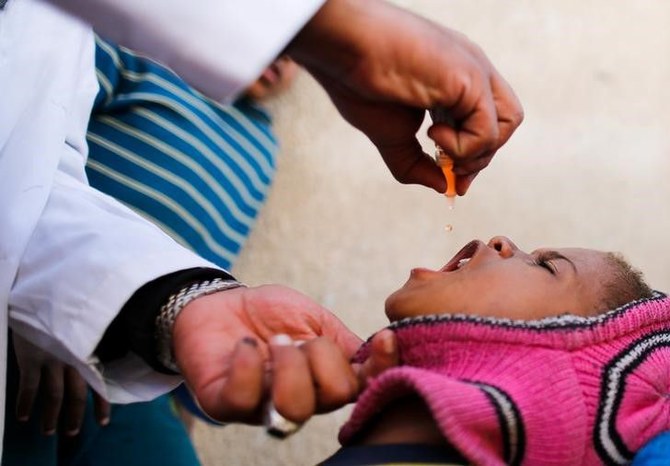
A boy receives polio vaccination drops during a house-to-house vaccination campaign in Sanaa, Yemen February 20, 2017. (REUTERS)
Short Url
Updated 18 February 2022
Follow

Africa’s first wild polio case surfaces in Malawi, linked to Pakistan

  • WHO says strain detected in Malawi linked to one that circulating in Pakistan, where it is still endemic
  • As imported case, detection does not affect African region’s wild poliovirus-free certification status

JOHANNESBURG: Malawi’s health authorities have declared a polio outbreak after a case was detected in a young child in the capital Lilongwe, the first case of wild poliovirus in Africa in more than five years, the World Health Organization (WHO) said.

The WHO said in a statement that laboratory analysis showed the strain detected in Malawi was linked to one that has been circulating in Pakistan, where it is still endemic.

“As an imported case from Pakistan, this detection does not affect the African region’s wild poliovirus-free certification status,” the WHO said.

The Global Polio Eradication Initiative said the case in the southern African country was in a three-year-old girl who experienced the onset of paralysis in November last year.

Sequencing of the virus conducted in February by South Africa’s National Institute for Communicable Diseases and the US Centers for Disease Control and Prevention confirmed it as type 1 wild poliovirus (WPV1).

“Detection of WPV1 outside the world’s two remaining endemic countries, Pakistan and Afghanistan, is a serious concern and underscores the importance of prioritising polio immunization activities,” the Global Polio Eradication Initiative said.

The WHO said the African continent could launch a rapid response because of a high level of polio surveillance.

“The last case of wild poliovirus in Africa was identified in northern Nigeria in 2016 and globally there were only five cases in 2021. Any case of wild poliovirus is a significant event and we will mobilize all resources to support the country’s response,” said Modjirom Ndoutabe, polio coordinator in the WHO’s regional office for Africa.


Polio is a highly infectious disease that invades the nervous system and can cause total paralysis within hours. While there is no cure for polio, it can be prevented by administration of a vaccine, the WHO said.


UNESCO lists Pakistan’s ancient Bareendo instrument as endangered cultural heritage

Updated 9 sec ago
Follow

UNESCO lists Pakistan’s ancient Bareendo instrument as endangered cultural heritage

  • 5,000-year-old Sindhi clay wind instrument placed on UNESCO urgent safeguarding list
  • Only two known practitioners remain as Pakistan launches four-year preservation plan

ISLAMABAD: Pakistan’s 5,000-year-old folk instrument Bareendo has been added to UNESCO’s Intangible Cultural Heritage list for urgent safeguarding, the UN agency said this week, placing it among cultural traditions considered at immediate risk of disappearing.

Believed to originate in the ancient Indus Valley Civilization, the clay wind instrument is the oldest known surviving musical form in the southern Sindh province. Its soft, breath-driven tones have accompanied Sufi devotional gatherings, winter festivals and village ceremonies for generations, forming a core part of Sindh’s musical and spiritual identity.

The inscription was approved at the 20th Session of UNESCO’s Intergovernmental Committee for Intangible Cultural Heritage, which documents vulnerable cultural practices globally, from oral folklore to craftsmanship, to ensure they are preserved and passed on.

UNESCO announced the listing on X on Tuesday:

“New inscription on the Urgent Safeguarding List of Intangible Heritage: Boreendo, Bhorindo: ancient dying folk musical instrument, its melodies, knowledge, and skills.”

Pakistan’s Permanent Delegate to UNESCO, Ambassador Mumtaz Zahra Baloch, welcomed the move, calling it the recognition of a tradition preserved through centuries of community transmission.

“Bareendo is not only an emblem of the Indus Valley’s cultural continuity but also a living expression of Sindh’s artistic and spiritual heritage,” she was quoted as saying by Pakistan’s Embassy in France. 

“This recognition by UNESCO reaffirms Pakistan’s commitment to the protection and promotion of our diverse cultural traditions.”

Only two people are believed to retain full mastery of Bareendo today, musician Ustaad Faqeer Zulfiqar and master potter Allah Jurio, underscoring why the nomination was marked urgent, the embassy said. 

The nomination followed an intensive consultation process between the Sindh government, Pakistan’s Mission to UNESCO and UNESCO headquarters in Keti Mir Muhammad Loond village and led to a four-year safeguarding strategy (2026–2029). Planned measures include a community music school, integration into formal and informal education and digital archiving to open access beyond Sindh’s rural belt.

With this recognition, Bareendo joins existing UNESCO-listed intangible traditions like Suri Jagek (the astronomical knowledge of the Kalash people), Falconry, and Nowruz, the regional spring new year.