ISLAMABAD: The risks associated with cryptocurrencies “far outweigh” the benefits, the Pakistani central bank governor has said, weeks after a mega crypto scam hit the country and the State Bank recommended banning virtual payment systems.
Thousands of Pakistanis lost life savings in a $100 million cryptocurrency scam, Pakistan’s Federal Investigation Agency (FIA) said last month, with investigators estimating that some 37,000 people, mostly from middle-class households in Punjab’s Faisalabad, had been defrauded after investing money in a scheme which promised to multiply funds.
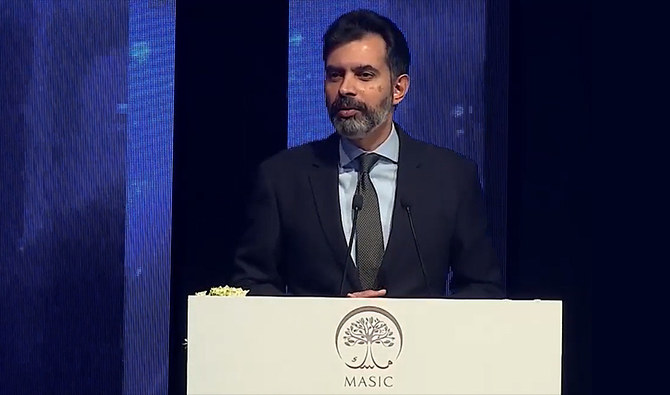
Speaking at the recent MASIC Annual Investment Forum in Riyadh, Pakistan central bank chief Reza Baqir said cryptocurrencies posed a risk to financial and monetary stability due to acute price fluctuations and their distributed and decentralized nature.
“In Pakistan, we as the central bank have reached the conclusion as of now that, for us and in terms of the core objectives of the central bank, the potential risks far outweigh the benefits,” Baqir said, according to a transcript of the speech released by the State Bank of Pakistan (SBP) this week.
“As many of you would be aware, we are not alone in reaching this conclusion. Many large emerging markets, including China, India, Russia, among others have reached similar conclusions.”
Virtual currencies were prone to be used for illegal economic activities and posed the risk of widening the gray economy, capital flight and consumer protection issues, the SBP governor added.
Speaking about why advanced economies had a more “permissive” attitude toward virtual currencies, the governor said: “One reason may be that in many of the advanced economies there is little practical threat that their currency, in many cases one of the major currencies of the world in which trade and finance is denominated, would be replaced by a new virtual currency.”
Another valid concern, according to him, was the impact of virtual currencies on promoting capital outflows, and more generally, capital volatility.
“Since by definition such currencies cannot be monitored, regulators are at a loss to determine the impact on the balance of payments, representing another key risk,” he added.
Pakistan’s central bank declared in 2018 that virtual currencies like Bitcoin were not legal tenders issued or guaranteed by the country’s government.
But despite not being recognized by the SBP, interest in cryptocurrencies has been on the rise. The country ranked third in the global crypto adoption index in 2020-21, after India and Vietnam. The federal chamber of commerce said in a report last year Pakistan had recorded around $20 billion in cryptocurrency value in 2020-21, showing an abnormal increase of 711 percent.
The central bank has not commented on FPPCI’s findings so far but in January recommended banning cryptocurrency, arguing that allowing it would cause capital flight. A committee formed by the Sindh High Court to deliberate on virtual currencies also urged imposing a “complete ban.”
The recommendations came as the court last year heard a constitutional petition filed in 2019, which sought to overturn the central bank’s guidance from 2018 advising banks and payment system operators against processing and investing in virtual currencies.
But proponents of cryptocurrency trade in Pakistan argue that the risks, and scams such as the one unearthed last year, are caused by the absence of a legal framework.
Waqar Zaka, a Pakistani TV host and activist who has filed a court petition in favor of allowing digital currencies, said regulation would help keep fraud at bay.
“I pleaded with the court that people have invested billions of rupees in crypto trade and the government should not declare it illegal,” he told Arab News in an interview last year. “Instead, it should devise a mechanism to legalize the business, and keep a check on transactions.”


![]()

Cryptocurrency risks ‘far outweigh’ benefits, Pakistan central bank chief says at Riyadh forum
Short Url
https://arab.news/6w65u
Cryptocurrency risks ‘far outweigh’ benefits, Pakistan central bank chief says at Riyadh forum
- Thousands of Pakistanis recently lost life savings in $100 million cryptocurrency scam
- In the wake of the scam, State Bank has recommended banning virtual currencies in Pakistan
Latest updates


© 2026 SAUDI RESEARCH & PUBLISHING COMPANY, All Rights Reserved And subject to Terms of Use Agreement.