

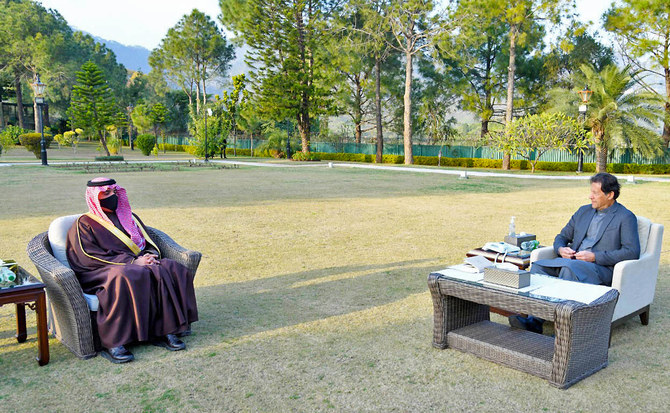

ISLAMABAD: Prime Minister Imran Khan on Monday expressed hope for the repatriation of Pakistani inmates from Saudi Arabia after the two countries finalized a prisoner transfer treaty, PM Khan’s office said.
The statement came after PM Khan’s meeting with Saudi Interior Minister Prince Abdulaziz bin Saud bin Naif, who arrived in Islamabad on a day-long visit on Monday.
The treaty to repatriate over 2,000 Pakistanis jailed in the kingdom was signed during PM Khan’s visit to the kingdom in May 2021. Saudi Arabia’s cabinet approved the agreement during a session, chaired by King Salman, on January 25, according to the official Saudi Press Agency (SPA).
The agreement allows Pakistani individuals convicted in Saudi Arabia, especially for minor offenses, to complete their terms at home. It also benefits prisoners languishing in Saudi jails for not being able to pay fines.
“Noting the conclusion of the Agreement on Transfer of Offenders between the two countries, the prime minister expressed the hope that a large number of Pakistani prisoners in KSA would be repatriated to Pakistan through this framework,” PM Khan’s office said in a statement.
“The prime minister particularly thanked the kingdom for its steadfast support to Pakistan, especially in challenging times. He thanked the Saudi leadership for the recent financial budgetary support extended to Pakistan.”
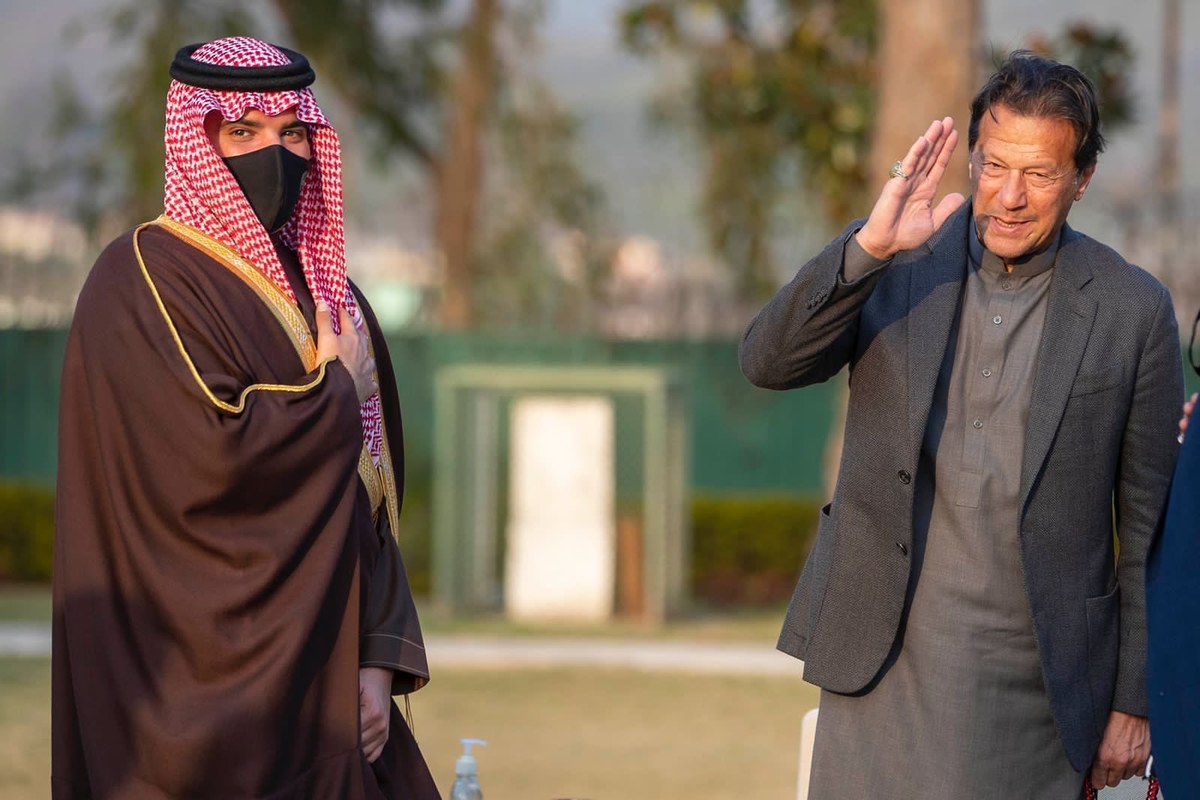
Saudi Interior Minister Prince Abdulaziz bin Saud bin Naif (left) and Prime Minister of Pakistan Imran Khan pose for a picture in Islamabad, Pakistan, on February 7, 2022. (@AbdulazizSNA/Twitter)
The Saudi interior minister conveyed greetings of Saudi Crown Prince Mohammed bin Salman to the prime minister and reaffirmed close fraternal relations between Pakistan and Saudi Arabia, according to the statement.
Prince Abdulaziz acknowledged the positive contribution of Pakistanis in the development of the kingdom and reiterated the resolve to work closely with the Pakistani side on all matters relating to his ministry.
He also held a meeting with Pakistani President Dr. Arif Alvi. “Saudi Minister for Interior informed that steps were being taken to help address the issue of Pakistani prisoners by the technical teams of the two countries,” President Alvi’s office said in a statement.
The president expressed gratitude to the Saudi leadership for launching the “Road to Makkah” pilot project for Hajj pilgrims, stating the Pakistani government was looking forward to its expansion to other cities of the country.
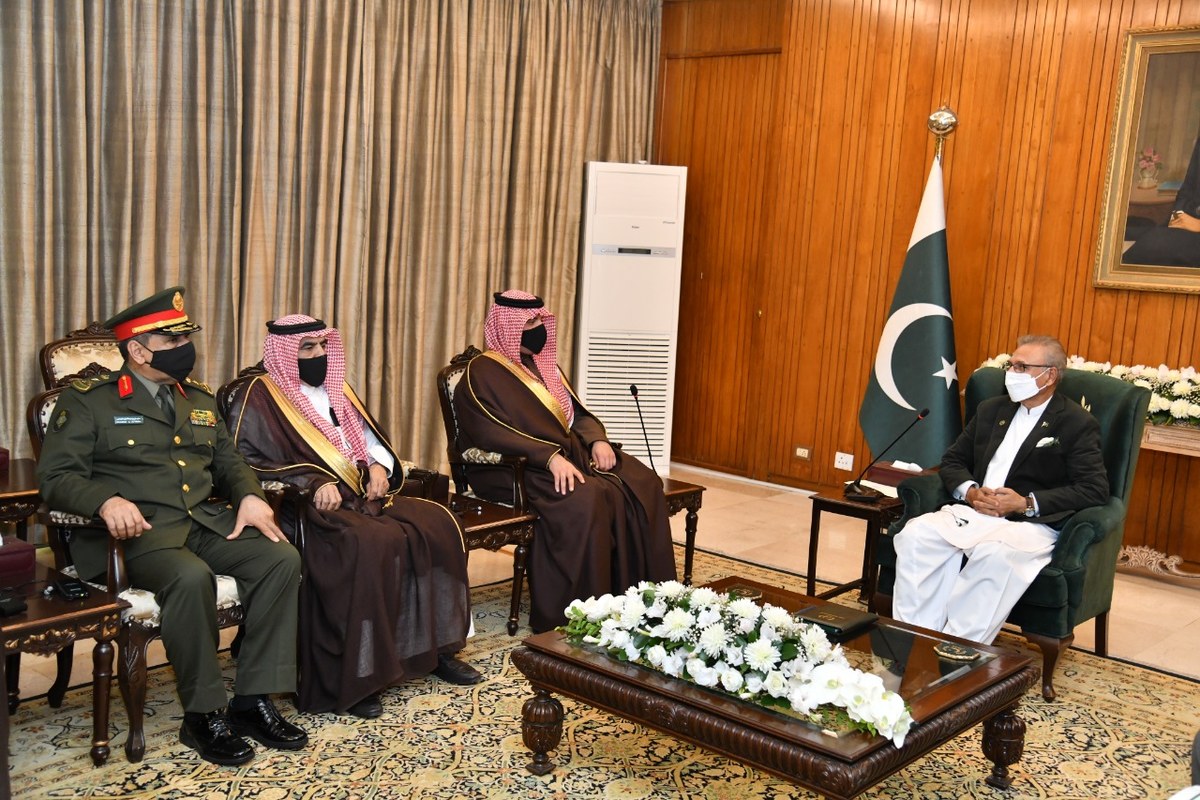
Saudi Interior Minister Prince Abdulaziz bin Saud bin Naif (third left) calls on President of Pakistan, Dr. Arif Alvi, in Islamabad, Pakistan, on February 7, 2022. (President of Pakistan/Twitter)
The Saudi interior minister hinted at including two more cities in the “Road to Makkah” project, Pakistani Religious Affairs Minister Noor ul Haq Qadri said.
“Both countries discussed further easing the visa and immigration process for Umrah and Hajj pilgrims from Pakistan but vowed to strictly implement COVID-19 guidelines,” Qadri was quoted as saying in a statement.
Tahir Mahmood Ashrafi, Pakistani PM’s aide on the Middle East, told Arab News both countries agreed to implement the prisoner release treaty.
“The Saudi interior minister has assured of the implementation of all agreements, including the prisoners release treaty, signed between the two countries,” Ashrafi said.
“The interior ministries of both countries will work together for speedy implementation of the prisoner release agreement.”
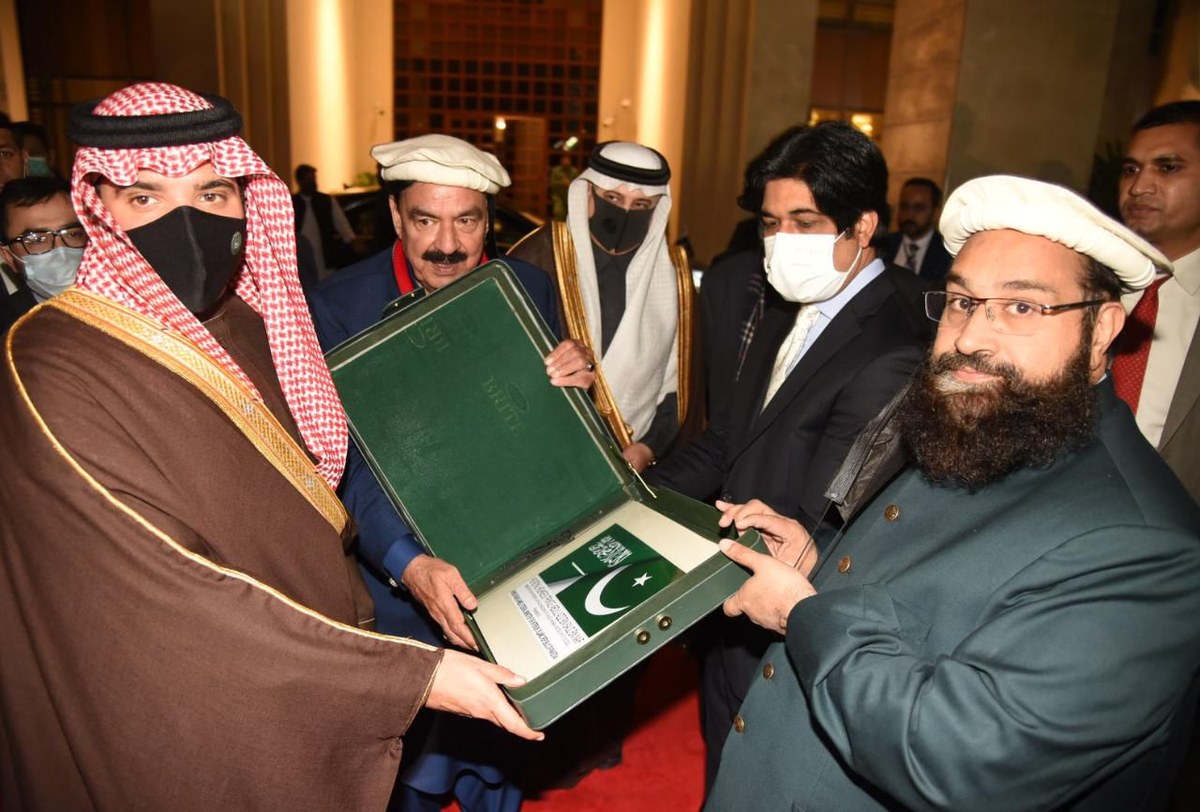
Tahir Mahmood Ashrafi (right), Pakistani PM’s aide on the Middle East, presents souvenir to Saudi Interior Minister Prince Abdulaziz bin Saud bin Naif (left) in Islamabad, Pakistan, on February 7, 2022. (PID)
The Saudi interior minister also held a meeting with his Pakistani counterpart, Sheikh Rashid Ahmed, in Islamabad.
The two officials agreed to further strengthen bilateral cooperation and increase connectivity between the ministries of interior, the Pakistani ministry said.
“Better liaison between the interior ministries of both countries was necessary to address different issues, including security challenges,” it said.
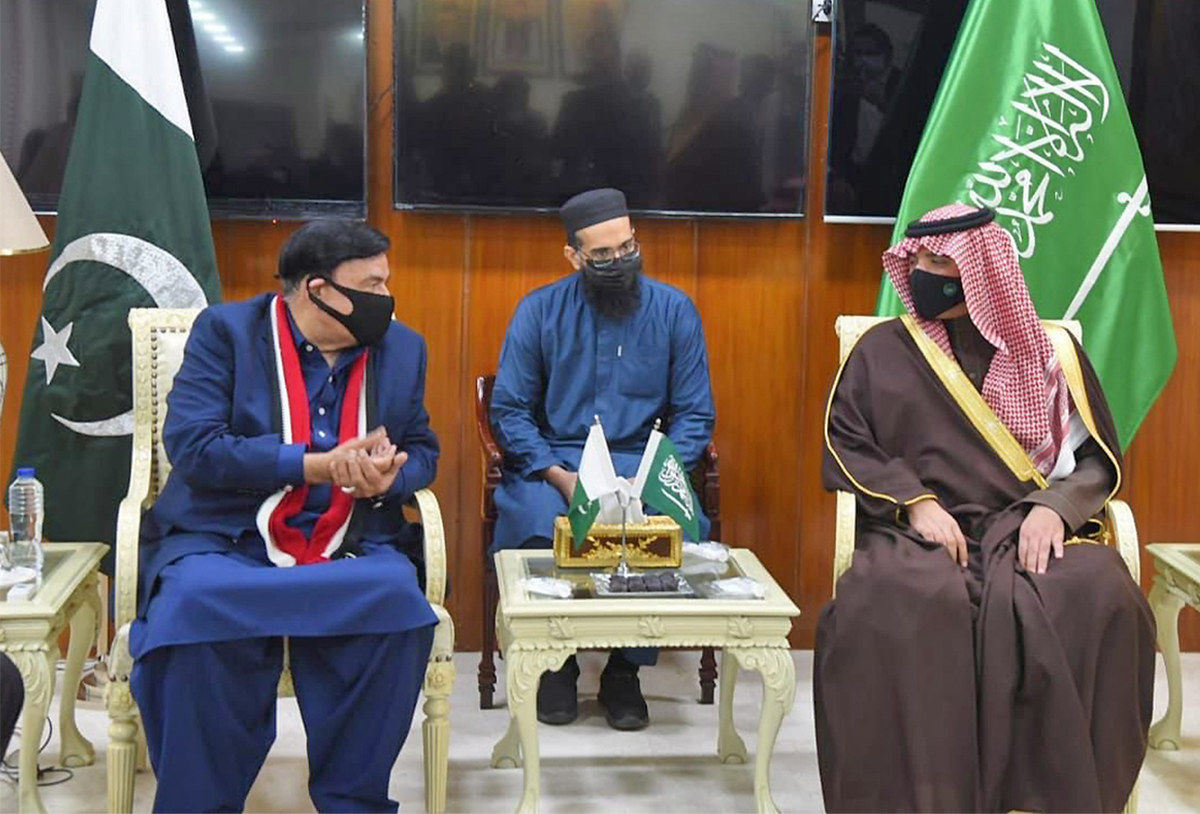
Pakistan's interior minister, Sheikh Rashid Ahmed (left), meets his Saudi Interior Minister Prince Abdulaziz bin Saud bin Naif in Islamabad, Pakistan, on February 7, 2022. (PTV/Twitter)
On the occasion, Prince Abdulaziz said relations between Pakistan and Saudi Arabia were based on mutual trust and Islamic brotherhood, according to the statement.
Ahmed told his Saudi counterpart that Pakistan attached great importance to its historic and brotherly relations with Saudi Arabia.
He said more than two million Pakistanis working in Saudi Arabia were their asset. “We are grateful to the Saudi government for the excellent care of Pakistani workers,” Ahmed added.
In his meeting with Pakistani Army Chief General Qamar Javed Bajwa, the visiting dignitary appreciated Pakistan's role in Afghanistan and efforts for border management and regional stability, the Pakistani military said.
Prince Abdulaziz pledged to play his part for further improvement in diplomatic cooperation with Pakistan at all levels, it added.
On the conclusion of the visit, Ahmed bid farewell to the Saudi interior minister at the Noor Khan Air Base in Rawalpindi.
He also presented a commemorative photo album to his Saudi counterpart on his visit.


