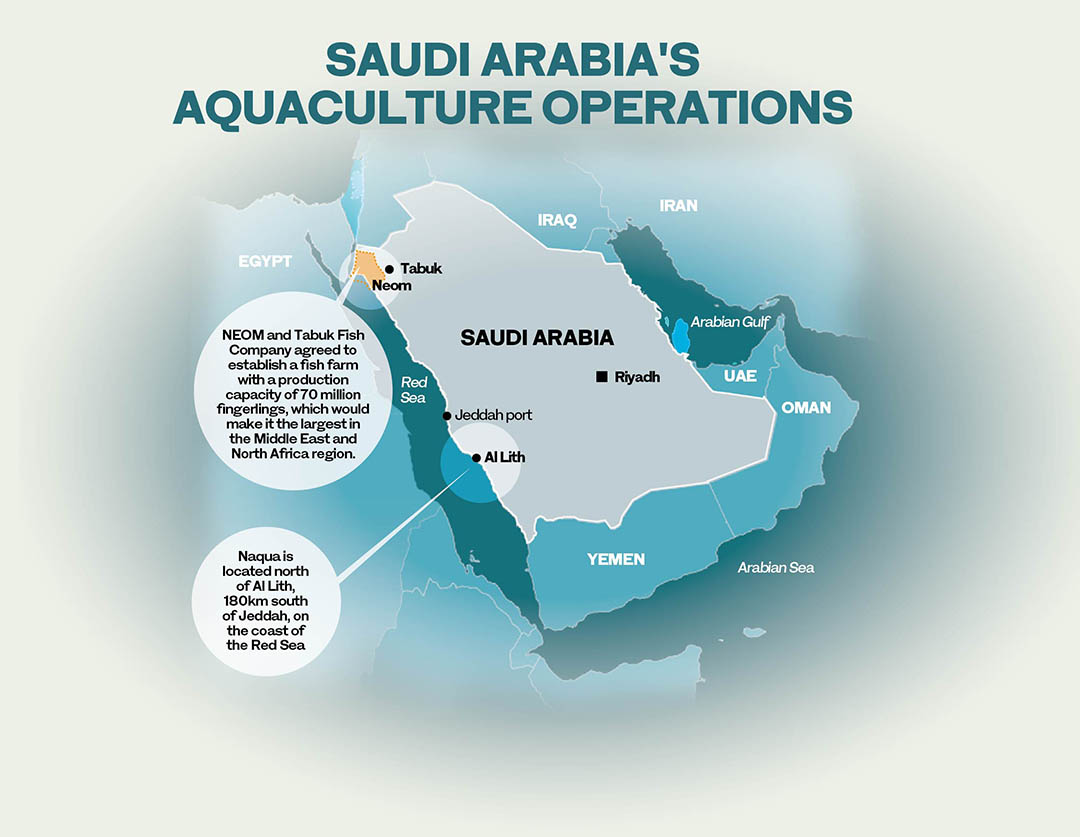
RIYADH: The National Fisheries Development Program plans to attract over $4 billion of foreign and local investment into Saudi Arabia’s fishing industry as part of the Kingdom’s Vision 2030 scheme to diversify the economy.
The man tasked with making this happen over the next eight years is NFPD CEO Dr Ali Al-Shaikhi. His body is mandated by the government to expand the country’s seafood industry, boost food security and grow agricultural exports.
Al-Shaikhi told Arab News: “This was an idea that in 2010 transformed into an initiative. A steering committee hired KPMG to study the potential of the Kingdom’s seafood sector.
“The committee also visited many countries to study aquaculture, and they assessed potential Saudi seafood production, at over one million tons. A market study discovered that KSA seafood consumption per capita was less than 50 percent of the global average — 11 kilos rather than 24.
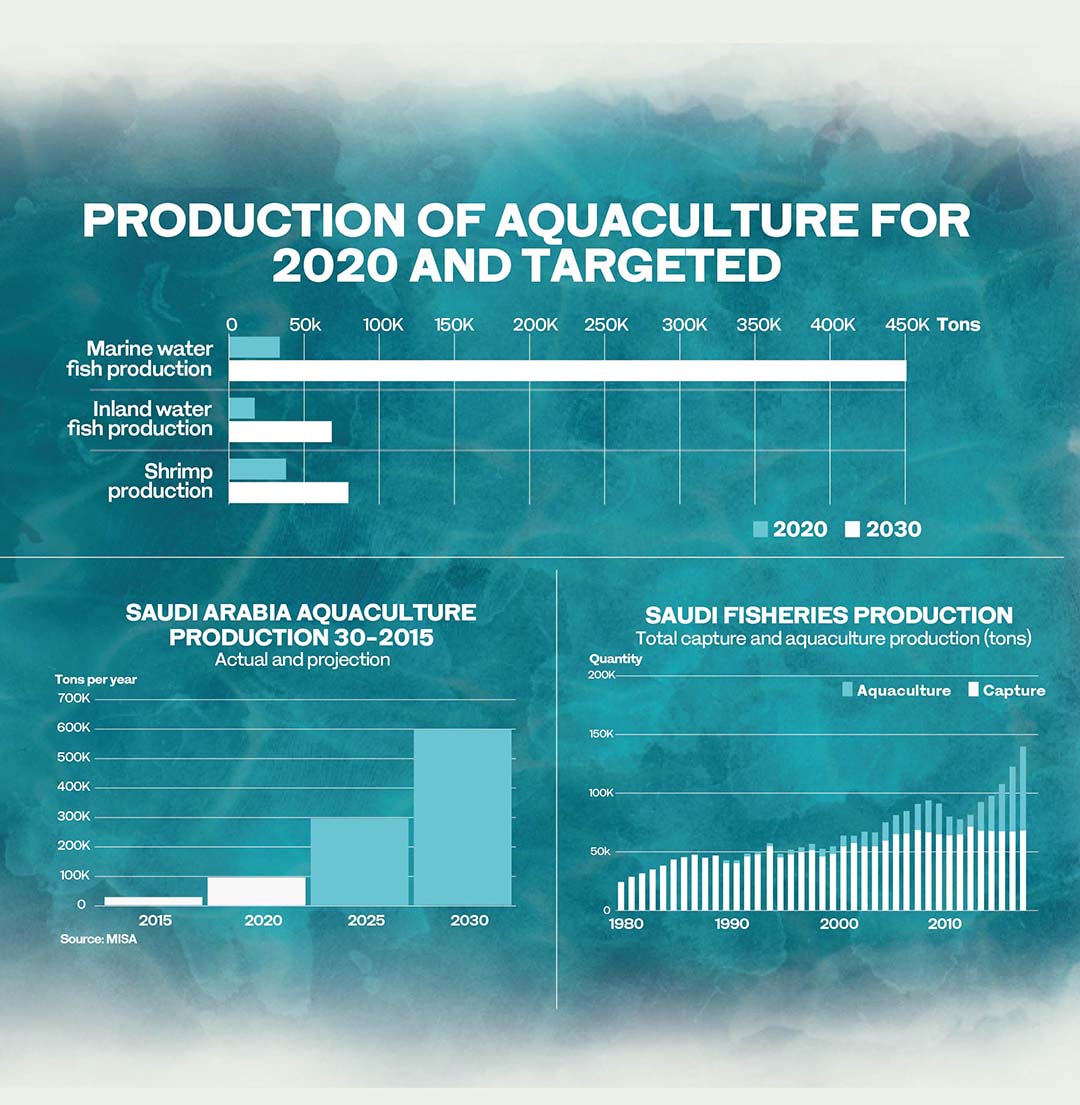
“Four years later, the committee’s report spelled out a clear strategy — to improve our aquaculture production facilities, and to increase production capacity. This was approved by the Royal Court, which assigned a program to implement the strategy.”
Al-Shaikhi joined the NFPD in 2017 after serving in the National Aquaculture Group and the Almarai food company
He said: “The NFDP works with the government and the private sector. We have a very good team and we have moved fast.
“We are focused on job creation, protecting the local markets and improving and promoting our seafood industry.”
He added: “We are preparing the platform for investment. We have spent almost SR300 million ($80 million) over the last three years only on research — carrying out feasibility studies, measuring environmental impacts, identifying the right species to be cultivated, calculating feed consumption rates and so on.
“We have created hatcheries for fish and fish feed and we are developing food processing techniques. Once all these critical elements are in place, the investor or farmer will have all the knowledge required and can just focus on production.
“Now we are working with the private sector to achieve our goals. We identify investment opportunities and make it easier and faster to invest in terms of new regulations and government support.”
Fishing is an age-old tradition in the Gulf, but aquaculture — the artificial raising, harvesting and processing of marine products — is an increasingly ‘smart’ industry demanding a range of specialized skills. How is Saudi Arabia preparing to meet this challenge?
“At present over 3,000 Saudis technicians are employed in our aquaculture sector,” Al-Shaikhi said. “We do not yet have academic colleges specific to aquaculture in the KSA, so we will help young Saudis to study aquaculture abroad.
“We are launching an initiative to develop one hundred Saudi [citizens] as aquaculture leaders — with 70 percent of funds coming from the private sector and 30 percen from the government.
“And we just signed an agreement with a local academic facility to train 3,000 Saudis for the aquaculture and fisheries sector. Foreign academics are coming in, so we will have knowledge transfer from them as well as from international governments we cooperate with.”
Al-Shaikhi noted: “Aquaculture is one of the fastest-growing areas in the food sector. Worldwide it's growing 6 percent per year. This contributes to food security, job creation and rural development — and it’s sustainable in terms of the environment and climate change.
“Aquaculture is one of the key elements that will improve the quality of life in many countries, and of course, we want this to happen in Saudi Arabia.”