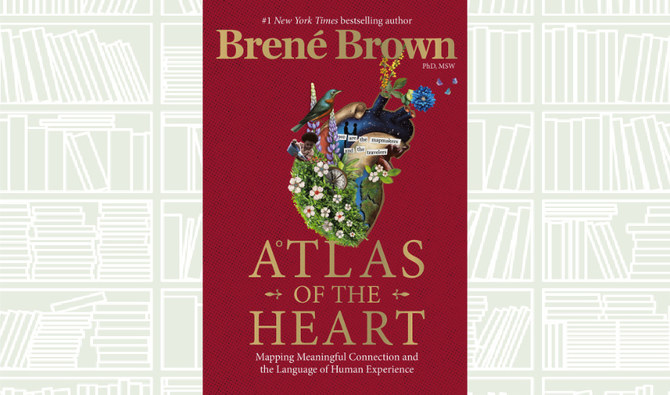
“Atlas of The Heart” is a nonfiction self-help book written by American professor, author and podcast host Brené Brown.
The book is centered on the idea of recognizing and understanding human emotion in depth, giving meaning to every fleeting feeling or rush of emotions.
It walks the reader through 87 emotional experiences, shedding light on the ways in which individuals can navigate the intensity of these emotions and cultivate an understanding of the human psyche.
The author trains us to use language and mind mapping in identifying and articulating these sentiments.
Published in 2021, “Atlas of The Heart” is a USA Today bestseller, and was turned into an eight-episode HBO Max television series.


![]()

What We Are Reading Today: ‘Atlas of The Heart’
Short Url
https://arab.news/ptybp
What We Are Reading Today: ‘Atlas of The Heart’


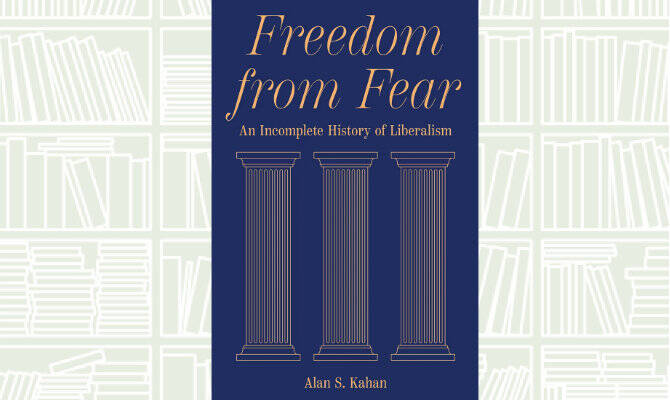
What We Are Reading Today: Freedom from Fear by Alan Kahan
“Freedom from Fear” offers a striking new account of the dominant political and social theory of our time: liberalism. In a pathbreaking reframing of the historical debate, Alan Kahan charts the development of Western liberalism from the late eighteenth century to the present.
Examining key liberal thinkers and issues, Kahan shows how liberalism is both a response to fear and a source of hope: the search for a world in which no one need be afraid.
“Freedom from Fear” reveals how liberal arguments typically rely on three pillars: freedom, markets, and morals.
But when liberals ignore one or more of these pillars, their arguments generally fail to persuade.


Latest updates




© 2026 SAUDI RESEARCH & PUBLISHING COMPANY, All Rights Reserved And subject to Terms of Use Agreement.