Jeweler Azza Fahmy discusses her new book, inspiration behind designs

Fahmy will have a discussion session at the event during which she will speak about her autobiography “Never Ending Dreams.” (Instagram)
Short Url
Updated 03 February 2022
Follow

Jeweler Azza Fahmy discusses her new book, inspiration behind designs

DUBAI: The UAE’s Emirates Airline Festival of Literature is returning for its 2022 edition with a stellar lineup of creatives, including renowned Egyptian jeweler Azza Fahmy. 

The designer has been showcasing Middle Eastern style to the world for over 50 years. Her clientele list includes Julia Roberts, Shailene Woodley, Naomi Watts, Vanessa Hudgens, Joss Stone, Rihanna and more. 

Ahead of the event, which is set to take place from Feb. 3-12, Fahmy spoke to Arab News about her participation at the festival’s 14th edition. 

“It is truly an honor for me to be part of one of the world’s leading international literary festivals among local and world-famous authors,” she said.
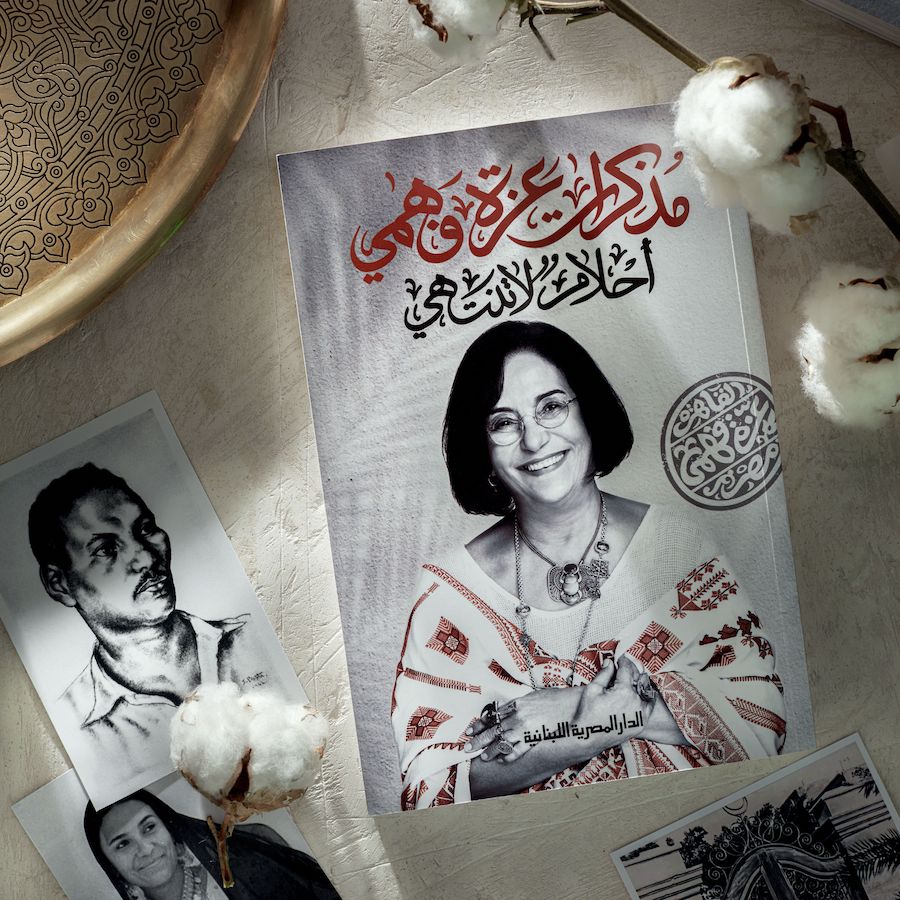


The title of her book, she says, is a reflection of her reality. (Supplied)

Fahmy, who is also an author, will have a discussion session at the event during which she will speak about her autobiography “Never Ending Dreams.” 

“I am also proud to be sharing my story, which not only represents me and the Azza Fahmy brand but also touches on important places, people, cultures and lessons for younger generations,” added Fahmy.

The title of her book, she says, is a reflection of her reality. “I still have so many more dreams that I want to bring to life, and my autobiography was definitely one of them,” she said. 

In the book, which took three years to finish, Fahmy writes about everything from her childhood to celebrating 50 years of her brand.


In the book, which took three years to finish, Fahmy writes about everything from her childhood to celebrating 50 years of her brand. (Supplied)

Before writing her autobiography, Fahmy feared that she would not be a “good writer.”

“I had many requests to have a ghostwriter help me, but I insisted on writing the book myself because no one had the ability to tell my journey better than I could. After I overcame my fear, I realized that I truly enjoyed writing,” she explained. 

The main reason she wrote her autobiography was to inspire young entrepreneurs to pursue their dreams.

“I tell the story of my successful journey with all its ups and downs. My only advice would be to never give up and to keep going until you achieve your dreams,” she said. 

Fahmy’s business is conceived, run and driven by women. There is Fahmy herself, the chairwoman and creative director; her elder daughter Fatma, who is managing director; and her younger daughter Amina, who is head of design.

The key element to the success of her brand, in her opinion, is passion.

“Being passionate about what you do will always be apparent to your customers, especially when it comes to designs,” she said. 

“I like to believe that I am an artist. I see the world from a certain perspective and translate that into my pieces. I turned my love and passion for jewelry making into the brand as it’s known today,” added the entrepreneur. 

The jeweler finds inspiration in everything she comes across, including music, museums, cultures, people and poems. 

“Every collection we release is well researched. For instance, our Pharaonic collection took eight years to produce. I wanted to make sure that every detail I added to the pieces was an accurate representation of Ancient Egypt,” she said.

Despite the development of the design-making process over the years, Fahmy believes in the importance of preserving and evolving techniques that were used years ago. 

“When every piece is handcrafted to tell a unique story, there is no doubt that the piece will speak more to its wearer,” she said. 

There are 18 Azza Fahmy shops in Egypt, Jordan, Dubai and London. 

Opening a store in Saudi Arabia is a plan in the works, said the designer. “We noticed a lot of potential through our online store. We hope that we will be able to have a presence there soon.” 


Global gems go under the hammer 

Updated 16 January 2026
Follow

Global gems go under the hammer 

  • International highlights from Sotheby’s ‘Origins II’ auction, which takes place Jan. 31 in Diriyah 

Andy Warhol 

‘Muhammad Ali’ 

Arguably the most famous name in pop art meets arguably the most famous sportsman of the 20th century in this set of four screen prints from 1978, created at the behest of US investment banker Richard Weisman. “I felt putting the series together was natural, in that two of the most popular leisure activities at the time were sports and art, yet to my knowledge they had no direct connection,” Weisman said in 2007. “Therefore I thought that having Andy do the series would inspire people who loved sport to come into galleries, maybe for the first time, and people who liked art would take their first look at a sports superstar.” Warhol travelled to Ali’s training camp to take Polaroids for his research, and was “arrested by the serene focus underlying Ali’s power — his contemplative stillness, his inward discipline,” the auction catalogue states. 

Jean-Michel Basquiat 

‘Untitled’ 

Basquiat “emerged from New York’s downtown scene to become one of the most influential artists of the late 20th century,” Sotheby’s says. The largely self-taught artist’s 1985 work, seen here, “stands as a vivid testament to (his) singular ability to transform drawing into a site of intellectual inquiry, cultural memory, and visceral self-expression.” Basquiat, who was of Caribbean and Puerto Rican heritage, “developed a visual language of extraordinary immediacy and intelligence, in which image and text collide with raw urgency,” the catalogue continues. 

Camille Pissarro 

‘Vue de Zevekote, Knokke’ 

The “Knokke” of the title is Knokke-sur-Mer, a Belgian seaside village, where the hugely influential French-Danish Impressionist stayed in the summer of 1894 and produced 14 paintings, including this one. The village, Sotheby’s says, appealed to Pissarro’s “enduring interest in provincial life.” In this work, “staccato brushstrokes, reminiscent of Pissarro’s paintings of the 1880s, coalesce with the earthy color palette of his later work. The resulting landscape, bathed in a sunlit glow, celebrates the quaint rural environments for which (he) is best known.” 

David Hockney 

‘5 May’ 

This iPad drawing comes from the celebrated English artist’s 2011 series “Arrival of Spring in Woldgate, East Yorkshire in 2011,” which Sotheby’s describes as “one of the artist’s most vibrant and ambitious explorations of landscape, perception, and technological possibility.” Each image in the series documents “subtle shifts in color, light and atmosphere” on the same stretch of the Woldgate, “showing the landscape as something experienced over time rather than frozen in an instant.” The catalogue notes that spring has long been an inspiration for European artists, but says that “no artist has ever observed it so closely, with such fascinated and loving attention, nor recorded it in such detail as an evolving process.” 

Zarina  

‘Morning’ 

Sotheby’s describes Indian artist Zarina Hashmi — known by her first name — as “one of the most compelling figures in post-war international art — an artist whose spare, meditative works distilled the tumult of a peripatetic life into visual form.” She was born in Aligarh, British India, and “the tragedy of the 1947 Partition (shaped) a lifelong meditation on the nature of home as both physical place and spiritual concept.” This piece comes from a series of 36 woodcuts Zarina produced under the title “Home is a Foreign Place.” 

George Condo 

‘Untitled’ 

This 2016 oil-on-linen painting is the perfect example of what the US artist has called “psychological cubism,” which Sotheby’s defines as “a radical reconfiguration of the human figure that fractures identity into simultaneous emotional and perceptual states.” It’s a piece that “distills decades of inquiry into the mechanics of portraiture, drawing upon art-historical precedent while decisively asserting a contemporary idiom that is at once incisive and darkly humorous,” the catalogue notes, adding that the work is “searing with psychological tension and painterly bravura.”