

Boulevard Riyadh City celebrates Chinese New Year

1 / 2
Chinese New Year starts after the rising of the second new moon after the winter solstice. (Supplied)
2 / 2
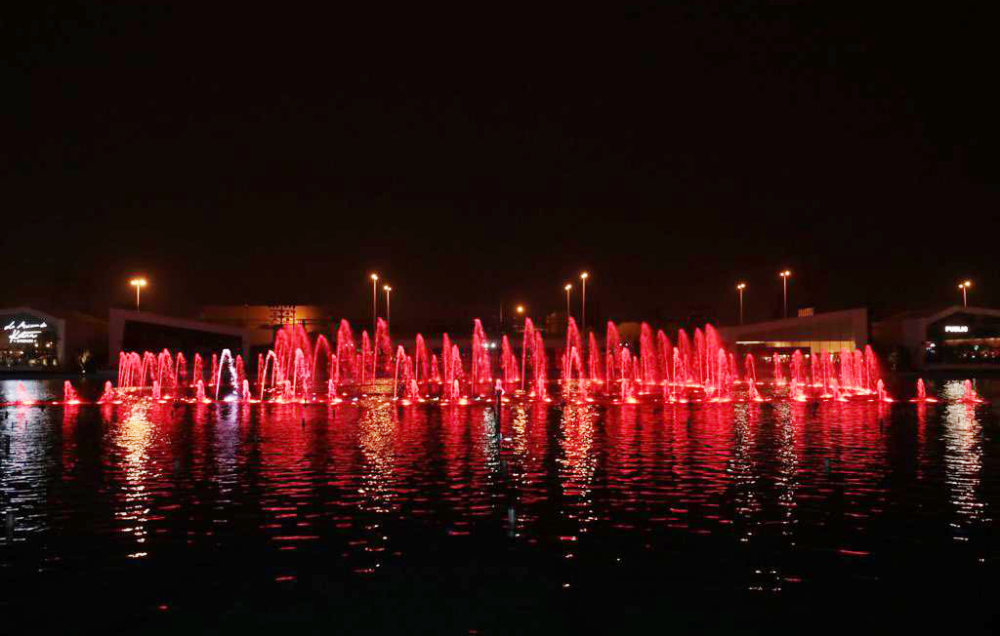
Chinese New Year starts after the rising of the second new moon after the winter solstice. (Supplied)
Short Url
Updated 02 February 2022
Follow

Boulevard Riyadh City celebrates Chinese New Year

  • This year marks the Year of the Tiger in Chinese culture, which is the third of the 12 Chinese zodiac animals

RIYADH: The iconic Boulevard Riyadh City celebrated Chinese New Year in the heart of the Saudi capital, amid the ongoing Riyadh Season festivals, reaffirming the importance of the cultural exchange between Saudi Arabia and China.
Chinese New Year, also known as the Lunar New Year, starts after the rising of the second new moon after the winter solstice.
The date usually falls between Jan. 21 and Feb. 20 on the Gregorian calendar, and is one of the most celebrated occasions in the world, a statement from the Riyadh Season said on Tuesday.
This year marks the Year of the Tiger in Chinese culture, which is the third of the 12 Chinese zodiac animals.
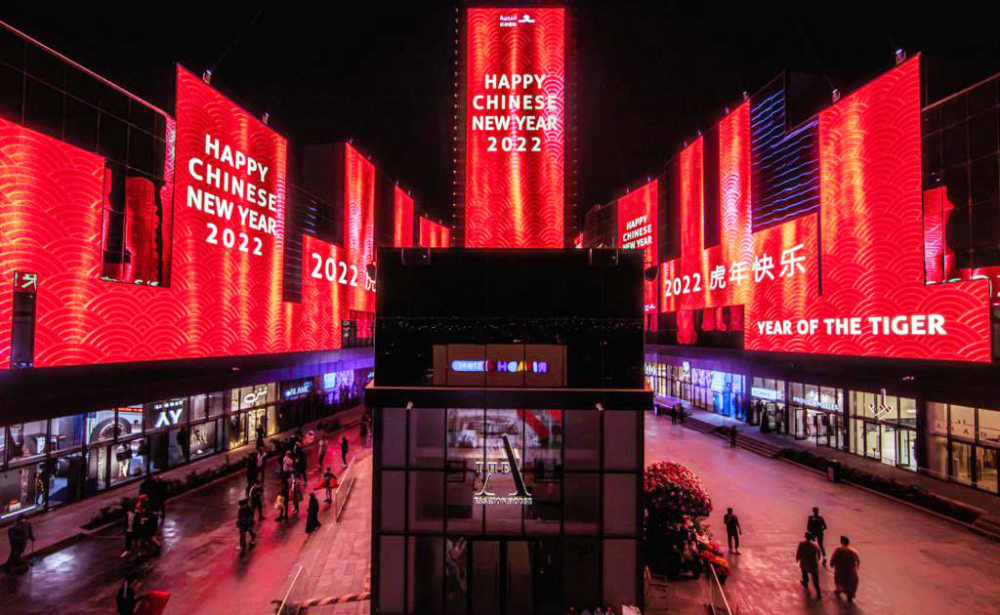
The celebration took several forms across the zone; all of its screens were lit red by midnight, displaying beautiful Chinese cultural images such as traditional Chinese houses and red lanterns, with congratulatory remarks written in Chinese, Arabic, and English.

HIGHLIGHTS

• The celebration took several forms across the zone; all of its screens were lit red by midnight, displaying beautiful Chinese cultural images such as traditional Chinese houses and red lanterns, with congratulatory remarks written in Chinese, Arabic, and English.

• The dancing fountain performed in harmony to traditional Chinese music, while the water splashes reflected red lights beneath for a breathtaking display.

The dancing fountain performed in harmony to traditional Chinese music, while the water splashes reflected red lights beneath for a breathtaking display.
Chen Weiqing, the Chinese ambassador to Saudi Arabia, praised the display on Twitter, describing it as a nice gesture.
Retweeting a tweet from Turki Al-Sheikh, CEO of the General Entertainment Authority and chairman of Riyadh Season, the ambassador tweeted: “Thanks for the nice gesture, Abu Nasser. I hope that the Chinese New Year will be a year of good and blessings for the two friendly people, and that China and Saudi Arabia will continue their fruitful cooperation and common achievements.”
Al-Sheikh tweeted colorful images of the Chinese New Year celebrations with a caption “Boulevard celebrating the Chinese New Year.”
In another tweet, Weiqing greeted people, saying: “As the Lunar New Year of the Year of the Tiger looms, we wish everyone a Happy New Year, and hope that the Chinese and Arab Tigers go hand in hand to create a better future.”


Experimental farm in Al-Lith looks into future of Saudi Arabian agriculture

Updated 01 February 2026
Follow

Experimental farm in Al-Lith looks into future of Saudi Arabian agriculture

  • Research initiative reflects strategic transformation

JEDDAH: An experimental farm in Saudi Arabia’s Al-Lith Governorate is one of the research initiatives reflecting the strategic transformation taking place in the Kingdom’s agricultural sector.

The farm uses highly efficient, sustainable production models that combine scientific research with commercial application, contributing to strengthening the country’s food security system and the sustainability of water resources.

Located in the Ghumaiqa Center on an area of about 10 hectares, the cutting-edge farm is a testing platform for modern agricultural technologies that tackle the challenge of water scarcity.

The farm includes developed open fields and modern greenhouses, supported by smart irrigation encompassing drip and sprinkler irrigation alongside surface and subsurface technologies.

All the systems operate via smart controls that enable the monitoring of water consumption and ensure improved efficiency, thereby achieving a balance between agricultural production and water conservation.

The farm also uses treated and diluted low-salinity seawater.

It aims to diversify agricultural water sources, reduce reliance on freshwater, and open new horizons for agriculture in coastal and semi-arid environments.

The project represents a promising investment opportunity in the field of smart agriculture, enabling the development of commercially scalable production models, particularly for high-value vegetables and fruits, while reducing operational costs associated with water and energy, enhancing the economic feasibility of future agricultural projects.

In addition, the project contributes to transferring and localizing agricultural expertise, supporting local food supply chains, and creating an attractive environment for agricultural investment.

This aligns with Sustainable Development Goals and enhances the efficiency of the private sector in adopting innovative agricultural solutions.

Yahya bin Abdulrahman Al-Mahabi, the director of the Ministry of Environment, Water and Agriculture office in Al-Lith Governorate, told the Saudi Press Agency that the project represented the future of agriculture in the Kingdom.

He explained that the vision was based on investing in technology, enhancing the return on water per unit, and integrating scientific research with investment opportunities.

Al-Mahabi spoke of the experimental farm as a modern, scalable and replicable model applicable in several regions of the Kingdom, particularly in coastal environments.

Al-Mahabi highlighted the Ministry of Environment, Water and Agriculture’s commitment to supporting distinctive projects that contributed to achieving food security while developing rural areas and enhancing agricultural production efficiency, in line with the objectives of the Kingdom’s Vision 2030.