

Police seek ban on PUBG after Pakistani teenager kills mother, siblings

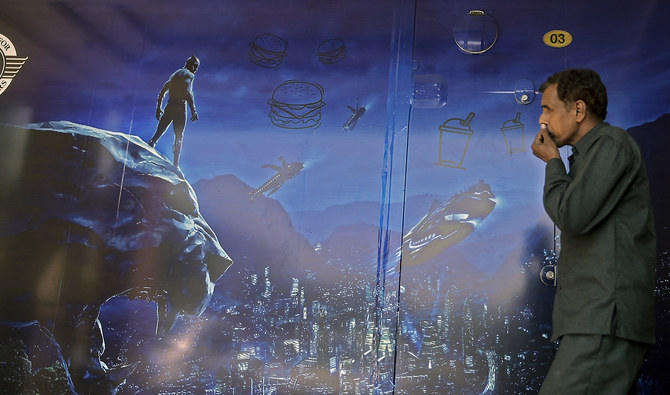
A man walks past a poster of online game PlayerUnknown's Battlegrounds (PUBG) in Rawalpindi, Pakistan, on July 13, 2020. (AFP/File)
Short Url
Updated 28 January 2022
Follow

Police seek ban on PUBG after Pakistani teenager kills mother, siblings

  • Police say the teenager had admitted to killing his family members as he was under 'mental stress' due to repeated defeats in the game
  • Pakistan's media regulator banned PUBG in July 2020, but the ban was lifted the same month by the Islamabad High Court

ISLAMABAD: Punjab police on Friday recommended that the government ban online game PlayerUnknown's Battlegrounds (PUBG) in relation to last week's incident in Lahore, in which a teenager shot dead his mother and siblings.

Police said the teenager had admitted to killing his mother, two sisters and brother as he was under “mental stress” that was increased by his repeated defeats in the game. The suspect told police he had thought that, like in the game, his family members would reappear after having been killed.

“To stop acts of violence caused by this game, it is necessary to ban PUBG,” the police said. “Youngsters addicted to completing the game’s tasks eventually commit acts of violence.”

Police appealed to parents to keep an eye on their children as "such activities can result in irreparable losses."

Pakistan had banned PUBG in July 2020, after Pakistan Telecommunication Authority said it had received numerous complaints that the game "affects physical and mental health" of children and teenagers.

“The game is highly addictive, destroying the youth, a wastage of time and has a negative impact on physical and psychological health,” the PTA said in its report at the time.

The ban was lifted the same month by the Islamabad High Court.


Pakistan to begin first phase of Hajj 2026 trainings from today

Updated 31 December 2025
Follow

Pakistan to begin first phase of Hajj 2026 trainings from today

  • Training programs to be held in phases across Pakistan till February, says religion ministry
  • Saudi Arabia allocated Pakistan a total quota of 179,210 pilgrims for Hajj 2026

ISLAMABAD: Pakistan’s religious affairs ministry has said that it will begin the first phase of mandatory Hajj 2026 training for pilgrims intending to perform the pilgrimage from today, Thursday.

The one-day Hajj training programs will be held in phases across the country at the tehsil level until February. The ministry directed intending pilgrims to bring their original identity cards and the computerized receipt of their Hajj application to attend the training sessions.

“Pilgrims should attend the one-day training program according to their scheduled date,” Pakistan’s Ministry of Religious Affairs (MoRA) said in a statement.

The ministry said training schedules are being shared through the government’s Pak Hajj 2026 mobile application as well as via SMS. It added that details of the schedule are also available on its website.

According to the ministry, training programs will be held in Abbottabad on Jan. 2; Ghotki, Thatta and Kotli on Jan. 3; and Tando Muhammad Khan and Khairpur on Jan. 4.

Hajj training sessions will be held in Rawalakot, Badin and Naushahro Feroze on Jan. 5, while pilgrims in Fateh Jang, Dadu and Tharparkar will receive the training on Jan. 6.

The ministry said training programs will be conducted in Umerkot and Larkana on Jan. 7, followed by sessions in Mirpurkhas, Shahdadkot and Mansehra on Jan. 8.

Pakistan’s religious affairs ministry has previously said these trainings will be conducted by experienced trainers and scholars using multimedia.

It said the training has been made mandatory to ensure that intending pilgrims are fully aware of Hajj rituals and administrative procedures.

Saudi Arabia has allocated Pakistan a quota of 179,210 pilgrims for Hajj 2026, of which around 118,000 seats have been reserved under the government scheme, while the remainder will be allocated to private tour operators.

Under Pakistan’s Hajj scheme, the estimated cost of the government package ranges from Rs1,150,000 to Rs1,250,000 ($4,049.93 to $4,236), subject to final agreements with service providers.