BERLIN: Austria will end its lockdown for unvaccinated residents next Monday — one day before a COVID-19 vaccine mandate takes effect in the country, the government announced Wednesday, according to Austrian news agency APA.
Austrian Chancellor Karl Nehammer and Health Minister Wolfgang Mueckstein said the measure, which was introduced in November, was no longer needed because there was no threat of hospital intensive care units being overstretched, APA reported.
For weeks, the lockdown for the unvaccinated has been “a measure that many people complained about, but that was unavoidable for health policy reasons,” Nehammer said.
On Feb. 1, a COVID-19 vaccine mandate for adults — the first of its kind in Europe — will take effect in the small Alpine country. Officials have said the mandate is necessary because vaccination rates remain too low. They say it will ensure that Austria’s hospitals are not overwhelmed with COVID-19 patients. So far, 75.4 percent of the country’s residents have been fully vaccinated.
Once the mandate goes into effect, authorities will write to every household to inform them of the new rules.
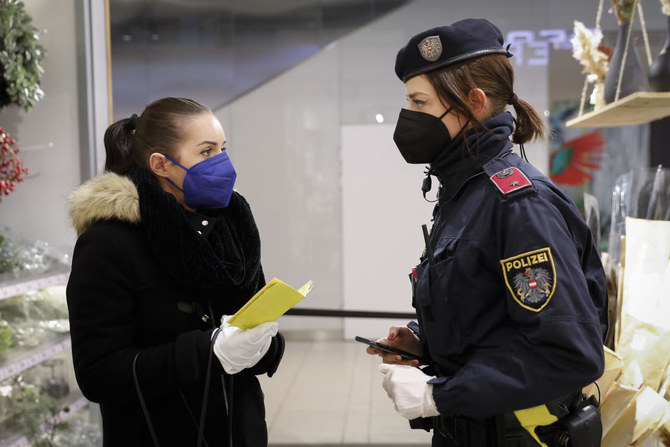
From mid-March, police will start checking people’s vaccination status during routine checks; people who can’t produce proof of vaccination will be asked to do so in writing, and will be fined up to 600 euros ($676) if they don’t.
If authorities judge the country’s vaccination progress still to be insufficient, Nehammer said earlier this month, they would then send reminders to people who remain unvaccinated. If even that doesn’t work, people would be sent a vaccination appointment and fined if they don’t keep it. Officials hope they won’t need to use the last measure. Fines could reach 3,600 euros if people contest their punishment and full proceedings are opened.

Austria to lift lockdown for unvaccinated residents
https://arab.news/nwttg
Austria to lift lockdown for unvaccinated residents
- Once the mandate goes into effect, authorities will write to every household to inform them of the new rules
UN experts concerned by treatment of Palestine Action-linked hunger strikers
- Eight prisoners awaiting trial for alleged offences connected to the group have taken part in the protest
LONDON: UN human rights experts have raised concerns about the treatment of prisoners linked to Palestine Action who have been on hunger strike while on remand, warning it may breach the UK’s international human rights obligations.
Eight prisoners awaiting trial for alleged offences connected to the group have taken part in the protest, reported The Guardian on Friday.
Among them are Qesser Zuhrah and Amu Gib, who were on hunger strike at HMP Bronzefield from Nov. 2 to Dec. 23, and Heba Muraisi, held at HMP New Hall. Others include Teuta Hoxha, Kamran Ahmed and Lewie Chiaramello, who has refused food on alternate days due to diabetes.
Zuhrah and Gib temporarily resumed eating this week because of deteriorating health but said they plan to resume the hunger strike next year, according to Prisoners for Palestine.
In a statement issued on Friday, UN special rapporteurs, including Gina Romero and Francesca Albanese, said the handling of the prisoners was alarming.
“Hunger strike is often a measure of last resort by people who believe that their rights to protest and effective remedy have been exhausted. The state’s duty of care toward hunger strikers is heightened, not diminished,” they said.
Three of the prisoners were in hospital at the same time on Sunday, with Ahmed admitted on three occasions since the hunger strike began.
The experts said: “Authorities must ensure timely access to emergency and hospital care when clinically indicated, refrain from actions that may amount to pressure or retaliation, and respect medical ethics.”
Prisoners for Palestine has alleged that prison staff initially denied ambulance access for Zuhrah during a medical emergency last week, with hospital treatment only provided after protesters gathered outside the prison.
“These reports raise serious questions about compliance with international human rights law and standards, including obligations to protect life and prevent cruel, inhuman or degrading treatment,” the experts said, adding: “Preventable deaths in custody are never acceptable. The state bears full responsibility for the lives and wellbeing of those it detains. Urgent action is required now.”
Families and supporters have called for a meeting with Justice Secretary David Lammy, while lawyers claim the Ministry of Justice has failed to follow its own policy on handling hunger strikes.
Government officials are understood to be concerned about the prisoners’ condition but cautious about setting a wider precedent.


