

Punjab leads in performance among Pakistani provinces — survey 

Pakistanis gather in front of the Minar-e-Pakistan, the historic monument for the struggle for independence, ahead of the country's Independence Day in Lahore on August 13, 2013. (AFP/FILE)
Short Url
Updated 19 January 2022
Follow

Punjab leads in performance among Pakistani provinces — survey 

  • 51 percent of respondents satisfied with Punjab chief minister’s performance in terms of development
  • Chief minister of Sindh was seen as performing worst in the same field, with only 38 percent approval

ISLAMABAD: The Punjab chief minister’s approval ratings in terms of performance in the past three years are the highest among all Pakistani provincial chiefs, a recent survey by the Institute for Public Opinion Research has found.
The study was conducted between Dec. 22, 2021 and Jan. 9, 2022, involving 3,769 respondents in Punjab, Khyber Pakhtunkhwa, Sindh and Balochistan.
The Punjab chief minister, Usman Buzdar, was elected to the post after the Pakistan Tehreek-e-Insaf (PTI) party won the general elections 2018.
IPOR said: “45 percent of the Respondents from Punjab said CM Punjab Sardar Usman Ahmed Khan Buzdar (is) performing better in his province, 41 percent from KP said CM KP Mehmood Khan, 38 percent from Sindh said CM Sindh Murad Ali Shah and 32 percent from Balochistan rated Mir Abdul Quddus Bizenjo performance as better.”
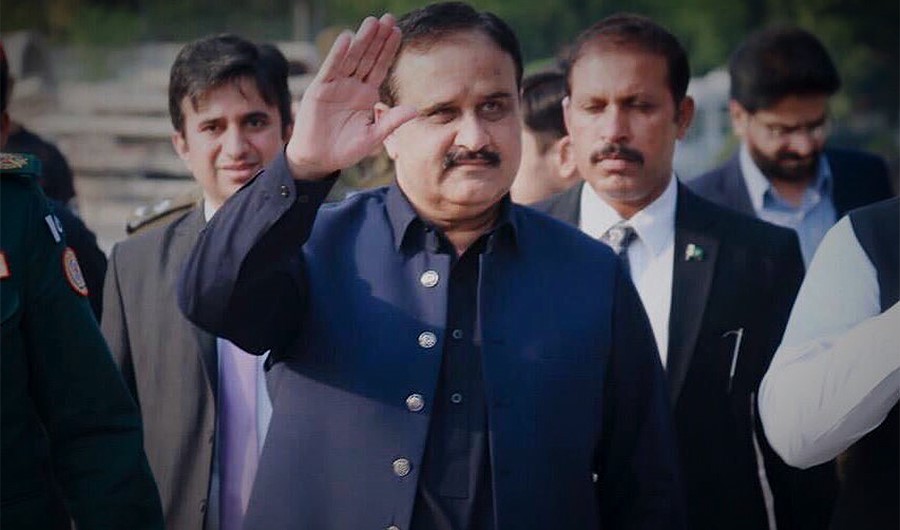


The undated file photo shows Punjab Chief Minister Sardar Usman Buzdar. (Photo courtesy: social media)

Buzdar has been often criticized by the opposition for what they refer to as lackluster performance, while Prime Minister Imran Khan has often backed him saying he spearheads important public development projects.
The survey showed Buzdar ahead of other provincial chief ministers in terms of development, with 51 percent of respondents expressing their satisfaction. He was followed by the Khyber Pakhtunkhwa chief who scored 48 percent, Balochistan chief with 43 percent, while the chief minister of Sindh was seen as performing worst, with only 38 percent approval.
About 86 percent of respondents said they were satisfied with Punjab’s public education facilities. In Khyber Pakhtunkhwa, around 80 percent were in favor of the local government, in Balochistan 62 percent, and in Sindh 58 percent.
Seventy-two percent of respondents were satisfied with Punjab’s public health facilities, followed by Khyber Pakhtunkhwa at 67 percent, Balochistan at 56 percent, and Sindh at 53 percent.
Punjab ranked second highest in terms of services provided by the provincial government, with 61 percent of respondents expressing satisfaction. Khyber Pakhtunkhwa topped in this category with 69 percent, while Balochistan and Sindh scored 54 percent and 50 percent respectively.


Pakistan, UK discuss regional security, cross-border attacks as senior official visits Islamabad

Updated 20 January 2026
Follow

Pakistan, UK discuss regional security, cross-border attacks as senior official visits Islamabad

  • British envoy for Afghanistan Richard Lindsay’s visit comes at a time of a surge in militancy in Pakistan’s border regions
  • Pakistani diplomat says both sides reviewed broader security challenges, emphasized coordination to address ‘shared concerns’

ISLAMABAD: Pakistani and British officials have discussed regional security challenges and cross-border attacks during talks in Islamabad, a Pakistani diplomat said on Tuesday, during a visit of the United Kingdom’s Afghanistan envoy, Richard Lindsay, to the Pakistani capital.

Pakistan and the UK regularly cooperate on counterterrorism and security, with a focus on intelligence-sharing to combat militant activity. Lindsay’s visit comes at a time of a rise in militancy in Pakistan’s western provinces, which border Afghanistan.

Mohammad Sadiq, Pakistan’s special representative for Afghanistan, said the discussions in Islamabad focused on the regional security situation, particularly the urgent challenge posed by cross-border attacks.

“We also exchanged views on the latest regional security developments and broader security challenges,” he said on X. “We emphasized the importance of continued cooperation and coordination to address shared concerns and promote regional stability.”

Islamabad frequently accuses Afghanistan of allowing its soil and India of backing militant groups, such as the Tehreek-e-Taliban Pakistan (TTP) and the Balochistan Liberation Army (BLA), for attacks against Pakistan. Kabul and New Delhi deny this.

In recent years, Pakistan and the UK have engaged with each other on counterterrorism and cross-border crimes as part of bilateral cooperation.

Both sides held the second round of the Pakistan-UK Counter Terrorism Dialogue in London in February last year, reviewing global and regional threats and exchanging best practices. Over the years, armed forces of both countries have also maintained close cooperation, particularly in counterterrorism efforts and professional military training.