



ISLAMABAD: Kabul is trying to revive suspended peace talks between the Pakistan government and the Tehreek-e-Taliban Pakistan militant group, Afghanistan’s acting envoy to Pakistan said on Tuesday.
The TTP is a separate movement from the Afghan Taliban and has fought for years to overthrow the government in Islamabad and rule with its own brand of Islamic Shariah law. Last month, the group declared an end to a month-long cease-fire arranged with the aid of the Afghan Taliban, accusing the Pakistan government of breaching terms including a prisoner release agreement and the formation of negotiating committees.
The head of the Pakistan army’s media wing said last week armed operations against the group had been relaunched since the end of the cease-fire.
“Islamic Emirates of Afghanistan is trying very hard to convince both the Pakistani government and TTP to return to the negotiating table and resolve their problems through dialogue,” Ambassador Sardar Ahmed Khan Shakib told Arab News in his first interview since he took office last year.
He said the mediation process had not ended, though it may have been “postponed.”
“As we promised, we will not allow the Afghan soil to be used against other countries and their interests,” he said. “We will keep our promise. So, if this issue is not resolved through dialogue, it will create a lot of problems for us in the future.”
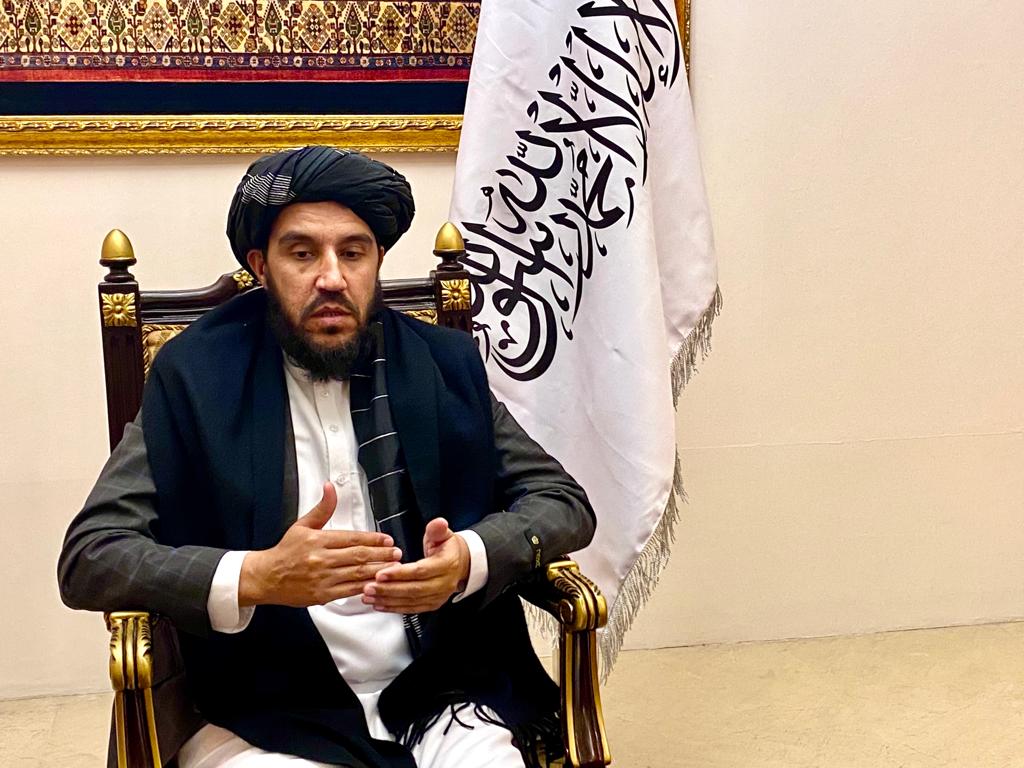
Acting Afghan ambassador to Pakistan, Sardar Ahmed Khan Shakib, speaks with Arab News in an exclusive interview in Islamabad on January 11, 2022. (AN Photo)
Asked about tensions between Islamabad and Kabul over the fencing of the Pakistan-Afghanistan border, Shakib said Afghanistan had a “strong desire” to address all issues through diplomatic channels.
Pakistan has fenced most of the 2,600 km border despite protests from Kabul, which has always contested the British-era boundary demarcation that splits families and tribes on either side. In recent weeks, there have been multiple incidents of Afghan Taliban border guards trying to remove the fence or disrupt construction work.
The fencing was a main reason behind the souring of relations between previous Afghan governments and Islamabad. The current standoff indicates the matter remains a contentious matter for the Taliban, despite its close ties to Islamabad.
“Two delegations, one from Afghanistan and the other from Pakistan, have been assigned to deal with the problem that recently happened along the Durand Line and related to the fencing project which is about 94 percent complete,” Shakib said, adding:
“We cannot decide about the Durand Line from a governmental perspective … This is not my or foreign minister’s or the whole government’s decision. It should be determined through a very comprehensive decision which will be made by the nation of Afghanistan.”
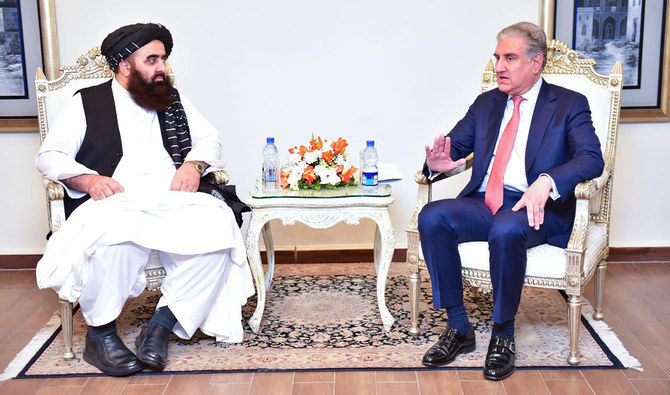
Afghanistan's acting foreign minister Amir Khan Muttaqi, left, with Pakistan's FM Shah Mahmood Qureshi in Islamabad, Pakistan, on December 18, 2021. (Photo courtesy: Pakistan foreign office)
The Afghan envoy appealed to the Pakistani government and other neighbors to recognize the Taliban administration and set a precedent for the rest of the world.
No country has formally recognized the Taliban government since the insurgents took over the country in August, while billions of dollars in Afghan assets and funds abroad have also been frozen, even as the country faces severe economic and humanitarian crises.
“They [the international community] have their own challenges,” Shakib said. “So, they say they cannot do it (recognize Afghanistan) alone and need to join some other countries. It is our humble request, especially from our neighbors, to recognize the newly established Islamic government in Afghanistan.”
The Afghan envoy said the Kabul administration met all the requirements of an independent government, including sovereignty, security, employment creation and being cooperative with neighboring states.
“So, this is the basic right of the Afghans to be recognized,” he added. “We call on the international community once again to recognize us which will lead us to a new era and establish communication with all members of the world community and international bodies.”
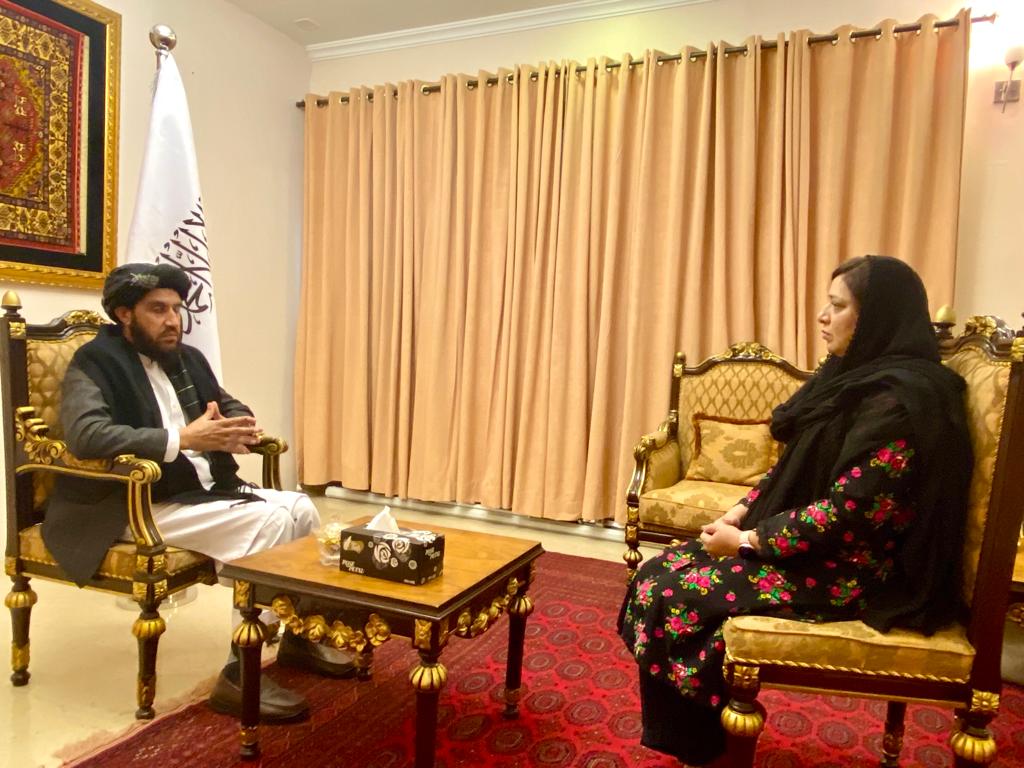
Acting Afghan ambassador to Pakistan, Sardar Ahmed Khan Shakib, speaks with Arab News in an exclusive interview in Islamabad on January 11, 2022. (AN Photo)
Shakib said his government’s international recognition would also help to resolve the financial woes of Afghanistan, which the UN and other aid agencies say is on the brink of humanitarian catastrophe.
“I ask the United States and other countries to unfreeze Afghan assets and remove their sanctions,” Shakib said. “These sanctions are blocking channels of humanitarian assistance which is creating a crisis.”


