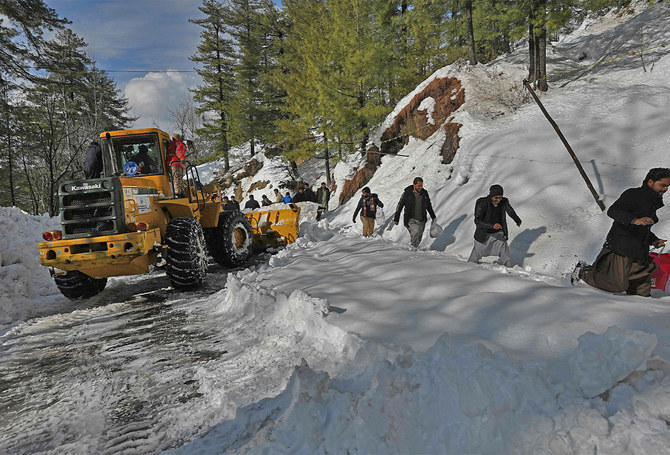

ISLAMABAD: Authorities on Sunday cleared snow from all major roads in and around the Pakistani hill station of Murree, rescue officials said, a day after the deaths of 22 people who died in their vehicles trapped by heavy snowfall and traffic snarl-ups.
Relief and rescue operations continued in the resort town, with the civil administration and Pakistan army soldiers evacuating hundreds of people stranded some 45 kilometers northeast of the Pakistani capital of Islamabad and providing them with food, water, shelter and warm clothes.
“The relief and rescue operations are still underway, but all major roads have been reopened for a smooth flow of traffic,” Deeba Shahnaz, a spokesperson for the 1122 emergency service, told Arab News on Sunday.
All 22 dead bodies were shifted to Rawalpindi Institute of Urology and later handed over to the families after completion of medico-legal formalities, she said.
“Bodies of all these unfortunate people were found in five vehicles on snowed-in roads,” Shahnaz said. “They either froze to death or were asphyxiated by carbon monoxide after turning heaters of their vehicles on trying to keep them warm during the blizzard.”
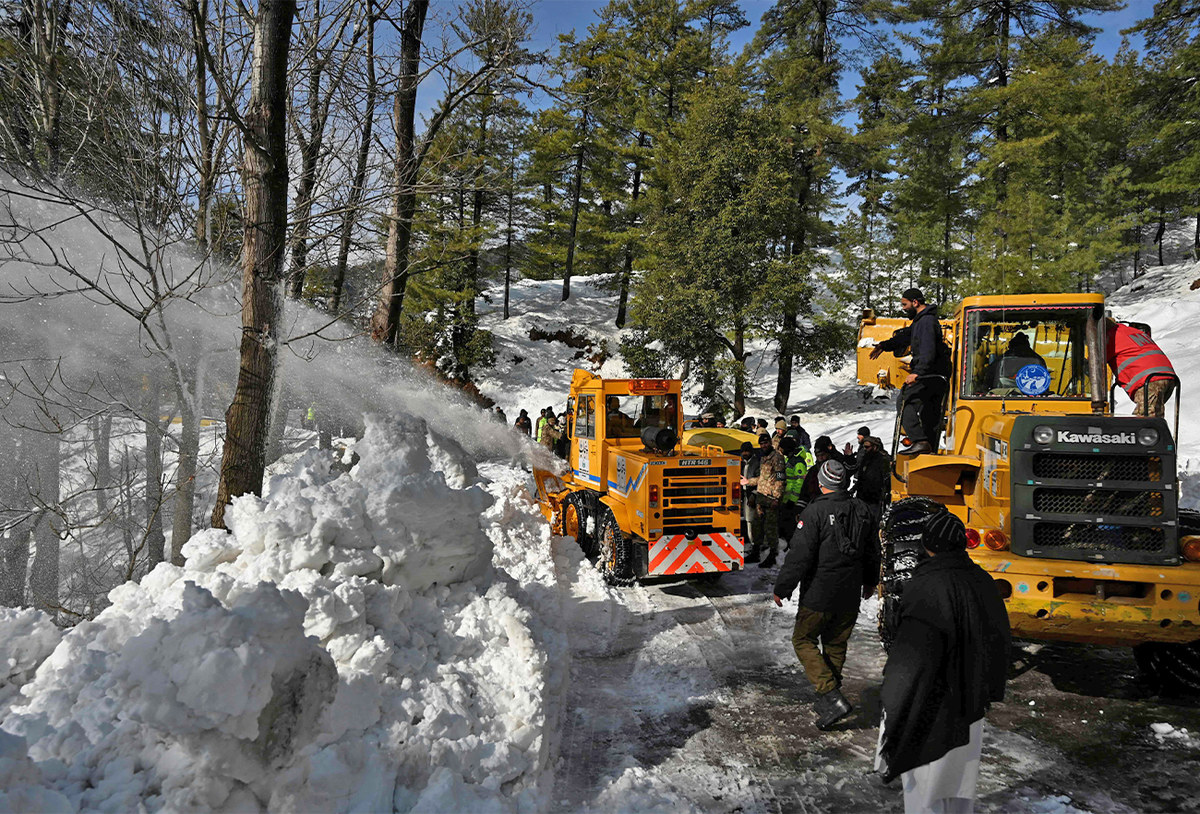
Workers use heavy machinery to clear a road following a blizzard that started on January 7 trapping visitors in vehicles along the roads to the resort hill town of Murree, Pakistan, on January 9, 2022. (AFP)
The 1122 spokesperson said some of the tourists had disappeared after leaving their vehicles on the snow-covered roads, urging them to come back now to remove their cars for the traffic to flow smoothly.
“All is well for now,” she said.
Eight of the Murree snowstorm victims belonged to the family of Islamabad police officer Naveed Iqbal, who died alongside his wife and six children.
Tens of thousands of people arrived in Murree on Thursday and Friday to see the snow, despite appeals by authorities to postpone their plans because of bad weather and roadblocks. The Pakistan Meteorological Department (PMD) had predicted heavy snowfall in Murree and the Galiyat mountainous regions from January 6 to 9.
More than four feet of snow fell in the hillside town overnight on Friday, trapping tourists and blocking all incoming traffic the next day.
Experts said that unchecked tourism, lack of data regarding number of vehicles and tourists entering a spot and zero warnings about weather conditions were bound to lead to such a disaster.
“We don’t have proper public transportation for our tourist resorts and revellers have to travel through their personal vehicles, which ultimately leads to congestion and accidents,” Naveed Iftikhar, an urban policy specialist who co-founded the Lahore-based Urban Innovation research and advocacy group, told Arab News.
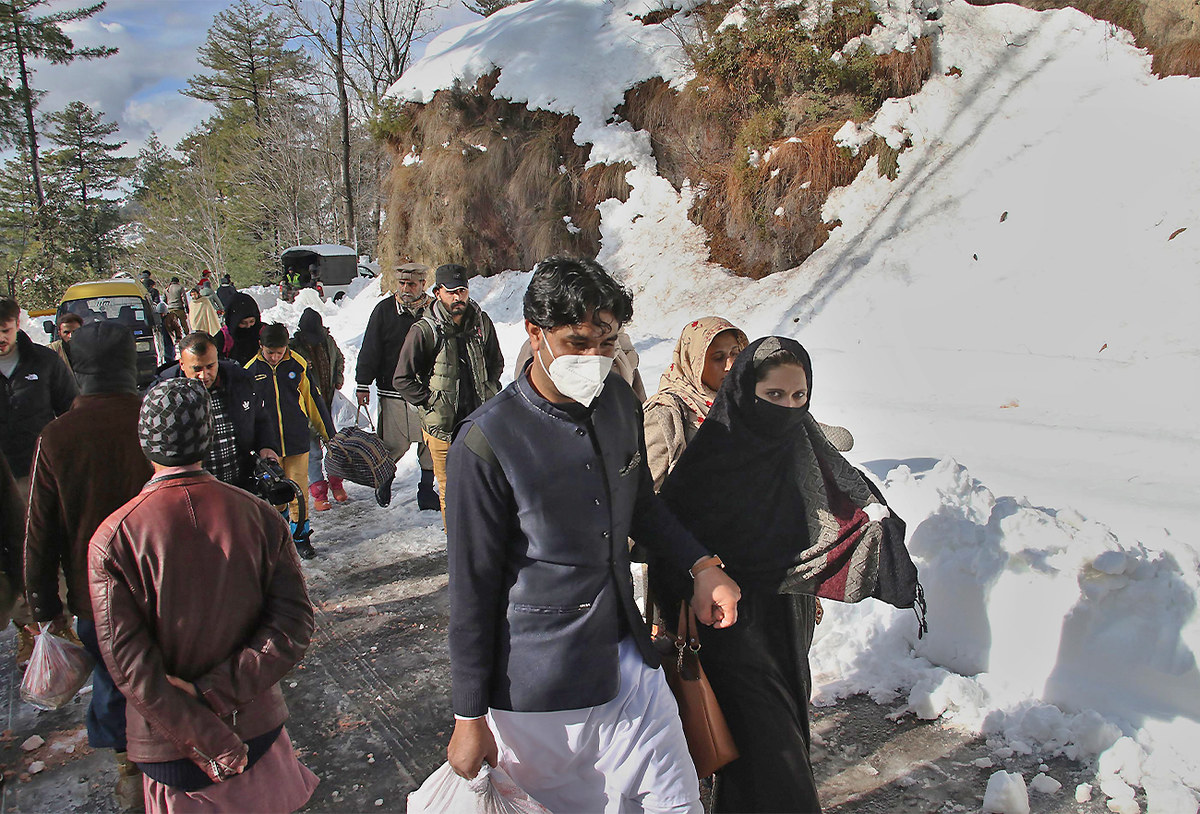
Stranded tourists walk to catch transport after workers cleared a road that was blocked by a heavy snowstorm, in Murree some 28 miles (46 kilometers) north of the capital of Islamabad, Pakistan, on January 9, 2022. (AP)
He pointed out structural flaws in the country’s disaster management system and lack of capacity of authorities to swiftly respond to an emergency.
“Our hierarchical system in bureaucracy is one of major hindrances in any proactive relief and rescue measure and this flaw leads to loss of precious lives and property,” he said.
Iftikhar suggested the government to charge “congestion price” from tourists entering mountainous areas to keep a check on unsustainable tourism.
“We’ll have to promote responsible and sustainable tourism through education and awareness to stop recurrence of Murree-like mishaps,” he added.