



ISLAMABAD: Rescue operations involving the army continued into Sunday morning to evacuate stranded tourists in northern Pakistan where authorities said a day earlier 22 people had died in freezing temperatures while being stranded in their vehicles in the Pakistani hill station of Murree.
The Pakistan Meteorological Department (PMD) had predicted heavy snowfall in Murree and the Galiyat mountainous regions from January 6 to 9. But despite appeals by authorities to postpone plans due to bad weather and roadblocks, tens of thousands of snow-tourists arrived in Murree, 64 km (40 miles) northeast of the capital Islamabad, in the past two days.
On Saturday, the local administration declared Murree “calamity hit,” with long lines of cars stuck in the resort town after a snowstorm made the roads impassable, stranding motorists without food and water in the freezing cold. The Rescue 1122 emergency service announced that 22 people, including nine children, had died.
Prime Minister Imran Khan’s special assistant on communication, Shahbaz Gill, said early Sunday morning that major roads in Murree had been cleared for traffic.
“About 600 to 700 vehicles were evacuated from Murree last [Saturday] night,” Gill wrote on Twitter. “Rawalpindi police, district administration, Pakistan Army men and our locals remained active throughout the night.”
مری کی تمام مین شاہراہوں کو ٹریفک کے لیے کلیئر کر دیا گیا ہے۔ مری سے رات گئے 600 سے 700 گاڑیوں کو نکالا گیا، راولپنڈی پولیس، ضلعی انتظامیہ،پاک فوج کے جوان اور ہمارے مقامی لوگ رات بھر متحرک رہے۔راولپنڈی اسلام آباد سے مری آنے والے راستوں پر پولیس موجود ہے، راستے آج بھی بند رہیں گے pic.twitter.com/Bdr5QOOO2H
— Dr. Shahbaz GiLL (@SHABAZGIL) January 9, 2022
The Pakistan army’s media wing said army engineers’ troops with road clearance machinery were working to clear roads.
“More Than 300 snow affected people including children have been provided medical care by team of army doctors and paramedics. Cooked meal served to more than 1000 stranded people in Jheekagali, Kashmiri Bazar, Lower Topa and Kuldana,” the military said, adding that stranded people had been accommodated and provided shelter with hot meals and tea at various military rescue centers set up in the area.
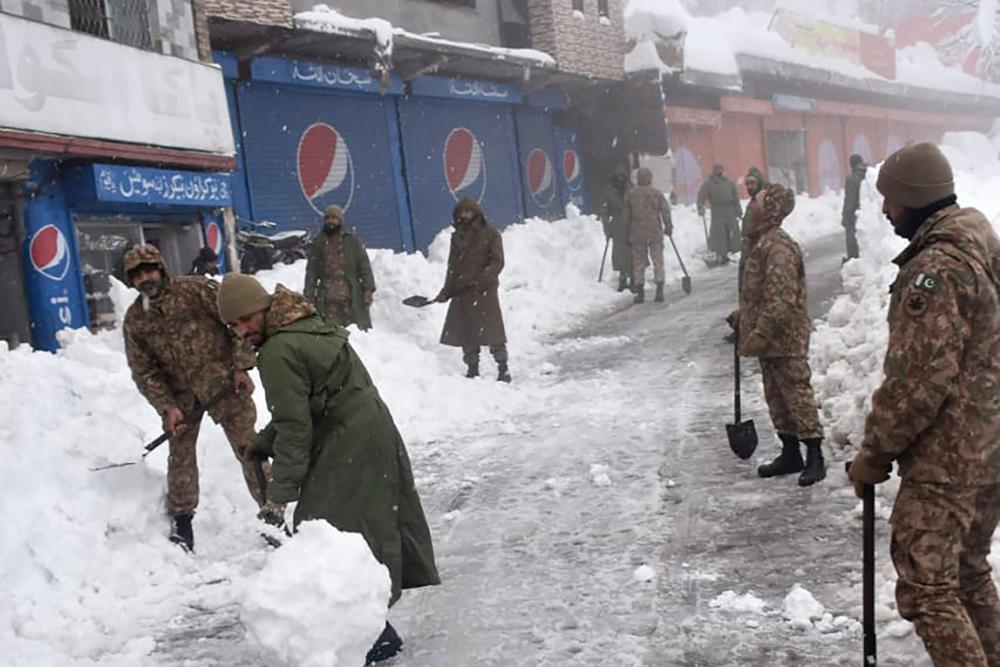
In this photo provided by the Inter Services Public Relations, army members take part in a rescue operation in a heavy snowfall-hit area in Murree, some 28 miles (45 kilometers) north of the capital of Islamabad, Pakistan, Saturday, Jan. 8, 2022. (AP)
On Friday evening, the Islamabad administration announced it was closing the roads leading to Murree for the rest of the weekend “in public interest.”
For hours overnight and well after daybreak on Saturday, thousands of cars lined the snow-clogged roadway as their drivers grew increasingly desperate about their predicament and exasperated by what appeared to be a slow response by authorities.
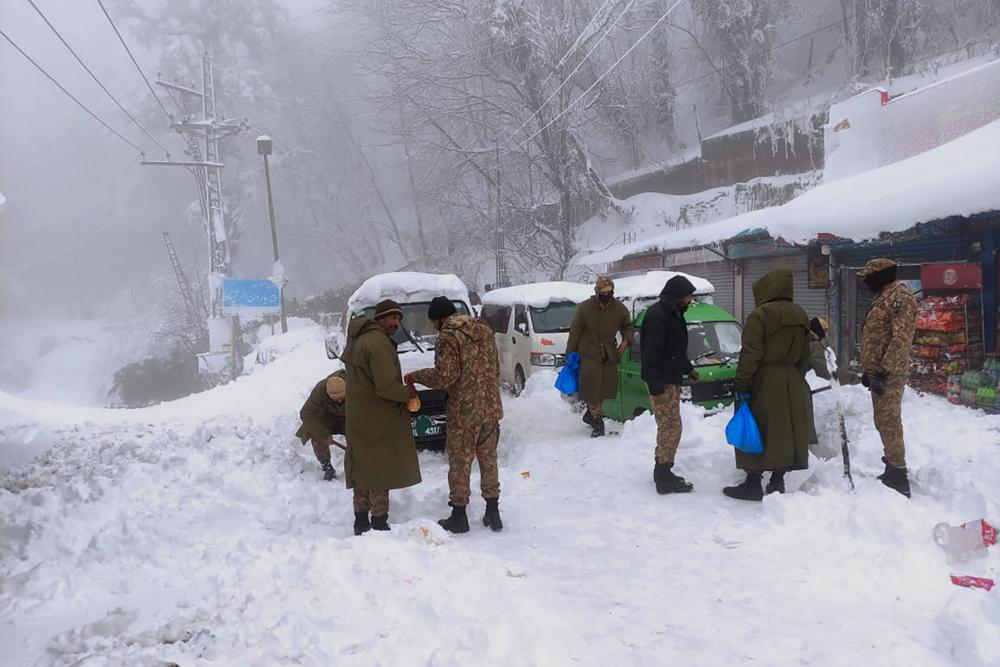
In this photo provided by the Inter Services Public Relations, army members take part in a rescue operation in a heavy snowfall-hit area in Murree, some 28 miles (45 kilometers) north of the capital of Islamabad, Pakistan, Saturday, Jan. 8, 2022. (AP)
Authorities in Rawalpindi, which is adjacent to Islamabad, said on Saturday over 23,000 stranded vehicles had been already evacuated from Murree and around 1,000 were still stranded.
A strong westerly wave entered Pakistan’s western and upper parts earlier this week, producing rain and snowfall. It is forecast to grip the areas until Sunday.


