

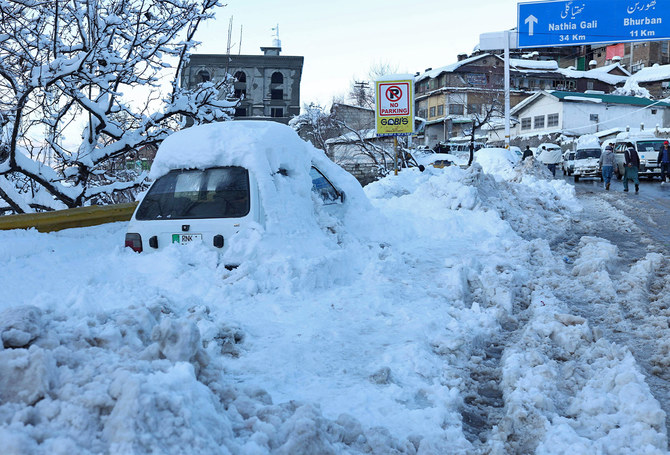

ISLAMABAD: Pakistani opposition leaders and experts on Saturday called out the government for “negligence” after 22 people died in freezing temperatures while being stranded in their vehicles in the Pakistani hill station of Murree where thousands had flocked to enjoy the snow.
The Pakistan Meteorological Department (PMD) had predicted heavy snowfall in Murree and the Galiyat mountainous regions from January 6 to 9. Despite appeals by authorities to postpone plans due to bad weather and roadblocks, tens of thousands of snow-tourists arrived in Murree, 64 km (40 miles) northeast of the capital Islamabad, in the past two days.
On Saturday, the local administration declared Murree “calamity hit,” with long lines of cars stuck in the resort town after a snowstorm made the roads impassable, stranding motorists without food and water in the freezing cold. Rescue efforts to get people and vehicles out were still ongoing on Saturday evening.
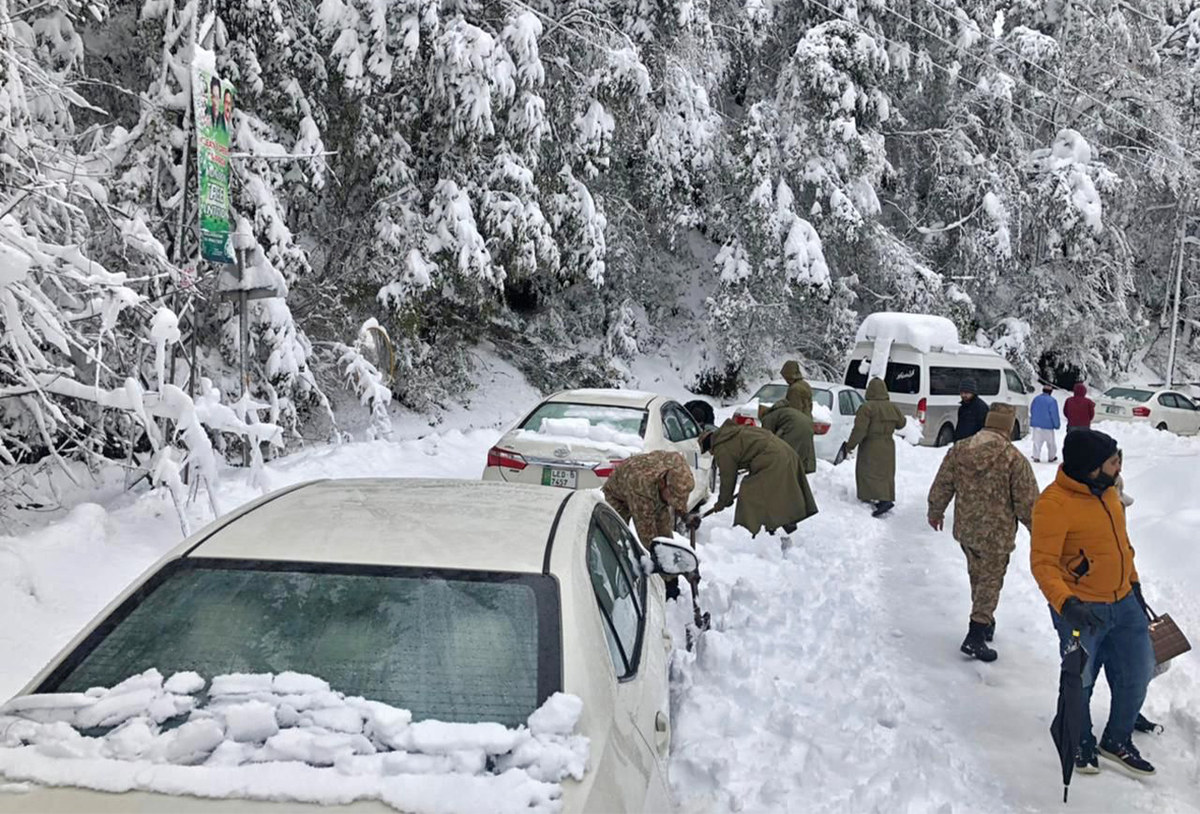
Pakistani army troops take part in rescue operation in a heavy snowfall-hit area in Murree, some 28 miles north of Islamabad, Pakistan, on January 8, 2022. (ISPR)
Rafaqat Zaman, a spokesperson for the Rescue 1122 emergency service, said 22 people, including nine children, had died.
“Our teams are in the field and trying to rescue stranded people as quickly as possible,” he told Arab News, saying up to six feet of snow had accumulated on the roads and streets, and thousands of tourists and vehicles were trapped in it.
“The death toll may go up, but we don’t want to speculate on it,” he said.
“This sheer negligence and mismanagement of the government has led to the loss of precious lives in Murree,” Faisal Karim Kundi, central information secretary of the opposition Pakistan Peoples Party (PPP), told Arab News. “The authorities failed to timely mobilize heavy machinery to remove snow from roads and rescue stranded tourists.”
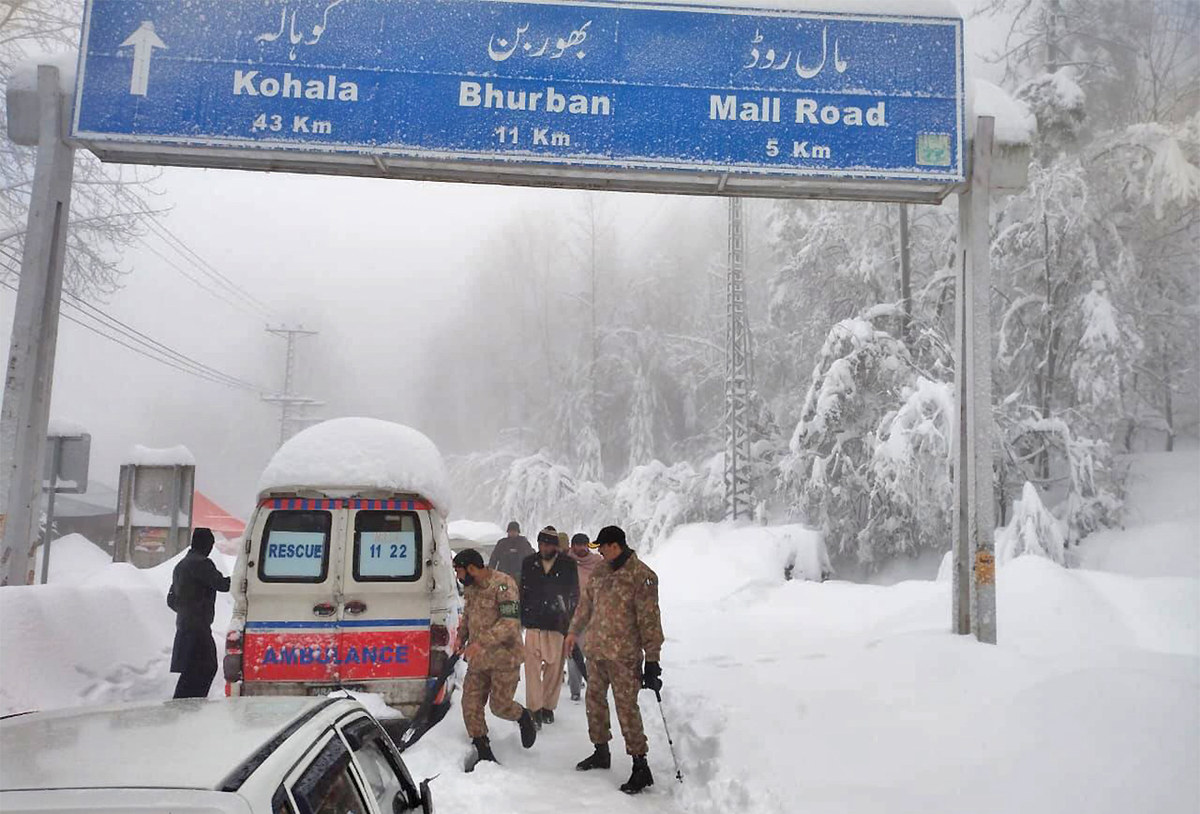
Pakistani army troops take part in rescue operation in a heavy snowfall-hit area in Murree, some 28 miles north of Islamabad, Pakistan, on January 8, 2022. (ISPR)
Kundi demanded the federal and Punjab governments apologize to the public over the mishap and announce compensation for the bereaved families.
Muhammad Zubair, a senior member of the Pakistan Muslim League-Nawaz (PML-N) opposition party, said the tragedy was “beyond imagination” and a clear reflection of bad governance.
“This is criminal negligence and all those responsible for it must be held accountable,” he told Arab News.
Zubair said the government was aware of the number of people entering the resort town, but failed to make necessary arrangements to ensure their safety: “This was an avoidable tragedy.”
There was also backlash on social and mainstream media against comments by Pakistani Prime Minister Imran Khan that were interpreted as blaming the victims.
“Unprecedented snowfall and rush of people proceeding without checking weather conditions caught district admin unprepared,” he said, adding that he had ordered an investigation.
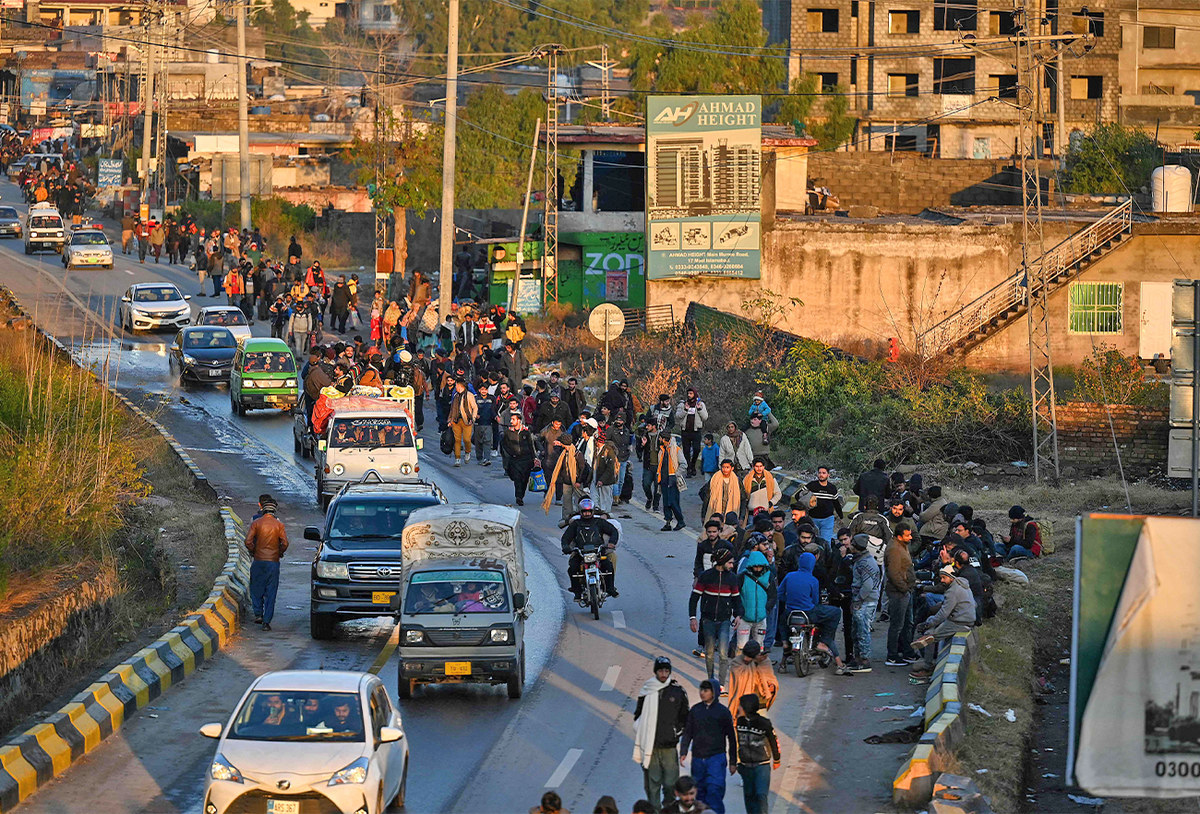
Local tourists walk as they return from Murree on the outskirts of Islamabad on January 8, 2022 after an incident where at least 21 people died in an enormous traffic jam caused by tens of thousands of visitors thronging to a Pakistani hill town to see unusually heavy snowfall. (AFP)
Fahd Husain, a political analyst and resident editor Islamabad for Dawn newspaper, said the prime minister’s tweet had “added insult to injury” as the deaths were avoidable.
“By blaming people and saying the government was caught ‘unawares’ boggles the mind with its sheer insensitivity and callousness,” he said.
“Rottenness of the system is on full display. Government has failed. Governance is collapsing under the weight of its own incompetence even as pitiful and pitiless minions retch out justifications for the avoidable tragedy,” he said.
The Pakistan army on Saturday afternoon announced it had established four camps in the area and a “control division” and opened rescue centers.
“Heavy machinery from Murree army engineers division and FWO (Frontier Works Organization) are working without any pause to assist people who are struck,” the army’s media wing said. “Troops are out in the field. Where machinery can’t reach, troops have been moved and they are clearing traffic and opening roads.”
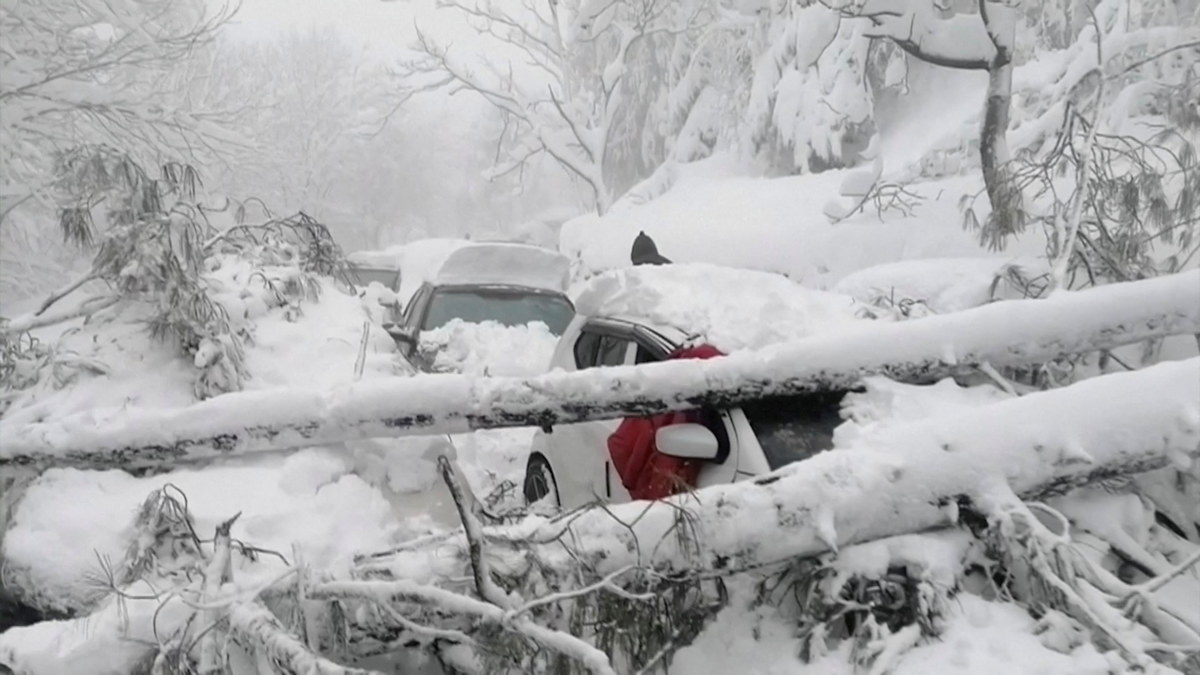
Vehicles stuck under fallen trees are seen on a snowy road, in Murree, northeast of Islamabad, Pakistan in this still image taken from a video January 8, 2022. (REUTERS via PTV)
On Friday evening, the Islamabad administration announced it was closing the roads leading to Murree for the rest of the weekend “in public interest.”
For hours overnight and well after daybreak on Saturday, thousands of cars lined the snow-clogged roadway as their drivers grew increasingly desperate about their predicament and exasperated by what appeared to be a slow response by authorities.
Authorities in Rawalpindi, which is adjacent to Islamabad, said on Saturday over 23,000 stranded vehicles had been already evacuated from Murree and around 1,000 were still stranded.
A strong westerly wave entered Pakistan’s western and upper parts earlier this week, producing rain and snowfall. It is forecast to grip the areas until Sunday.



