



ISLAMABAD: The Pakistani government has established an Asian Leopard Preservation Zone in Islamabad’s scenic Margalla Hills National Park (MHNP) with the aim of achieving a “balanced relationship” between humans and nature while conserving a critically endangered species, Prime Minister Imran Khan’s aide on climate change said on Friday.
The Asian Leopard Preservation Zone, a unique biodiversity spot nestled in Pakistani capital’s MHNP, was inaugurated by the Islamabad Wildlife Management Board (IWMB) this week to protect and preserve a number of Asian leopards recently spotted along Trail-6 of Margalla Hills.
There are several well-identified trails on Margalla Hills, most of which are used by locals. The Capital Development Authority (CDA) has worked on and developed six of them for hiking purposes.
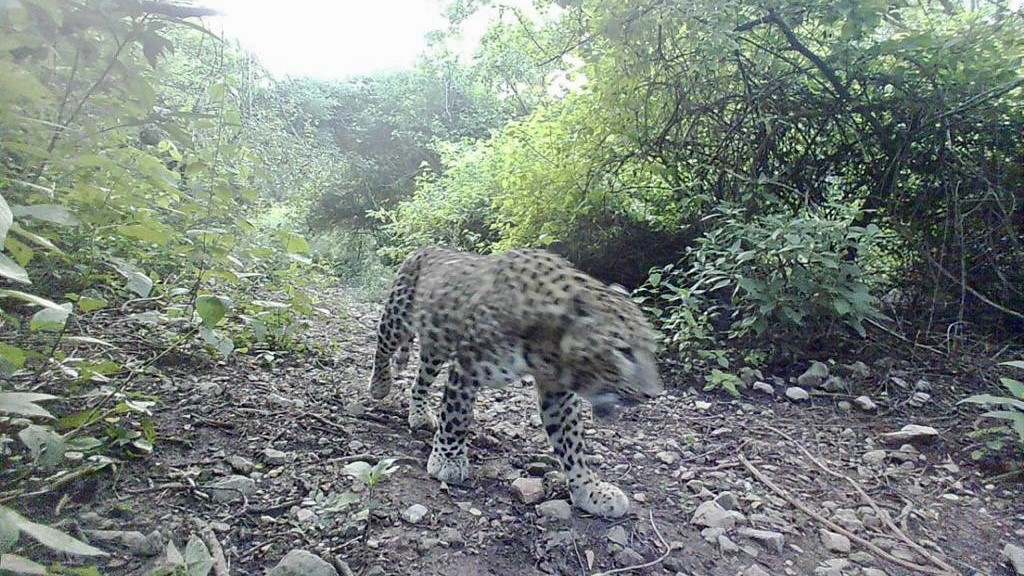
A leopard is spotted at the Margalla Hills National Park in Islamabad, Pakistan, on September 13, 2021. (Photo courtesy: Islamabad Wildlife Management Board)
“It’s a very unique reserve as it is right next to a thriving capital city and provides an excellent example for creating a balanced relationship between humans and nature while conserving the critically endangered leopard that chose to live next to a city,” PM’s aide on climate change Malik Amin Aslam told Arab News.
“The special leopard zone will provide healthy eco-system to predators, permanently inhabiting the hills,” he said, adding that the IWMB had been tracking these leopards over the past two years.
The PM’s aide said various camera traps and visuals had helped ascertain the area as a home to leopards that did not migrate uphill during summers and provided credible grounds to conserve it as a specialized reserve.
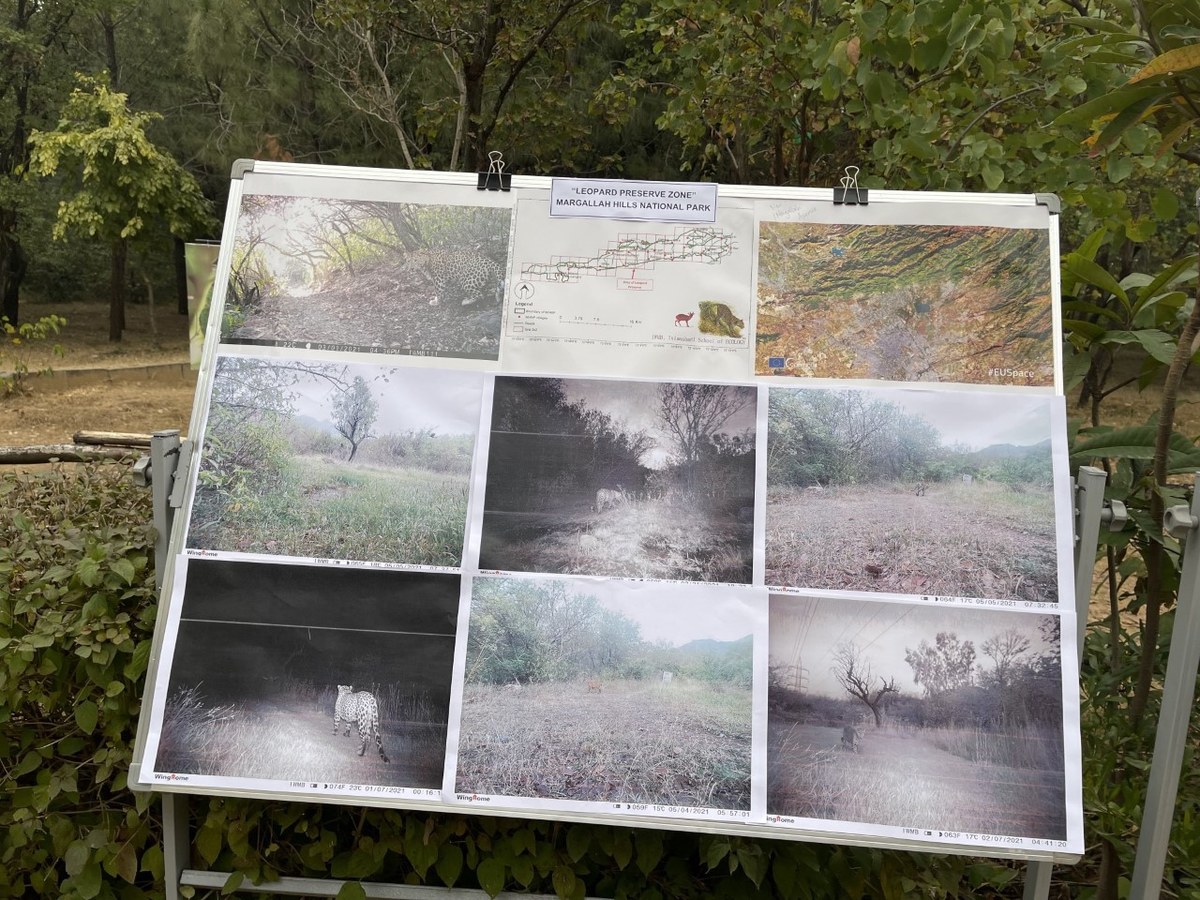
A view of the Asian Leopard Preservation Zone at the Margalla Hills National Park in Islamabad, Pakistan, on January 1, 2022. (Photo courtesy: Islamabad Wildlife Management Board)
IWMB chairperson Rina Saeed Khan said after viral videos last February, the wildlife board decided to study the presence of leopards in MHNP which remain critically endangered, according to the wildlife species listing by the International Union for Conservation of Nature (IUCN).
“We decided to track them by closing Trail-6 for the public. The entire 17,000 hectares of national park was divided into 20 zones and 20 camera traps were placed in it,” she told Arab News.
“So far, a minimum of seven different leopards have been captured by the camera and there are probably more of them there,” she said, adding that each leopard was recognized through its unique pattern called “rosettes.”
Khan said while Trail-6 was closed for the public, two males and one female leopard, currently living in the Kalinjar area, were frequently seen on the main track and marked it their territory. “They even forbade other leopards from entering as they hunted within this marked area,” she added.
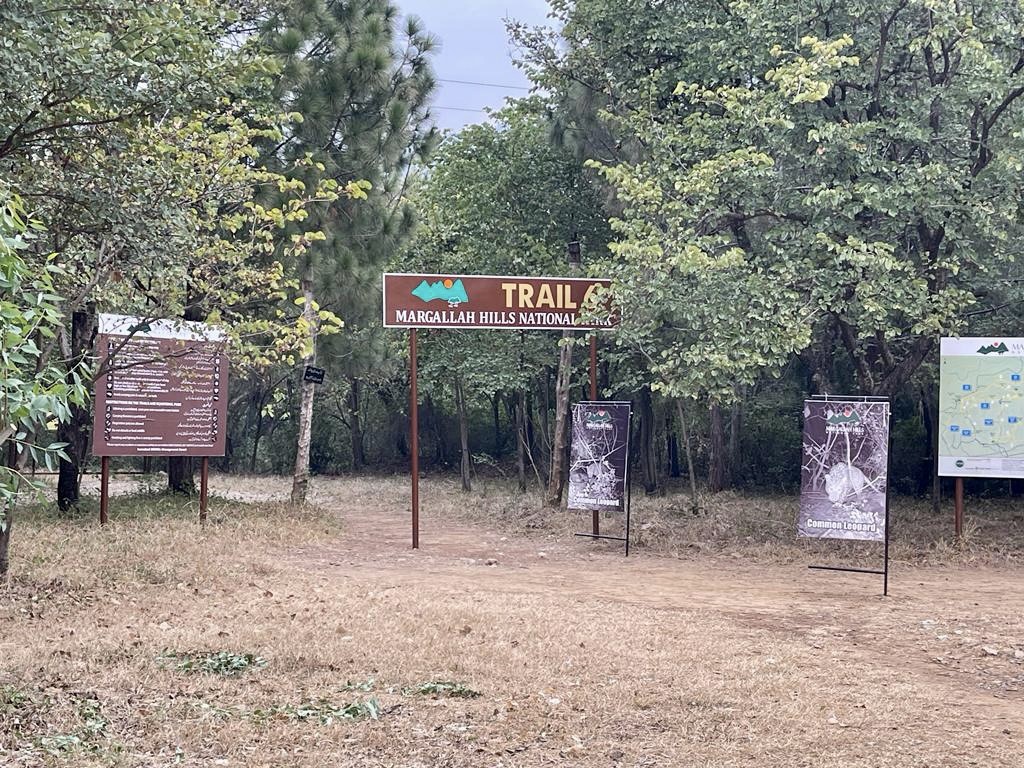
A view of the Asian Leopard Preservation Zone at the Margalla Hills National Park in Islamabad, Pakistan, on January 1, 2022. (Photo courtesy: Islamabad Wildlife Management Board)
On the basis of findings of the study, a summary was sent to the prime minister for establishing the leopard preservation zone and he approved it, the IWMB chairperson explained. The preservation zone has a radius of around 20 square kilometers, she added.
Trail-6 would be opened for education purposes in the mid of January, according to Khan.
“There will be guided tours on the trail, supervised by wildlife rangers, for a batch of 25 people once a day, so as to not disturb the leopards,” she said, adding that people would be charged a nominal fee and the IWMB was working on its modalities.
Dr. Muhammad Ali Nawaz, a biodiversity specialist and the country head of the Snow Leopard Foundation in Pakistan, described the leopard preservation zone as an “important step” and said it would help the number of the endangered wildcat grow.
“We first got leopard in MHNP camera-trapping in 2017, but after that we felt they may have left the area for Murree or Ayubia,” Nawaz told Arab News.
“After last year’s footage, I advised the government to establish a special zone so that we can provide them a peaceful habitat where their population could grow.”
Nawaz said the said area was ideal for the growth of leopards as it had prey animals like deer, barking bear and wild pigs. Despite the presence of leopards, no major attack on humans has been reported in the area, he added.
“It will provide a beautiful example of coexistence of large predators and humans,” he said, “as they have been living very peacefully near the federal capital.”


