


Kazatomprom, the world's biggest uranium producer, said on Thursday it was operating normally with no impact on output or exports despite unrest in Kazakhstan.
Uranium prices have risen after violent demonstrations in the central Asian country, initially spurred by protests against fuel price hikes, as Kazakhstan is responsible for about 40 percent of global supplies of the metal.
Spot prices hit $45.5 per pound on Wednesday, the highest since Nov. 30, according to a Platts assessment.
But the country's political turmoil does not seem to have so far affected key industries.
"Uranium mining is going according to plan there have been no stoppages. The company is fulfulling its export contracts," a Kazatomprom spokesperson said.
Oil
Oil production at Kazakhstan's top field Tengiz was reduced on Thursday, its operator Chevron said, as some contractors disrupted train lines in support of protests taking place across the central Asian country.
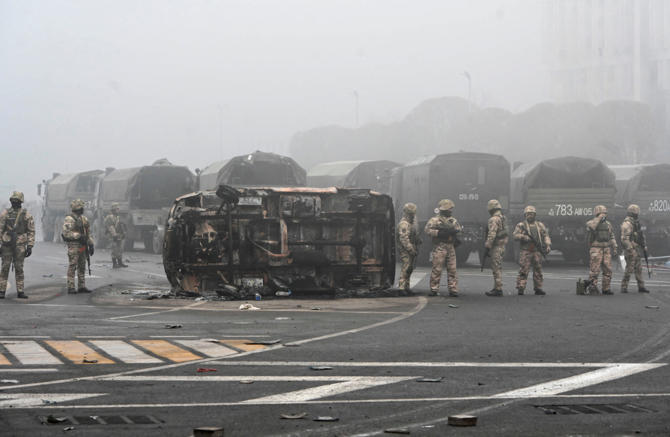
Demonstrations in the west of the country against a New Year's Day fuel price hike have quickly grown into deadly anti-government riots with Russia sending in paratroopers to put down the countrywide uprising. read more
Kazakhstan is a major oil producer with an output of about 1.6 million barrels per day (bpd) in recent months and has rarely seen production disrupted by unrest or natural disaster.
“TCO production operations continue, however, there has been a temporary adjustment to output due to logistics,” Chevron, the largest foreign oil producer in Kazakhstan with a 50 percent stake in the Tengizchevroil (TCO) joint venture, said in a statement.
Protestors at the field have disrupted train activity which is used to export oil, sources told Reuters.
TCO produces around 700,000 bpd. It was not clear by how much output has been reduced. Other top fields in Kazakhstan are onshore Karachaganak and offshore Kashagan.
Besides Chevron, the three key projects involve most top foreign companies including Exxon Mobil, Lukoil, Royal Dutch Shell (RDSa.L), Eni, TotalEnergies (TTEF.PA), CNPC and Inpex.
A Shell spokesperson said production at the Karachaganak and Kashagan ventures was continuing.
“We are following developments in Kazakhstan closely. We are focusing on keeping our people and operations safe, working closely with our venture partners... We are keeping the situation under constant review.”
Despite the turmoil, which has seen Russia send paratroopers into the country to quell a violent uprising, there are no indications that oil production has been affected so far, Reuters reported.
Kazakhstan is a member of OPEC+, a group that includes the Organization of the Petroleum Exporting Countries, Russia and other producers,
"The political situation in Kazakhstan is becoming increasingly tense," Commerzbank said, adiding: "And this is a country that is currently producing 1.6 million barrels of oil per day."
The global benchmark Brent crude futures rose $1.09, or 1.4 percent, to $81.89 a barrel, by 1054 GMT.
US West Texas Intermediate crude futures gained $1.17, or 1.5 percent, to $79.02 a barrel.
Banks
Commercial banks in Kazakhstan have suspended work, official representative of the National Bank of the Republic Olzhas Ramazanov said on Thursday.
According to Russia's Interfax news agency, Ramazanov said the decision was taken "to protect the health and life of employees of financial organizations and consumers of financial services" after "taking into account the conduct of counter-terrorism operations by law enforcement agencies and taking into account temporary interruptions in the Internet."
Telegram channel Sputnik Kazakhstan quoted Ramazanov as saying that "from Jan. 6 the work of all second-tier banks as well as the Kazakhstan stock exchange has been suspended."
All Kazakhstan's banks except for the National Bank of Kazakhstan, fall under the definition of "second-tier banks" according to the country's banking law.
Airlines
Airlines in the Middle East cancelled flights to Kazakhstan's largest city, Almaty, as civil unrest continues to grow in the Central Asian country.
Air Arabia and flydubai have both grounded flights to the city, with Reuters quoting a spokesperson for the latter saying the two return Dubai-Almaty services scheduled for Thursday had been halted due to the “situation on the ground” there.
The website for Air Arabia showed its return Sharjah-Almaty flights scheduled for Thursday as cancelled.
Other reported developments include:
- Internet access has been blocked in Almaty, as well as in some parts of the capital Nur-Sultan.
- WhatsApp and Telegram messengers have been down since Tuesday Jan. 4.
- Workers of oil fields in the natural-resource rich state have joined the protesters.
- Almaty’s public health department said 190 people needed medical aid because of the protests — 137 police officers and 53 civilians. Seven of those — including four police officers — are in intensive care.
- There have been restrictions imposed on travel as part of the state of emergency.
- The EU Commission, asked whether it would suspent the EU's trade agreement with Kazakhstan, said it was premature to comment, according to Reuters.
Kazakhstan is experiencing the worst street protests the country has seen since gaining independence three decades ago.
Government buildings have been set ablaze and at least eight law enforcement officers have been killed.
In #Kazakhstan, thousands flocked to the streets to protest rising fuel prices & a collapsing economy. Hours later, the Kazakh govt resigned. Take a look.pic.twitter.com/ys8UFkYr6M
— Steve Hanke (@steve_hanke) January 5, 2022
Almaty airport was reportedly overrun by anti-government protesters on Wednesday, forcing flights to be cancelled, before it was later retaken by government security forces.
The violent anti-government protests have led Kazakhstan's leaders to declare a two-week nationwide state of emergency.
The protests were triggered by a spike in the price of fuel, with prices for the liquified petroleum gas most people in western oil town of Zhanaozen use to power their cars doubling overnight on Saturday.
Protesters now storming the main government building in Kazakhstan’s largest city Almaty. pic.twitter.com/lemKcpILL8
— Patrick Reevell (@Reevellp) January 5, 2022
Demonstrations quickly expanded to a more general frustration with the Kazakhstan government, and on Wednesday President Kassym-Jomart Tokayev sought to placate the crowds by dismissing the entire government.
Later that day he adopted a tougher line against the protesters, accusing them of being in the service of international terrorist gangs.
A Russia-led military alliance agreed on Thursday to send peacekeepers to the country.


