NEW YORK: Norway will elevate UN Security Council discussions of the Israeli-Palestinian conflict to a ministerial level on Jan. 19, in an effort to highlight the need for the council to restore its focus on this decades-long conflict.
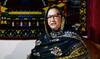
That was the pledge by Mona Juul, Oslo’s permanent representative to the UN, who lamented the reduced international attention to the issue, which has been sidelined as a result of multiple other conflicts raging across the Middle East.
“The people of Israel and Palestine do not deserve that,” she said on Tuesday during a press conference to discuss her country’s priorities as it assumes the presidency of the Security Council for January. “Thirty years after the Madrid conference, the Israeli-Palestinian issue deserves more attention.
“It’s critical to enhance the council’s focus and the need to find a political solution to this protracted conflict and make sure we avoid further actions that undermine the prospect of the two-state solution.”
Juul reiterated her country’s opposition to any unilateral action in the conflict, specifically referencing Israel’s settlement expansion in the Occupied Territories but adding that “it takes two to tango.”
She said: “We need to make sure that there is a Palestinian Authority that can speak with one voice and come to the table with a mandate to make peace as well.”
Juul played an instrumental role in the 1993 Oslo Accords peace initiative involving Israeli Prime Minister Yitzhak Rabin and Yasser Arafat, chairman of the Palestine Liberation Organization. While working as an official in the Norwegian Ministry of Foreign Affairs, she came up with the idea that a mediated meeting between the Israeli and Palestinian leaders could lead to a mutual understanding.
The Norwegian envoy was portrayed by actress Ruth Wilson in “Oslo,” an HBO film about the accords that was released in May last year.
“The main thing that made (the Oslo Accords) work was that you had two courageous leaders on both sides that decided — (in view of) the status quo and the situation of the PLO sitting in Tunis, and the government that was fighting against stone-throwing Palestinians in the first intifada — that it is better to meet at the table and at least start an incremental process toward a full-fledged peace agreement,” said Juul.
Although these incremental steps were not implemented, “a lot of things took place, not least of which is the fact that Israel recognized the PLO, and the Palestinian Authority was established in parts of Palestine and it is actually still working,” she added.
“Of course, it depends on leaders. You need a political will in order to make a compromise and a strength to do it, and also the two-state solution is a compromise solution and you have to have leaders that carry that compromise on both sides. That is not the case right now but that doesn’t mean we should give up. Time is running out but it is not too late.”
The Security Council this month welcomes five new members who began their rotating, two-year terms: the UAE, Gabon, Ghana, Albania and Brazil.
Norway intends to organize a so-called “mini-Oslo” forum for members of Security Council. who will be invited to meet in Oslo, in a closed setting, and discuss “how to do better when it comes to preventive diplomacy and conflict resolution,” Juul said.
As the this month’s president of the UN body tasked with maintaining international peace and security, she admitted that the picture currently looks bleak but added: “We have to be optimistic and still believe that both as a Security Council member but also as a country … we will never give up on working in order to try to help solve conflict through dialogue rather than violent and military means.
“There are examples that (show) it is still possible to forge dialogue and to bring people to the table but we know it costs a lot, requires a lot of resources and, not least, it requires unity at the (Security Council).
“On many issues we have that unity, on some, we don’t — but we will do our utmost to forge that unity.”