

‘Dozens’ of investment deals signed by Pakistani companies since launch of Expo Dubai — envoy

People pass by the Pakistan pavilion, left, and the Bahrain pavilions at the Dubai Expo 2020, in Dubai, United Arab Emirates, on October 3, 2021. (AP)
Short Url
Updated 05 January 2022
Follow

‘Dozens’ of investment deals signed by Pakistani companies since launch of Expo Dubai — envoy

  • Over half a million people have visited Pakistan Pavilion at expo since it opened three months ago
  • Exhibitors from almost 200 countries are looking to the expo to boost trade and investment

KARACHI: Pakistan’s ambassador to the UAE has said public and private sector Pakistani companies had signed “dozens” of investment agreements since the opening of the Expo 2020 Dubai in October 2021.
Exhibitors from almost 200 countries, including Pakistan, are participating in the mega event, with many countries and companies looking to the expo — the first major global event open to visitors since the coronavirus pandemic — to boost trade and investment.
The Pakistan Pavilion was officially inaugurated by President Dr. Arif Alvi on October 9. The Expo itself started on October 1 and will last till March 31, 2022. The Pakistani commerce minister said last month over half a million people had visited the Pakistan Pavilion so far.
“So far, dozens of MoUs (Memorandum of Understanding) have been signed for cooperation, collaboration and investment in the fields of infrastructure, housing, water management, waste management, trade in goods and services as well as investment in various fields,” Afzaal Mahmood, Pakistan’s ambassador to the UAE, told Arab News in an exclusive interview this week. 
“The Bazar at the Pavilion is also helpful in showcasing Pakistani exports,” he added. 



This picture taken on October 27, 2021, shows The Bazaar at the Pakistan Pavilion which has been attracting thousands of visitors at Expo 2020 in Dubai, UAE. (AN Photo)

An entire section at the Pakistan Pavilion is a dedicated space where investors are educated about investment opportunities in Pakistan. Each month, a new Pakistani province or region comes in the spotlight at the Pavilion, with exhibits that showcase its trade and investment potential.
“The federal and provincial governments of Pakistan are offering investment opportunities in various sectors, including infrastructure, energy, manufacturing, housing and tourism to foreign investors,” the envoy said. “The Embassy and Consulate General of Pakistan are reaching out to the business community to create awareness about investment opportunities in Pakistan.”
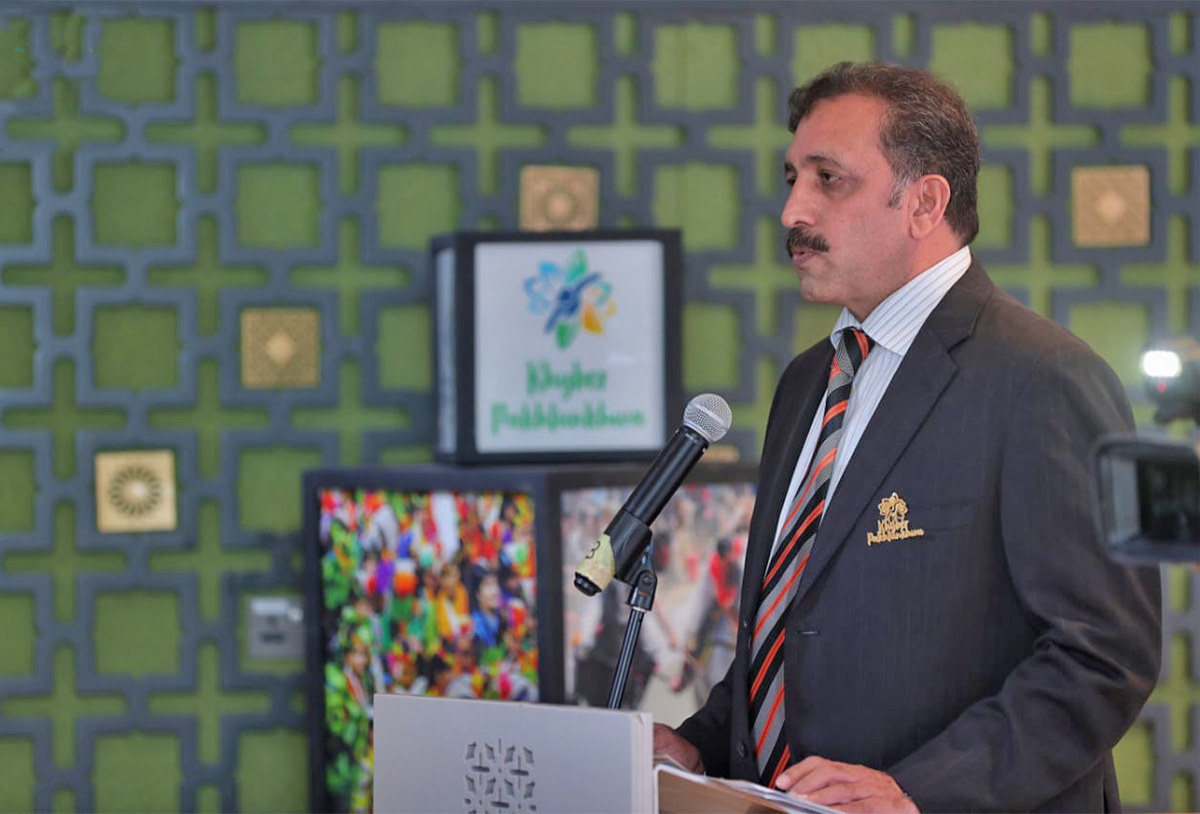


Pakistan’s ambassador to the UAE, Afzaal Mahmood, addresses KP Art and Craft Exhibition at Pakistan Pavilion in Dubai, UAE, on January 2022. (@kptourism)

Last month, the government of Pakistan’s Sindh province signed six agreements with various investors at the Sindh Investment Conference in Dubai. Brother Gas UAE, a major oil and gas company in Dubai, has also signed an agreement to invest $15 million to set up a bottling plant at a Special Economic Zone in Faisalabad.
The central government as well as the governments of Balochistan, Punjab and Sindh have organized various events on the sidelines of Expo-2020 to attract the business community.
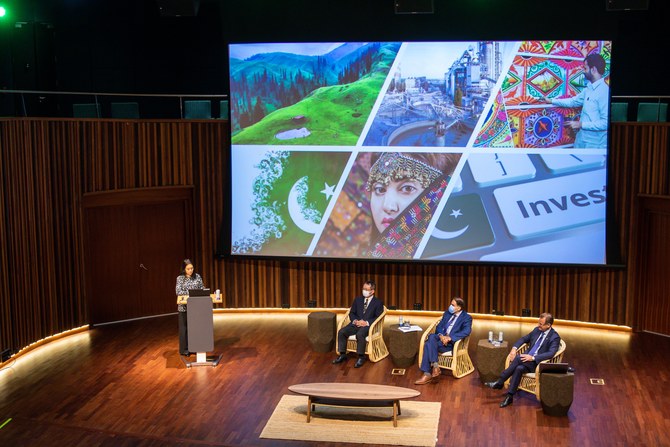


This photo shows a seminar that was held at the Pakistan Pavilion in Dubai, United Arab Emirates, to promote investment and tourism opportunities in Balochistan on October 17, 2021. (Photo courtesy: Pakistan Pavilion Management)

The governments of Khyber Pakhtunkhwa, Azad Jammu and Kashmir and Gilgit-Baltistan are looking to promote their potential through the expo, ambassador Mahmood said, with special offers being deliberated to attract investment through the Special Economic and Export Processing Zones being developed under the China-Pakistan Economic Corridor (CPEC).
“We are targeting larger number companies within the Gulf Region and beyond,” the envoy said, “through networking and marketing events at the Pakistan Pavilion and other venues in the UAE.”


Pakistan says multilateralism in peril, urges global powers to prioritize diplomacy over confrontation

Updated 8 sec ago
Follow

Pakistan says multilateralism in peril, urges global powers to prioritize diplomacy over confrontation

  • The country tells the UN international security system is eroding, asks rival blocs to return to dialogue
  • It emphasizes lowering of international tensions, rebuilding of channels of communication among states

ISLAMABAD: Pakistan warned the world community on Monday that multilateralism was “in peril” amid rising global tensions, urging major powers to revive diplomacy and dialogue to prevent a further breakdown in international security.

Speaking at a UN Security Council briefing, Pakistan’s ambassador to the UN, Asim Iftikhar Ahmad, said the world was drifting toward confrontation at a time when cooperative mechanisms were weakening.

His comments came during a session addressed by Finland’s foreign minister Elina Valtonen, chairing the Organization for Security and Co-operation in Europe (OSCE), the world’s largest regional security body.

Formed out of the 1975 Helsinki Final Act, the OSCE was designed during the Cold War to reduce tensions, uphold principles of sovereignty and human rights and promote mechanisms for peaceful dispute resolution.

“Today, the foundational ethos of international relations, multilateralism, cooperation and indivisible security, as envisaged in the preamble of Helsinki Final Act, is perhaps facing its biggest challenge in decades,” Ahmed said. “The OSCE, too, is navigating a difficult geopolitical landscape, with conflict raging in the heart of Europe for nearly four years, depletion of trust and unprecedented strains on peaceful co-existence.”

He said a return to the “Helsinki spirit” of dialogue, confidence-building and cooperative security was urgently needed, not only in Europe but globally.

“This is not a matter of choice but a strategic imperative to lower tensions, rebuild essential channels of communication, and demonstrate that comprehensive security is best preserved through cooperative instruments, and not by the pursuit of hegemony and domination through military means,” he said. “Objective, inclusive, impartial, and principle-based approaches are indispensable for success.”

Ahmed’s statement came in a year when Pakistan itself fought a brief but intense war after India launched missile strikes at its city in May following a militant attack in Indian-administered Kashmir. New Delhi blamed Pakistan for the assault, an allegation Islamabad denied while calling for a transparent international investigation.

The Pakistani diplomat said the international system was increasingly defined by bloc politics, mistrust and militarization, warning that such trends undermine both regional stability and the authority of multilateral institutions, including the UN itself.

He urged member states to invest more in preventive diplomacy and the peaceful settlement of disputes as reaffirmed by the Council in Resolution 2788.

Ahmad said Pakistan hoped the OSCE would continue reinforcing models of cooperative security and that the Security Council would back partnerships that strengthen international law and the credibility of multilateral frameworks.

The path forward, he added, required “choosing cooperation over confrontation, dialogue over division, and inclusive security over bloc-based divides.”