MARLY-LE-ROI, France: No more munching, crunching and slurping at the movies in France.
The country’s increasingly fraught fight against an unprecedented surge in coronavirus infections is putting a stop to eating and drinking at French cinemas, just as they show signs of recovering from the brutal economic bashing of lockdowns last year.
COVID-19 measures kicking in Monday, once France’s New Year’s celebrations are out of the way, will mean an enforced rest for popcorn machines and ice creams left in cold storage. The ban of at least three weeks on eating and drinking also applies to theaters, sports venues and public transport.
For cinema owners hoping to lure back movie fans who switched to home-viewing during the pandemic, not being able to tempt them with candies and soft drinks is another blow. French cinemas sold 96 million tickets in the eight months they have been reopened this year, a jump of 47 percent compared to 2020. But ticket sales are still down 55 percent compared to 2019, before the pandemic, the National Center for Film and Moving Images said Thursday in its look at French cinemas’ annual sales.
Benoit Ciné Distribution, which supplies 70 percent of France’s cinemas with popcorn, sweet treats and drinks, was deluged with both order postponements and delivery requests from movie houses expecting good sales on the final weekend before the food and drink ban, with “Spider-Man: No Way Home” and “Matrix Resurrections” featuring on billboards.
“It’s like being told to apply the emergency brake to the high-speed train,” said Vincent Meyer, a director at Benoit.
Against raging coronavirus infections, the government is hoping its latest measures will also apply a brake on the fast-spreading omicron variant, but without derailing France’s economic recovery that is a vote-getter for President Emmanuel Macron, facing reelection in April.
As well as the food and drink ban, there’ll once again also be limits on crowd numbers at public venues, with no more than 2,000 allowed indoors and 5,000 outdoors. The limits don’t apply to election campaign rallies, infuriating some musicians who will no longer be allowed to perform for stand-up crowds. Some suggested, only half-jokingly, that they may rebrand their concerts as political rallies.
France’s COVID-19 death toll is already at more than 123,000 people. New infections are higher than they have ever been and hospitals are again overburdened with the gravely sick. Many health experts had called for stricter measures than those announced by the government this week, with some pushing for renewed closures of schools and businesses. France reported another 206,243 coronavirus infections Thursday, just shy of the record 208,000 cases set Wednesday.
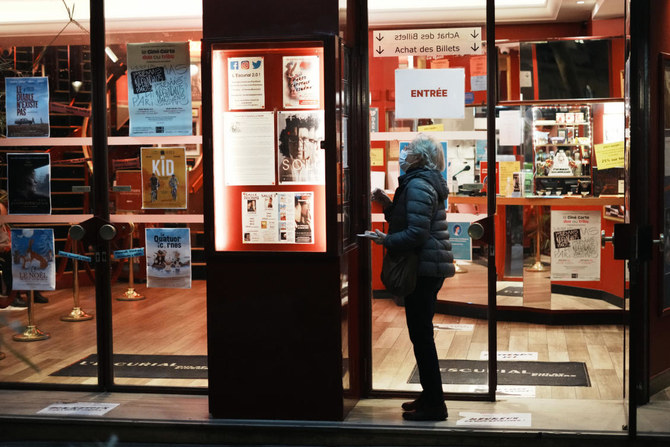
Michel Enten, manager of the Le Fontenelle cinema in the town of Marly-le-Roi west of Paris, was relieved to stay open, even if he’ll no longer be able to sell cotton candy, popcorn, ices and drinks. He says he has lost about half of his clientele during the pandemic. He expects the ban on food and drinks to hit larger cinemas particularly hard and says it may even help lure back fans to smaller, arty cinemas like his.
“There are lots of people who hate hearing the sounds of popcorn in the auditoriums,” he said. “Perhaps we will win over new movie fans, people who were watching Netflix and are saying to themselves, ‘Now there’s no more popcorn, let’s run to the cinema.’“
Cinemagoers said they understood the need for new measures, although some struggled to see any logic in not being able to indulge their sweet cravings in cinemas or theaters when restaurants are still allowed to serve food and drinks.
“It’s going to be strange to just go to the cinema and do without all these little moments,” Vincent Bourdais said as he lined up in Marly-le-Roi for “Spiderman.”
“Often, when one imagines the cinema, one thinks of the auditorium, the beautiful posters, the popcorn, the smells.”


![]()

Cut! Popcorn, candy ban hits French cinemas’ virus recovery
Short Url
https://arab.news/gfkvf
Cut! Popcorn, candy ban hits French cinemas’ virus recovery
- COVID-19 measures kicking in Monday will mean an enforced rest for popcorn machines and ice creams
- The ban of at least 3 weeks on eating and drinking applies to theaters, sports venues and public transport


Latest updates


Recommended


© 2026 SAUDI RESEARCH & PUBLISHING COMPANY, All Rights Reserved And subject to Terms of Use Agreement.