

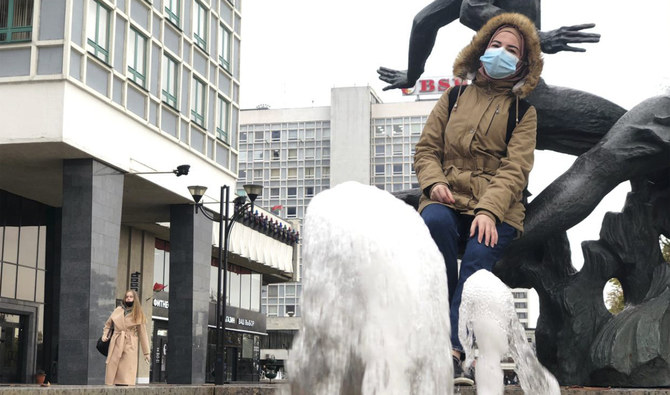

GIESSEN, Germany: She had already walked for 60 hours through the wet, dark forests of Poland, trying to make her way to Germany, when the 29-year-old Syrian Kurd twisted her knee.
It wasn’t the first setback in Bushra’s journey.
Earlier, her road companion and best friend had fainted in a panic attack as Polish border guards chased them. They hid in ditches and behind trees as her friend tried to regain her breath, but it was no good. They turned themselves in and the guards dumped them back across the border into Belarus.
They quickly returned, bedraggled and wet, on the same trail. After twisting her knee, Bushra persevered. For two more days, she dragged her right foot behind her through the rain and freezing temperatures of the forests. Finally, they reached a Polish village where a car took them across the border into Germany — for a life she hopes will be free.
“I put up with the unbearable pain. Running away from something is sometimes the easiest thing,” Bushra said in the central German town of Giessen, where she applied for asylum as a refugee. “There is no future for us in Syria.”
Bushra, who asked that her last name be withheld for her own safety, is the face of the new Syrian migrant. More Syrians are leaving home, even though the 10-year-old civil war has wound down and conflict lines have been frozen for years.
They are fleeing not from the war’s horrors, which drove hundreds of thousands to Europe in the massive wave of 2015, but from the misery of the war’s aftermath. They have lost hope in a future at home amid abject poverty, rampant corruption and wrecked infrastructure, as well as continued hostilities, government repression and revenge attacks by multiple armed groups.
More than 78,000 Syrians have applied for asylum in the EU so far this year, a 70 percent increase from last year, according to EU records. After Afghans, Syrians are the largest single nationality among this year’s nearly 500,000 asylum applicants so far.
Nine out of 10 people live in poverty in Syria. Around 13 million need humanitarian assistance, a 20 percent increase from the year before. The government is unable to secure basic needs, and nearly 7 million are internally displaced.
Roads, telecommunications, hospitals and schools have been devastated by the war and widening economic sanctions are making reconstruction impossible.
The coronavirus pandemic compounded the worst economic crisis since the war began in 2011. Syria’s currency is collapsing, and minimum wage is barely enough to buy 5 pounds of meat a month, if meat is even available.
Crime and drug production are on the rise while militias, backed by foreign powers, operate smuggling rackets and control entire villages and towns.
The numbers are far below the levels of 2015, but desperate Syrians are racing to get out. Social media groups are dedicated to helping them find a way.
Users ask where they can apply for work or scholarship visas. Others seek advice on the latest migration routes, cost of smugglers, and how risky it would be to use assumed identities to get out of Syria or enter other countries.


