




RIYADH/MANILA: Saudi Arabia's King Salman has sent a cable of condolences and sympathy to Philippine President Rodrigo Duterte for the victims of a powerful typhoon that has killed hundreds of people and destroyed thousands of homes in the central and southern regions.
“We have learned of the news of Typhoon Rai ... and the resulting deaths, injuries and missing persons," King Salman said in his message to Duterte, which was carried by the Saudi Press Agency.
"We share with you the pain of this affliction. We send to you, the families of the deceased and your friendly people, our deepest condolences and sincere sympathy," he said.
Crown Prince Mohammed bin Salman also sent a cable to Duterte commiserating with the Filipino people.
Authorities in the Philippines on Monday reported that the strongest typhoon to hit the country this year had destroyed more than 50,000 houses, sending 380,000 people to evacuation centers.
Fifty-six people were reported missing, with 500 more injured, the national police said.
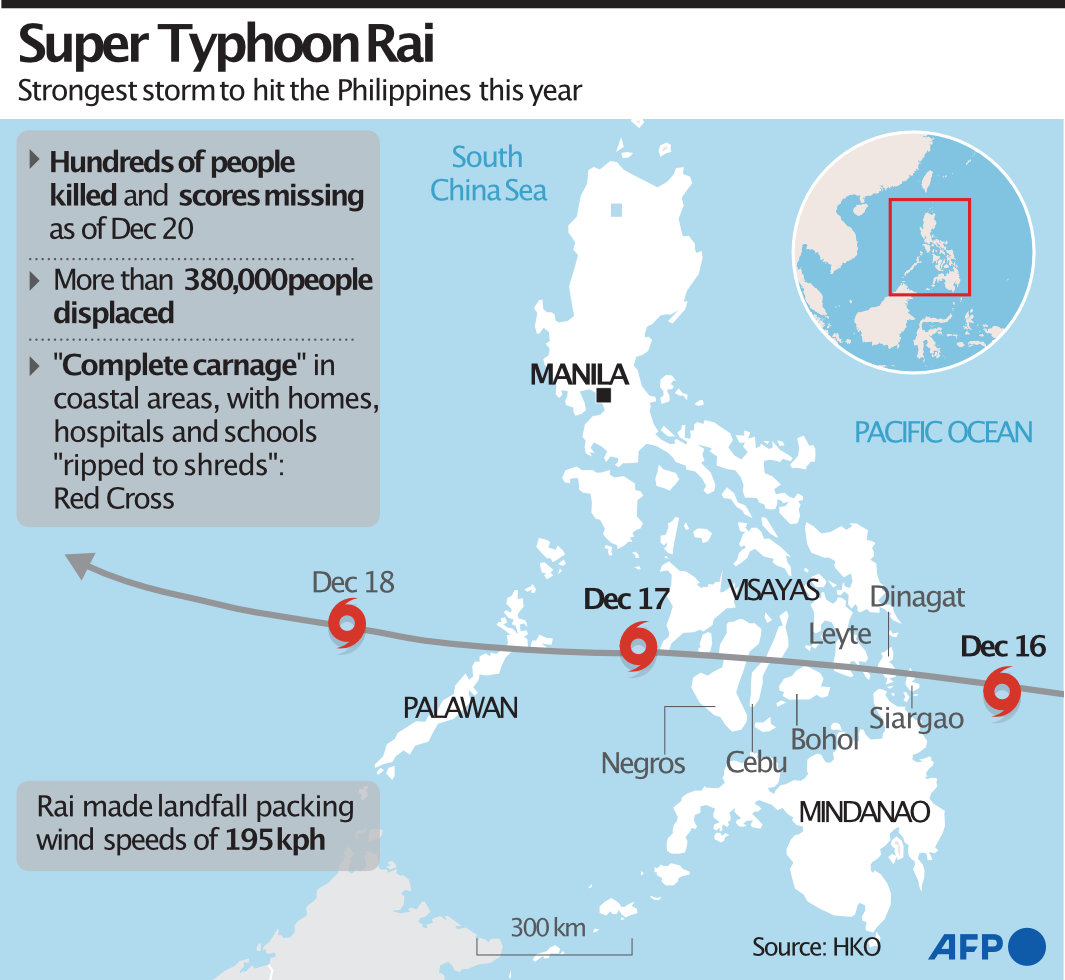
The Philippine National Red Cross reported "complete carnage" in coastal areas after Super Typhoon Rai left homes, hospitals and schools "ripped to shreds".
The storm tore off roofs, uprooted trees, toppled concrete power poles, smashed wooden houses to pieces, wiped out crops and flooded villages -- sparking comparisons to the damage caused by Super Typhoon Haiyan in 2013.
"Our situation is so desperate," said Ferry Asuncion, a street vendor in the hard-hit seaside city of Surigao, which was devastated by the storm.
Residents urgently needed "drinking water and food", he said.
One of the hardest-hit islands was Bohol — known for its beaches, "Chocolate Hills" and tiny tarsier primates — where at least 94 people have died, provincial Governor Arthur Yap said on Facebook.
Many wooden houses in Bohol's coastal town of Ubay were flattened and small fishing boats destroyed on the island, where a state of calamity has been declared.
A senior official at the national disaster agency said he had not expected as many deaths.
"I was proven wrong as it appears now coming from the reports," said Casiano Monilla, deputy administrator for operations.
Monilla said the government had so far not felt the need to call for foreign help with the relief operation.
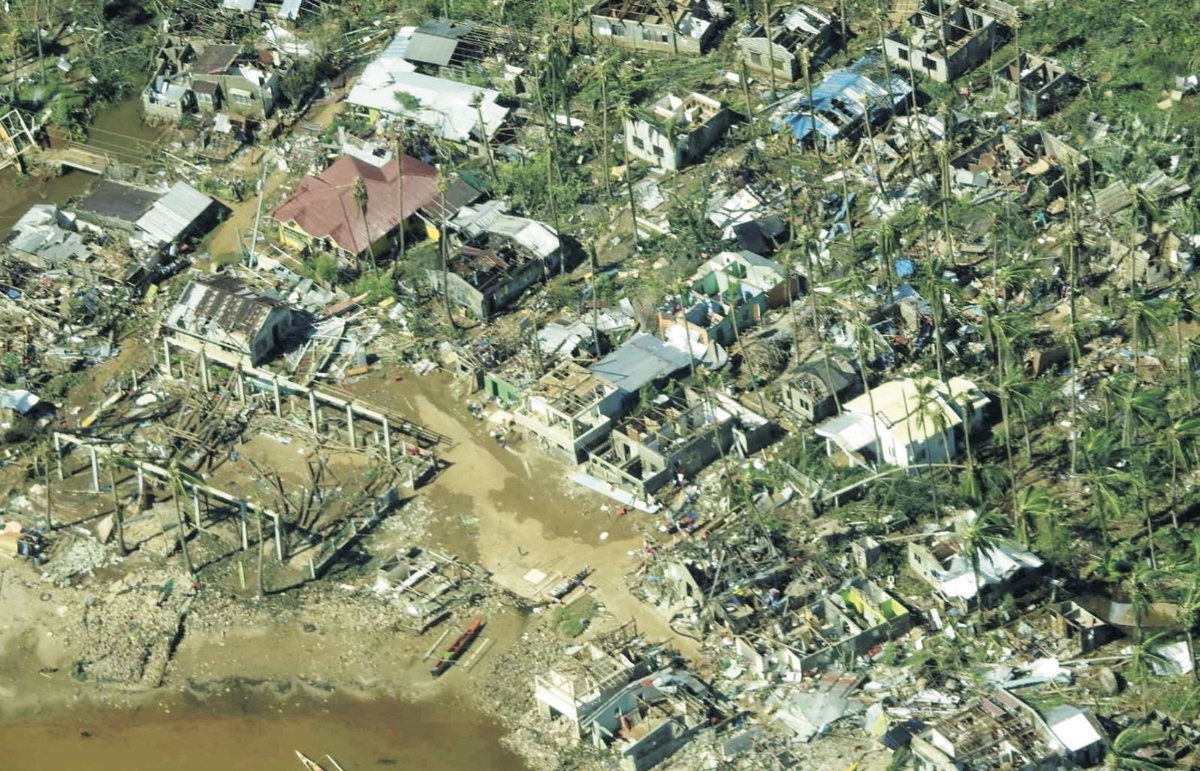
An aerial shot showing destroyed houses in Surigao City, Surigao Del Norte province, days after super Typhoon Rai devastated the province. (Reuters)
"But the office of the UN coordinator on humanitarian assistance has already sent a letter offering their technical expertise and other help that they can give locally,” Monilla added.
Scientists have long warned that typhoons are becoming more powerful and strengthening more rapidly as the world becomes warmer because of human-driven climate change.
The Philippines — ranked among the most vulnerable nations to the impacts of climate change — is hit by an average of 20 storms every year, which typically wipe out harvests, homes and infrastructure in already impoverished areas.
In 2013, Typhoon Haiyan was the strongest storm ever to have made landfall, leaving over 7,300 people dead or missing.
The death toll from Rai is not expected to get anywhere close to that number.
(With agencies)


