

Islamic Development Bank promises humanitarian assistance to Afghanistan ahead of OIC summit in Islamabad

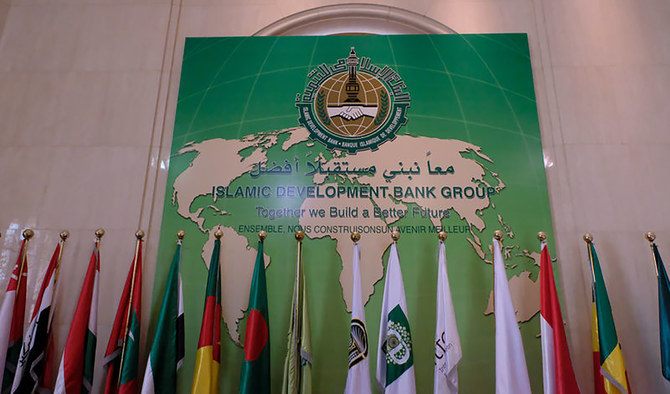
A banner with the flags of Arab countries seen at the entrance of the Islamic Development Bank headquarters in Jeddah, Saudi Arabia on May 31, 2018. (REUTERS/File)
Short Url
Updated 17 December 2021
Follow

Islamic Development Bank promises humanitarian assistance to Afghanistan ahead of OIC summit in Islamabad

  • The bank president says his institution previously launched similar operations in Palestine, Yemen, Syria and Iraq
  • The bank’s executive board is also likely to approve $180 million for the Mohmand Dam project in Pakistan

ISLAMABAD: President of Islamic Development Bank Dr. Muhammad Sulaiman Al-Jasser said on Friday his institution was willing to help Afghan people while holding a meeting with Pakistan’s planning minister Asad Umar ahead of the Organization of Islamic Cooperation’s extraordinary session focusing on humanitarian assistance to the war-battered country.
A multilateral development finance institution based in Jeddah, the bank has 57 shareholding member states with the single largest contribution coming from Saudi Arabia.
Pakistan has been striving to convince the world to provide necessary humanitarian assistance to Afghanistan since the departure of international forces in August that also led to a financial meltdown in the aid-dependent economy.
“Dr. Muhammad Al-Jasser highlighted that the Bank Group has had the experience of delivering humanitarian assistance in conflict-afflicted countries such as Palestine, Yemen, Syria, and Iraq,” said an official statement released by the planning ministry. “The Bank would garner all its institutional capacities to meet the expectations of alleviating the sufferings of the people of Afghanistan as well as meet the expectations of its member countries and the international community.”
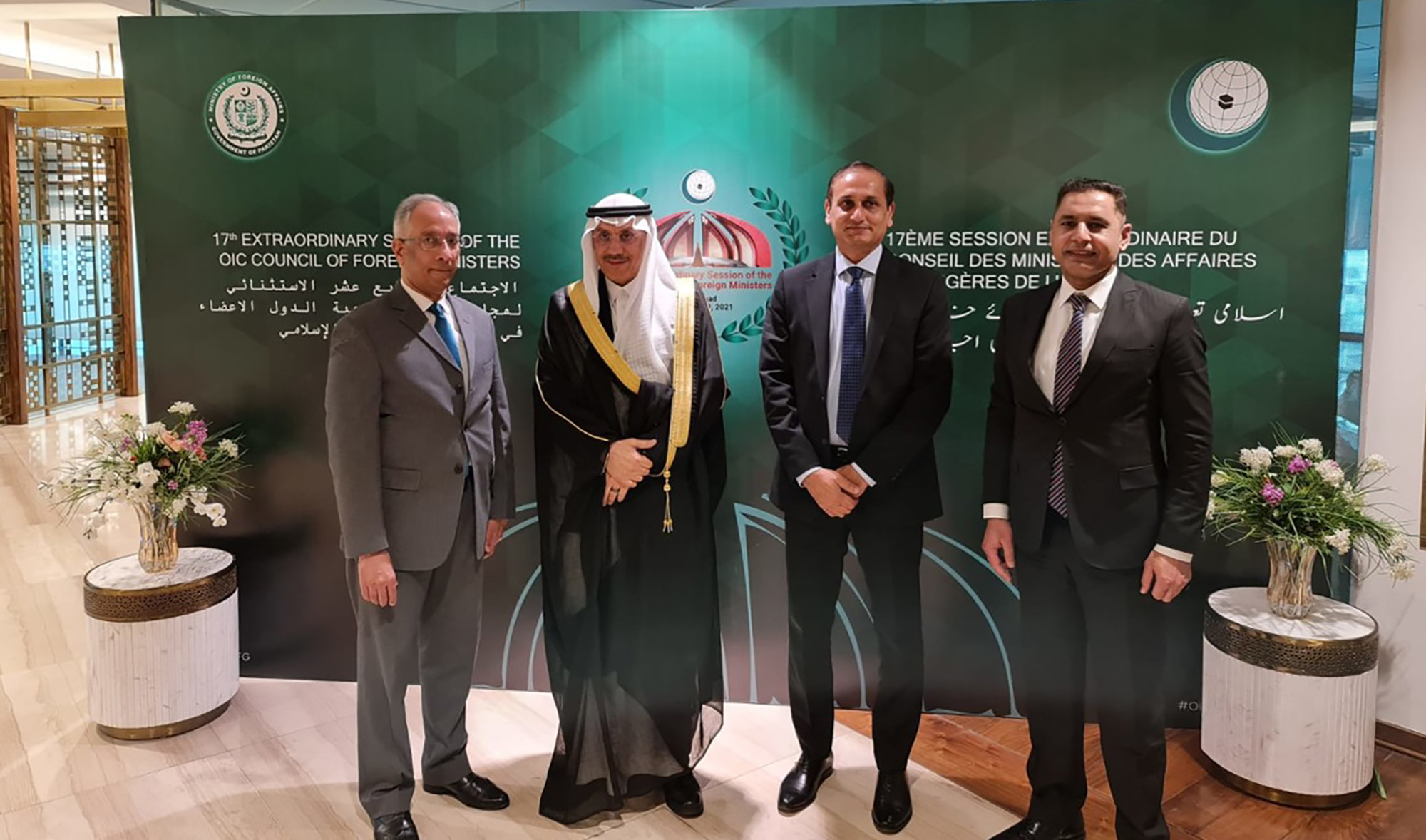


Islamic Development Bank President & Chairman Muhammad Al Jasser, second left, is seen along with Pakistani officials in Islamabad, Pakistan, on December 17, 2021. (Photo courtesy: IDB)

The bank’s president said his institution’s executive board was likely to approve $180 million for the Mohmand Dam project in Pakistan on Saturday, adding it had already endorsed $72.5 billion under the COVID-19 vaccine support program for the country in April 2021.
The Pakistani minister congratulated Al-Jasser on assuming the top office of the bank for five-year term in July.
Umar also requested him to support his institution’s long-term finance operations in the country through a guarantee structure to strengthen the bankability of the projects.
He informed the visiting dignity of the planning commission’s three-year rolling growth strategy while requesting the bank support and alignments of its medium-term operations through the instruments of member countries partnership strategy.
Al-Jasser welcomed the initiative and assured of his institution’s full cooperation, said the official statement.
Discussing the government’s COVID-19 containment strategy, the Pakistani minister highlighted the internationally acclaimed role of the National Command and Operation Center, his country’s central pandemic response body, and expressed the readiness to share the experience with other member countries of the bank.
The president of the Islamic Development Bank is also scheduled to address the inaugural OIC session in Islamabad on Saturday.


Pakistan’s Mahnoor Omer named among TIME’s ‘Women of the Year’ for 2026

Updated 01 March 2026
Follow

Pakistan’s Mahnoor Omer named among TIME’s ‘Women of the Year’ for 2026

  • Omer moved a Pakistani court against the so-called ‘period tax’ in Sept. 2025 which has since sparked a national debate
  • Taxes on sanitary pads in Pakistan can add up to 40 percent to retail price, UNICEF says only around 12 percent women use such products

ISLAMABAD: Pakistani women’s rights activist Mahnoor Omer, who fought against taxes on menstrual products, has been named among the TIME magazine’s ‘Women of the Year’ for 2026.

Omer’s efforts have been recognized alongside 16 activists, artists, athletes and businesswomen in the TIME’s Women of the Year 2026 list, including Olympic gold medalist Sydney McLaughlin-Levrone and Oscar-nominated filmmaker Chloe Zhao.

Dissatisfied with the efforts to educate Pakistani girls about sexual violence, Omer founded the Noor Foundation at the age of 14 and held her own workshops with village girls about everything from climate change to menstruation, according to the TIME magazine.

Two years later, a conversation with a domestic worker about the price of pads made her realize that not everyone could afford these essentials. She moved a court against the so-called “period tax” in Sept. 2025 and the case has sparked a national debate on the subject, considered a taboo by many in Pakistan, since its first hearing late last year.

“A decade and one law degree after her interest in activism was sparked, Omer, now 25, is putting her passion and expertise to work in the name of gender equity,” TIME wrote about Omer on its website.

Taxes imposed on sanitary products in Pakistan can add up to 40 percent to the retail price. UNICEF estimates just 12 percent of women in the country use commercially produced pads or tampons. The alternative, using cloth, risks health impacts including rashes and infections, and can make it impossible for girls to attend school while menstruating.

Omer’s suit, which awaits the government response, has sparked a national discussion. She says she spoke about menstruation to her father and male cousins, who thanked her for standing up for their daughters.
The 25-year-old, who is currently enrolled in a master’s degree in gender, peace, and security at the London School of Economics, sees this case as just the first of many.

“I’m not free until every woman is free,” she was quoted as saying by TIME. “I want to leave no stones unturned in terms of what I can do with the next few decades, as a lawyer for the women in my country and gender minorities in general.”