

Al-Qaeda, Deash will ‘get advantage,’ Pakistan warns as delegates arrive for OIC Afghanistan session

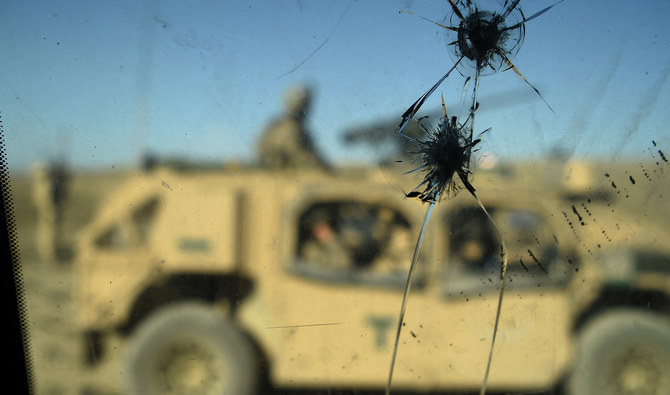
US Army soldiers are seen through a cracked window of an armed vehicle in a checkpoint during a patrol against Daesh militants in Deh Bala district in the eastern Afghan province of Nangarhar on July 7, 2018. (AFP/File)
Short Url
Updated 18 December 2021
Follow

Al-Qaeda, Deash will ‘get advantage,’ Pakistan warns as delegates arrive for OIC Afghanistan session

  • US Central Command warned last week that Al-Qaeda is attempting to rebuild its presence inside Afghanistan
  • Washington's special representative for Afghanistan Tom West has confirmed his participation in the OIC meeting

ISLAMABAD: Groups such as Al-Qaeda and Deash will get advantage of the Afghan crisis, Pakistan foreign minister Shah Mahmood Qureshi warned on Friday as delegates for the Organization of Islamic Cooperation's (OIC) special session on Afghanistan started to arrive in Islamabad.

The 17th Extraordinary Session of the OIC's Council of Foreign Ministers was called by Saudi Arabia and will be hosted by Islamabad on Dec. 19. The meeting's focus is on the humanitarian situation in Afghanistan, where the economy plunged into free fall in mid-August when the Taliban took control as US-led foreign troops withdrew after 20 years of presence.

Concerns over the unchecked presence of extremist groups on Afghan soil have been raised since the beginning of the US withdrawal, but last week the head of the US Central Command said it was clear that Al-Qaeda is attempting to rebuild its presence inside Afghanistan, which was the base from which it planned the Sept. 11, 2001 attacks against the US.

"The likes of Al-Qaeda and Daesh will get advantage of the crisis and will increase their footprints in Afghanistan," Qureshi told reporters during a press briefing. 
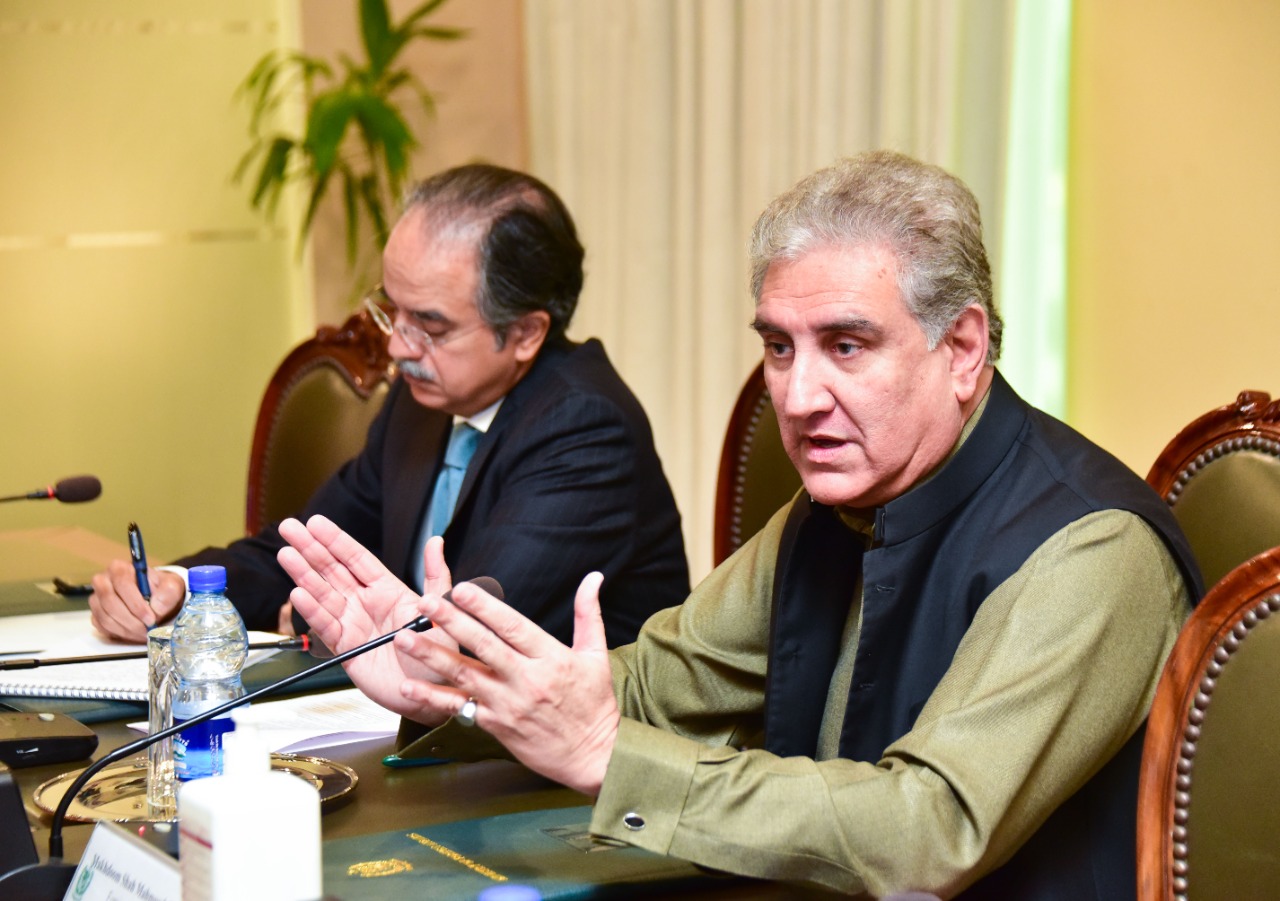


Pakistan foreign minister Shah Mahmood Qureshi (R) is addressing a media briefing ahead of OIC meeting on Afghanistan in Islamabad on December 17, 2021. (Courtesy: Ministry of foreign affairs)

The Taliban takeover prompted the US and other donors to cut off financial aid on which Afghanistan became dependent during 20 years of war, and froze $9.5 billion in Afghan central bank assets, isolating the country from the global financial system and paralyzing its banks.

UN agencies say nearly 23 million people — about 55 percent of the Afghan population — are now facing extreme levels of hunger, with 9 million at risk of famine.

"If we will not act now this will become the largest humanitarian crisis in the world," Qureshi said. "All you have invested in Afghanistan in last 20 years in education, and other sectors will be ruined. The gains the world has made will evaporate."

As delegates for the OIC meeting started to arrive in Islamabad, including the organization's secretary general Hissein Brahim Taha and Islamic Development Bank president Muhammad Sulaiman Al-Jasser, Qureshi said US Special Representative for Afghanistan Tom West has also confirmed his participation.

"That gives US an opportunity of assessing the situation right sitting next door," he said, adding that he had also discussed the unfreezing of the Afghan central bank assets with US Secretary of State Antony Blinken, who cited "certain legal issues" hindering the release of funds.

"I think within those legal issues there is still a cushion of around $2 billion which is not tied to that legal issue. By releasing those $2 billion US can ease immediate sufferings of Afghan people, so what we are saying is they should consider that," Qureshi said.

"Rebooting the banking system would be a big step in the direction of economic stability that is the immediate step that is required."

He added that Afghanistan's acting foreign minister Amir Khan Muttaqi is also scheduled to attend the OIC meeting, which will give the international community an opportunity to express their concerns and expectations directly to the Taliban.


US Marines fired on protesters storming consulate in Karachi, officials say

Updated 6 sec ago
Follow

US Marines fired on protesters storming consulate in Karachi, officials say

  • Ten people were killed when protesters stormed consulate on Sunday to protest Iranian supreme leader’s killing
  • Citing initial information, two US officials say unclear whether rounds fired by Marines struck or killed protesters

WASHINGTON: ‌US Marines opened fire on demonstrators during the storming of the Karachi consulate over the weekend, two US officials said on Monday— a rare use of force at ​a diplomatic post that could sharply escalate tensions in the country amid widespread protests over the killing of Iran’s leader.

Ten people were killed on Sunday when protesters breached the compound’s outer wall after Iranian Supreme Leader Ayatollah Ali Khamenei was killed in strikes on Iran. Citing initial information, the two US officials said it was unclear whether rounds fired by Marines struck or killed anyone.

They also did ‌not know whether ‌shots were also fired by others protecting ​the ‌mission, ⁠including private ​security ⁠guards and local police. This would mark the first confirmation by US officials that Marines were involved in firing at the protesters.

A provincial government spokesman, Sukhdev Assardas Hemnani, said “security” personnel had opened fire, without specifying their affiliation. Daily security operations at US diplomatic missions are often carried out by private contractors and local forces, and the involvement of Marines in the incident ⁠underscores how seriously the consulate viewed the threat. Pakistan is ‌home to the world’s second-largest Shia ‌community after Iran.

On Monday, Pakistan banned ​large gatherings nationwide after the protests ‌over the strikes on Iran spread, with 26 people reported dead ‌across the country. Protesters on Sunday chanted “Death to America! Death to Israel!” outside the consulate, where Reuters reporters heard gunfire and saw tear gas fired in surrounding streets.

Video on social media appeared to show at least one protester firing ‌a weapon toward the consulate and bloodied demonstrators fleeing as shots rang out. A Karachi police official told ⁠Reuters that ⁠the shots were fired from inside the consulate premises. The US Marines referred questions to the US military, which in turn referred questions to the State Department.

The State Department did not respond to a request for comment. Shia community leaders have called for more protests in Lahore and Karachi despite the nationwide ban on public gatherings.

The US embassy in Pakistan is in the capital, Islamabad, and there are two additional consulates in Peshawar and Lahore.

Roads leading to the US consulate in Karachi were blocked off with a heavy police presence in ​the area. Similar measures were ​in place around US missions in Lahore and Islamabad.