MANILA: At least 75 people have been reported killed in the strongest typhoon to hit the Philippines this year, official tallies showed Sunday, as efforts to deliver water and food to devastated islands ramped up.
More than 300,000 people fled their homes and beachfront resorts as Typhoon Rai ravaged the southern and central regions of the archipelago.
The storm knocked out communications and electricity in many areas, ripping off roofs and toppling concrete power poles.
Arthur Yap, governor of the popular tourist destination Bohol, said on his official Facebook page that mayors on the devastated island had reported 49 deaths in their towns.
That took the overall number of reported deaths to 75, according to the latest official figures.
Yap said 10 people were still missing on the island and 13 were injured after the storm smashed into the country Thursday as a super typhoon packing wind speeds of 195 kilometers (120 miles) per hour.
“Communications are still down. Only 21 mayors out of 48 have reached out to us,” Yap said, raising fears the death toll could rise in the flood-hit province.
Thousands of military, police, coast guard and fire personnel are being deployed to assist in search and rescue efforts in the worst-affected areas.
A Philippine Navy ship carrying goods and other relief would depart for Bohol on Monday, Yap said, after he earlier declared a state of calamity on the island.
There has also been widespread destruction on Siargao, Dinagat and Mindanao islands, which bore the brunt of Rai when it slammed into the Philippines.
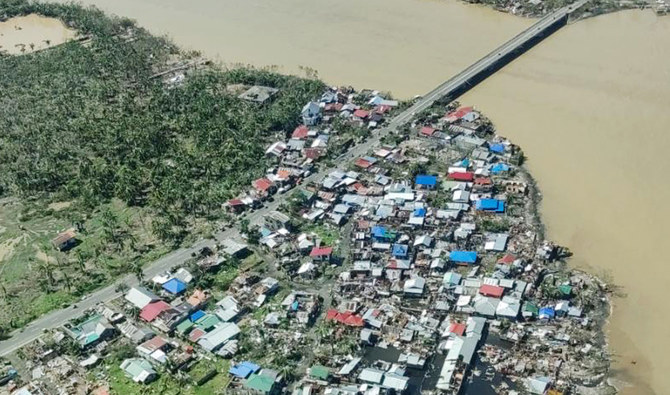
Aerial photos shared by the military showed severe damage in the Siargao town of General Luna, where many surfers and holidaymakers had flocked ahead of Christmas, with buildings stripped of roofs and debris littering the ground.
Dinagat Governor Arlene Bag-ao said Saturday the damage to the island’s landscape was “reminiscent if not worse” than that caused by Super Typhoon Haiyan in 2013.
Haiyan, which is called Yolanda in the Philippines, was the deadliest cyclone on record in the country, leaving more than 7,300 people dead or missing.
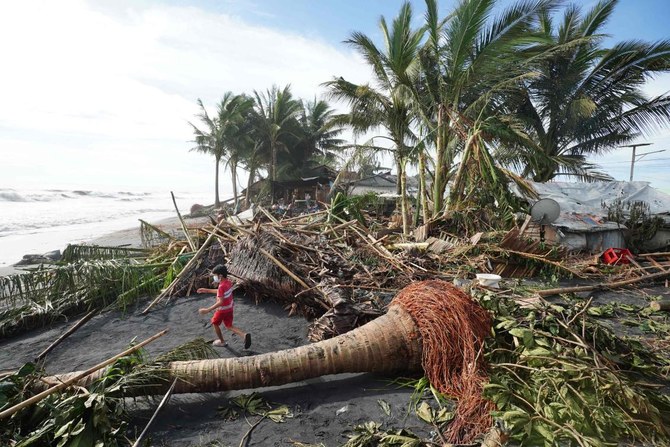
Rai’s wind speeds eased to 150 kph as it barrelled across the country, dumping torrential rain that inundated villages, uprooting trees and shattering wooden structures.
It emerged over the South China Sea on Saturday and headed toward Vietnam.
The Philippines — ranked one of the world’s most vulnerable countries to the impacts of climate change — is hit by an average of 20 storms and typhoons every year, which typically wipe out harvests, homes and infrastructure in already impoverished areas.


![]()
![]()
![]()

Typhoon leaves 75 dead, many homes roofless in Philippines

Short Url
https://arab.news/nwckj
Typhoon leaves 75 dead, many homes roofless in Philippines
- Typhoon Rai slightly weakened after blowing ashore Thursday on the country’s southeastern coast but remained deadly and destructive


Latest updates


© 2026 SAUDI RESEARCH & PUBLISHING COMPANY, All Rights Reserved And subject to Terms of Use Agreement.