

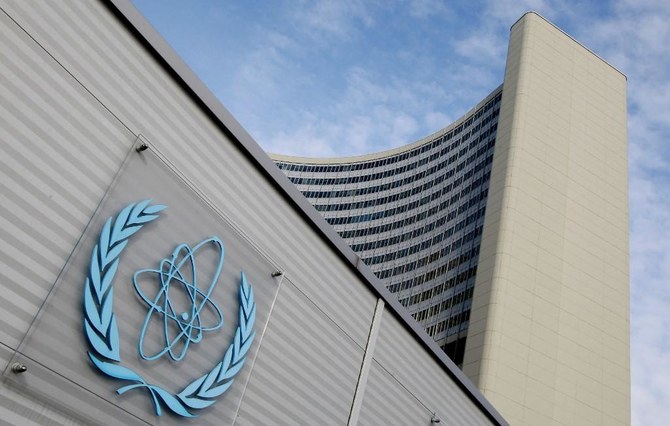
Iran backs down over atom plant monitoring, lets UN replace nuclear site's damaged cameras

Iran has allowed IAEA – the UN nuclear watchdog – to replace its cameras at a centrifuge parts workshop in Karaj. (AFP)
Short Url
Updated 16 December 2021
Follow

Iran backs down over atom plant monitoring, lets UN replace nuclear site's damaged cameras

  • Until Wednesday, Iran had turned down the IAEA's requests to replace the cameras
  • Negotiations resumed on Thursday last week to try to revive the 2015 nuclear deal

TEHRAN/JEDDAH:  Iran bowed to pressure from Washington and the UN nuclear watchdog on Wednesday and agreed to new monitoring cameras being installed at a workshop that makes parts for centrifuges that enrich uranium.

One of the International Atomic Energy Agency’s four cameras in the workshop at the TESA Karaj complex was destroyed in an Israeli sabotage attack in June. Iran then removed all the cameras and banned the agency from replacing them.

The US threatened to confront Tehran at the IAEA’s 35-nation board of governors if it did not change its mind, a confrontation that would have led to the collapse of talks in Vienna aimed at reviving the 2015 nuclear deal with Iran.

The Vienna-based International Atomic Energy Agency (IAEA) has been seeking to replace the devices which Iran says were damaged in a June attack it blames on Israel.

"In a gesture of goodwill, Iran is allowing the IAEA to install new cameras to replace those damaged in a sabotage operation" against the Karaj nuclear site, said the Nour news agency, considered close to Iran's National Security Council.
"This is a voluntary action by Iran to end misunderstandings in its relations with the IAEA," it said.

"Due to the completion of the safety investigation of the damaged cameras, as well as the agency's decision to condemn the sabotage in the TESA complex and to accept the technical inspection of the cameras by Iranian experts before their installation, Iran has authorised the agency to replace the damaged cameras with new ones," it added.

Iran accuses its arch foe Israel of being behind a "sabotage" attack on the TESA Karaj centrifuge component manufacturing workshop on June 23.

At the time it had said it thwarted the attack on the building without identifying the nature of the incident.

Until Wednesday, Iran had turned down the IAEA's requests to replace the cameras. Negotiations resumed on Thursday last week to try to revive a 2015 deal between Iran and world powers, which the United States withdrew from under Donald Trump in 2018.

Iran says it only wants to develop a civilian capability but Western powers say its stockpile of enriched uranium goes well beyond that, and could be used to develop a nuclear weapon.The Islamic republic has always denied wanting a nucleararsenal.

The development was also reported by other Iranian news agencies.
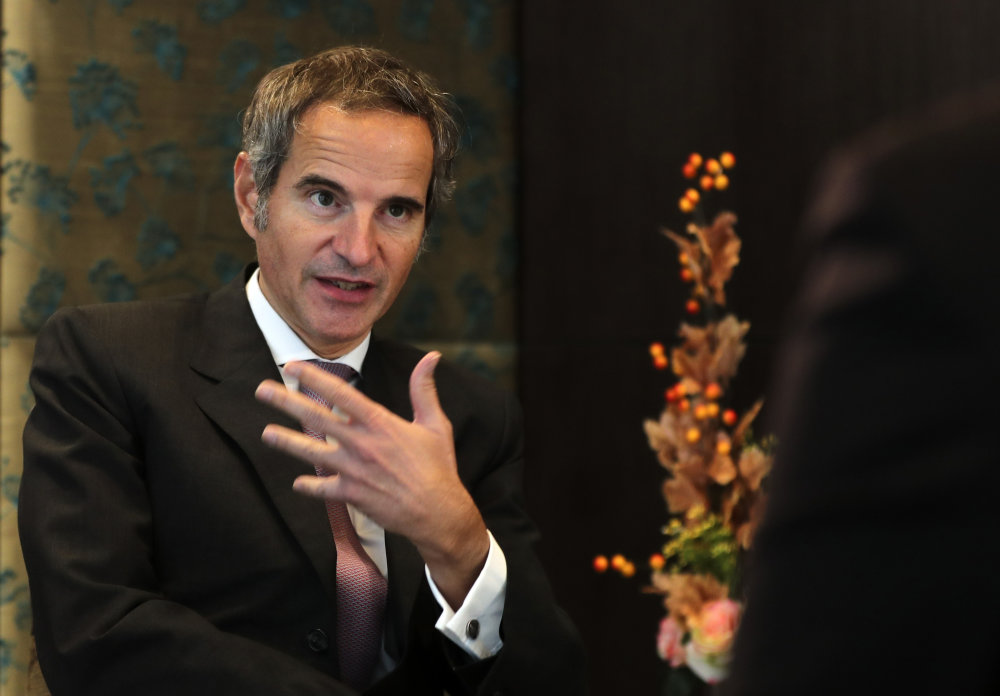


IAEA Director General Rafael Mariano Grossi. (AP File)

“The agreement with Iran on replacing surveillance cameras at the Karaj facility is an important development for the IAEA’s verification and monitoring activities in Iran,” agency chief Rafael Grossi said. “I sincerely hope we can continue our constructive discussions to also address and resolve all outstanding safeguards issues in Iran.”

However, Wednesday’s agreement did not address the issue of missing footage from the camera that was destroyed. The IAEA and Western powers have called on Iran to explain where it is.

The bigger the gap in knowledge of what goes on at Karaj, the greater the concern among Western and Gulf states that Iran has secretly siphoned off key parts for uranium centrifuges.


Second US aircraft carrier is being sent to the Middle East, AP source says

Updated 57 min 57 sec ago
Follow

Second US aircraft carrier is being sent to the Middle East, AP source says

  • Move by the USS Gerald R. Ford, first reported by The New York Times, will put two carriers and their accompanying warships in the region
  • Trump told Axios earlier this week that he was considering sending a second carrier strike group to the Middle East

WASHINGTON: The world’s largest aircraft carrier has been ordered to sail from the Caribbean Sea to the Middle East, a person familiar with the plans said Thursday, as US President Donald Trump considers whether to take possible military action against Iran.
The move by the USS Gerald R. Ford, first reported by The New York Times, will put two carriers and their accompanying warships in the region as Trump increases pressure on Iran to make a deal over its nuclear program. The person spoke on condition of anonymity to discuss military movements.
The USS Abraham Lincoln aircraft carrier and three guided-missile destroyers arrived in the Middle East more than two weeks ago.
It marks a quick turnaround for the USS Ford, which Trump sent from the Mediterranean Sea to the Caribbean last October as the administration build up a huge military presence in the leadup to the surprise raid last month that captured then-Venezuelan President Nicolas Maduro.
It also appears to be at odds with Trump’s national security strategy, which put an emphasis on the Western Hemisphere over other parts of the world.
Trump on Thursday warned Iran that failure to reach a deal with his administration would be “very traumatic.” Iran and the United States held indirect talks in Oman last week.
“I guess over the next month, something like that,” Trump said in response to a question about his timeline for striking a deal with Iran on its nuclear program. “It should happen quickly. They should agree very quickly.”
Trump told Axios earlier this week that he was considering sending a second carrier strike group to the Middle East.
Trump held lengthy talks with Israeli Prime Minister Benjamin Netanyahu on Wednesday and said he insisted to Israel’s leader that negotiations with Iran needed to continue. Netanyahu is urging the administration to press Tehran to scale back its ballistic missile program and end its support for militant groups such as Hamas and Hezbollah as part of any deal.
The USS Ford set out on deployment in late June 2025, which means the crew will have been deployed for eight months in two weeks time. While it is unclear how long the ship will remain in the Middle East, the move sets the crew up for an usually long deployment.
The White House didn’t immediately respond to a request for comment.