

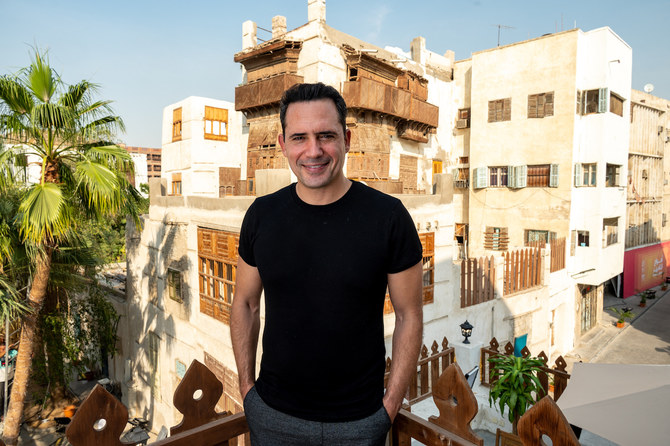

DUBAI: More than two decades ago, Dhafer L’Abidine — the now mega-popular Tunisian actor and director — was in London speaking on the phone to his mother, who wanted to hear how his burgeoning career in film was going.
It was going great, he said, not wanting his family to know that he was washing dishes to make rent, struggling to land a role that would justify his transcontinental move to pursue a dream after his stint as a professional football player went awry and a promising career as a model proved too unfulfilling.
Even as he doubted himself, L’Abidine, now 49 and a crossover star of the screen in both the Arab world and the West, knew how much his mother and father believed in him, and that’s what pushed him to become the huge success he ended up becoming as an actor.

“Ghodwa” screened at the inaugural Red Sea International Film Festival in Jeddah. (Supplied)
It’s that same love that drove him to never limit himself, and why — even when he had achieved huge success in Egypt and across the world — he undertook the biggest risk of his career; writing and directing his own film, “Ghodwa” (‘Tomorrow’ in English), which just screened at the inaugural Red Sea International Film Festival in Jeddah.
“Why would I take the risk to do a film that could fail? As an actor, if it doesn’t work, you’re usually not the one people blame,” L’Abidine says. “With directing, people can actually judge you, and the box office will immediately show you the success of your vision. It’s brutal. To do something like that, you must believe in something. You must believe in yourself.”
Two weeks into pre-production on “Ghodwa,” L’Abidine’s mother died; a devastating shock that came years after the death of his father, a loss that he had never fully recovered from.
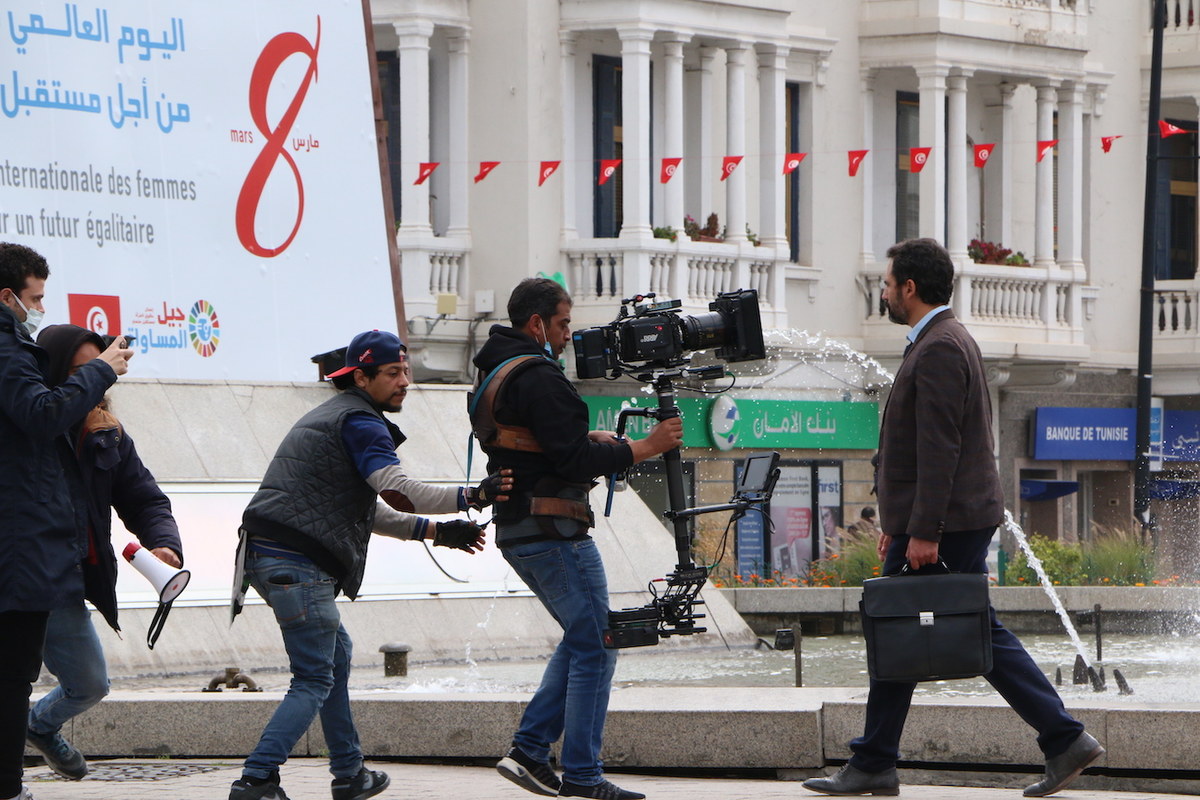
“Ghodwa” is set 10 years after Tunisia’s Jasmine Revolution, with the wounds of the previous regime still unhealed. (Supplied)
“It was an intense time to be honest, but we kept going. I had to push myself, both for the team and for me. I wanted to do it for my mom, and my father too. I would have loved for them to see it, but even though they couldn’t, I could make it for their memory, and for all they had done for me,” L’Abidine tells Arab News. “In a way, that is what kept me going.”
“Ghodwa” is set 10 years after Tunisia’s Jasmine Revolution, with the wounds of the previous regime still unhealed. While there is a strong political current to the film, due to the fact that L’Abidine has remained highly engaged in Tunisian politics — checking the news five to six times a day, he tells us — what was important for L’Abidine was not the political message, it was the personal one.
The film is ultimately about a father who is struggling to function in a flawed society, and his teenaged son, still in school, who has no choice but to take care of his father and patiently help him through his struggles, even as it hurts him, and even when he doesn’t understand what his father is going through. It is that father-son bond that L’Abidine believed in most, and why this was a story he had to tell himself.

The film is ultimately about a father who is struggling to function in a flawed society. (Supplied)
“Their relationship is the main thing. The political and economic themes give the story depth, but without the relationship between the father and the son, it’s nothing,” he says. “I never wanted it to be about the politics. It doesn’t matter where you’re from, you have a connection to this kind of relationship. And it doesn’t matter where you’re watching this film, whether in the Arab region or across the world, we all want to have the best relationship with our fathers or our sons that we possibly can. That is what I believed in most.”
Becoming a writer and director, however — especially a good one — is a huge undertaking, one that led L’Abidine to discover new things about himself.
“When you’re behind the camera, everything is new. You have to adapt and learn quickly, listen to everyone around you, try to see the logic behind each of their perspectives and try to make the right choice. Ultimately, that’s what directing is — making decisions, because you have no one to turn to but yourself,” says L’Abidine.

((L to R) Ahmed Berrhouma and Dhafer L'Abidine. (Supplied)
“Through all of those firsts, I had to remain open and go with it, and that helped me a lot. I never expected it to be easy, so when it wasn’t, I never complained,” he continues. “I knew I was out of my comfort zone — that was the whole point. I was acting, directing, and taking care of production. I barely had time to eat. But the journey was so rewarding. I loved every minute of it, even when it was at its hardest.”
As proof of that statement, L’Abidine reveals he has already written his second feature, which dives into the ways that East and West interact.
“I actually think I’m getting addicted to it. It’s so fulfilling. It was a dream for a long time. My life has felt like a puzzle, and I’ve slowly been putting it all together. In creating a story as a director, you have the power to explore things that you never could as an actor. As a director, you cannot hide. Everything is your responsibility. You’re creating life, you’re creating a soul people can see themselves in. Your ideas and your choices become something people can connect to across the world. That’s all I ever wanted to do,” he says.
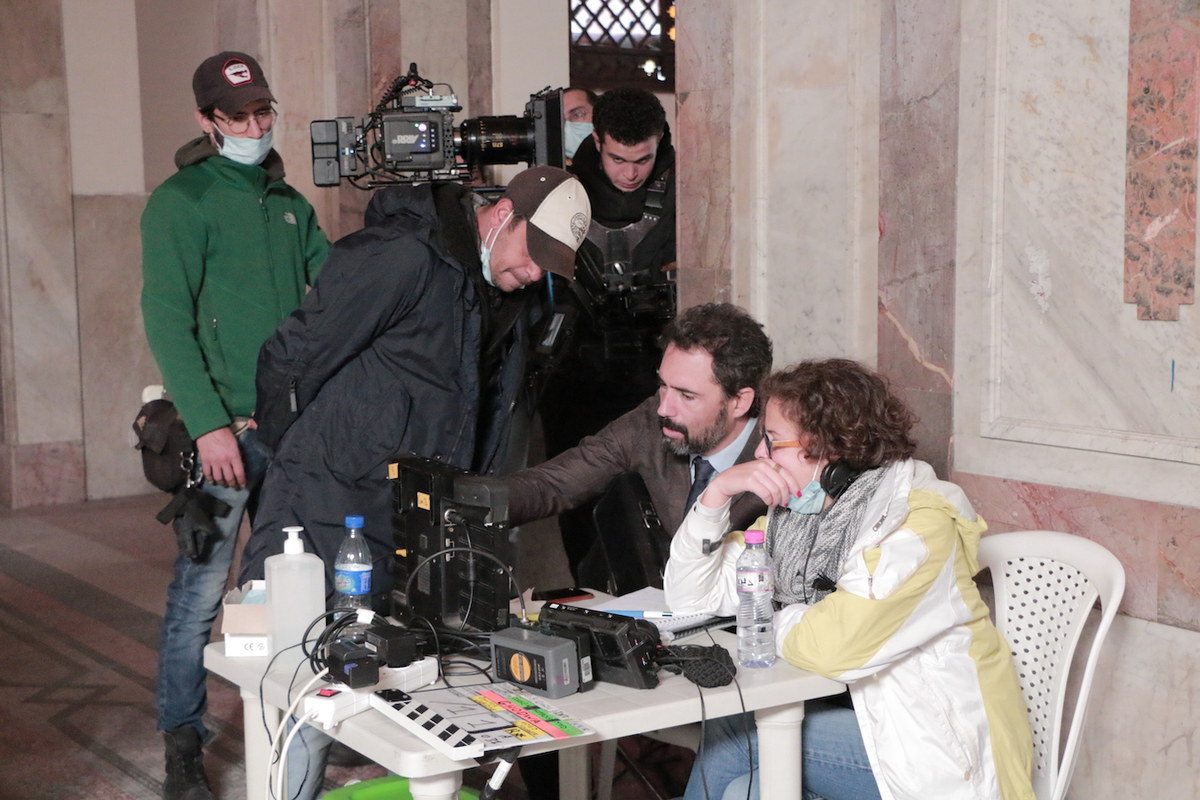
At the film’s world premiere at the Cairo International Film Festival this month, “Ghodwa” scooped the International Federation of Critics’ Prize. (Supplied)
And momentum is on his side. At the film’s world premiere at the Cairo International Film Festival this month, “Ghodwa” scooped the International Federation of Critics’ Prize, one of the festival’s top honors. It was a moment L’Abidine will cherish forever, as was its showing in Jeddah.
“I’m so thrilled. The reaction of the public has been great, in both (Jeddah) and Cairo, by audiences from across the world,” he says. “We told this story so people from across the world can connect with it, and that people really are is such a great feeling.”
As L’Abidine focuses on his next step with the production company he has named after his father and mother, he’s planning to stay true to the values they instilled in him and become the man he always hoped he would be.
“I’m so happy with this whole experience. Now, I just need to keep my head straight and be careful. As long as you make things from the heart, as long as you feel what you're making, I think you can do it properly,” he says. “That’s what I will always push myself to do.”


