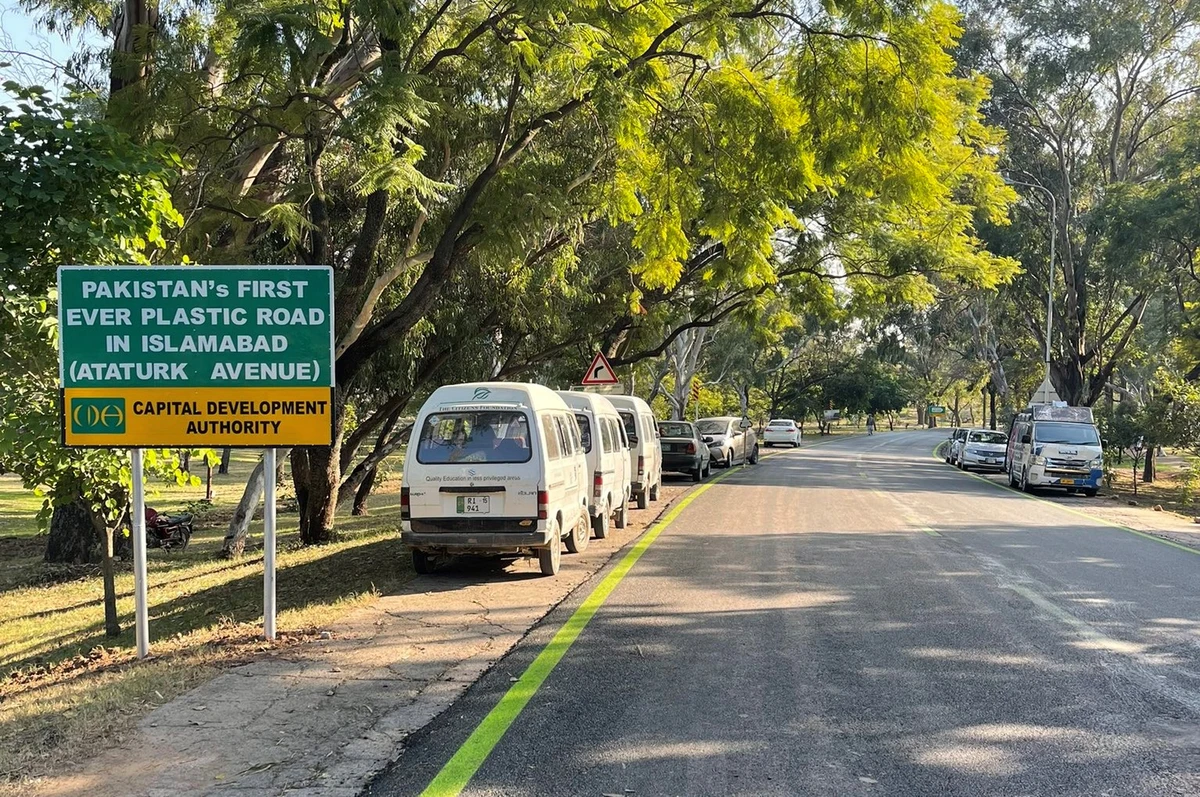
- Almost 10 tons of plastic waste was recycled to re-carpet a one-kilometer-long patch of Ataturk Avenue in the Pakistani capital
- Plastic Road Project executed with funding of Rs21 million in partnership with Coca Cola, TeamUp and Capital Development Authority
ISLAMABAD: Pakistan’s 'first plastic road,' carpeted with recycled plastic waste, was inaugurated in Islamabad on Monday, a press release by three organizations that collaborated on the project said.
Pakistan has the highest percentage of mismanaged plastic in South Asia. Around 55 billion plastic bags are produced in the country every year, most of them destined for garbage dumps, landfill sites, or municipal sewers. Around 30 million tons of solid waste is produced each year, out of which nine percent are plastics. The result is increasing plastic pollution in the country which has a negative effect on human health and marine life, upsetting food chains and causing air, water and land to pollute.
The government of Pakistan estimates that 87,000 tons of solid waste is generated per day, mostly from major metropolitan areas. Karachi, Pakistan’s largest city, generates more than 13,500 tons of municipal waste daily. All major cities face enormous challenges in managing urban waste.
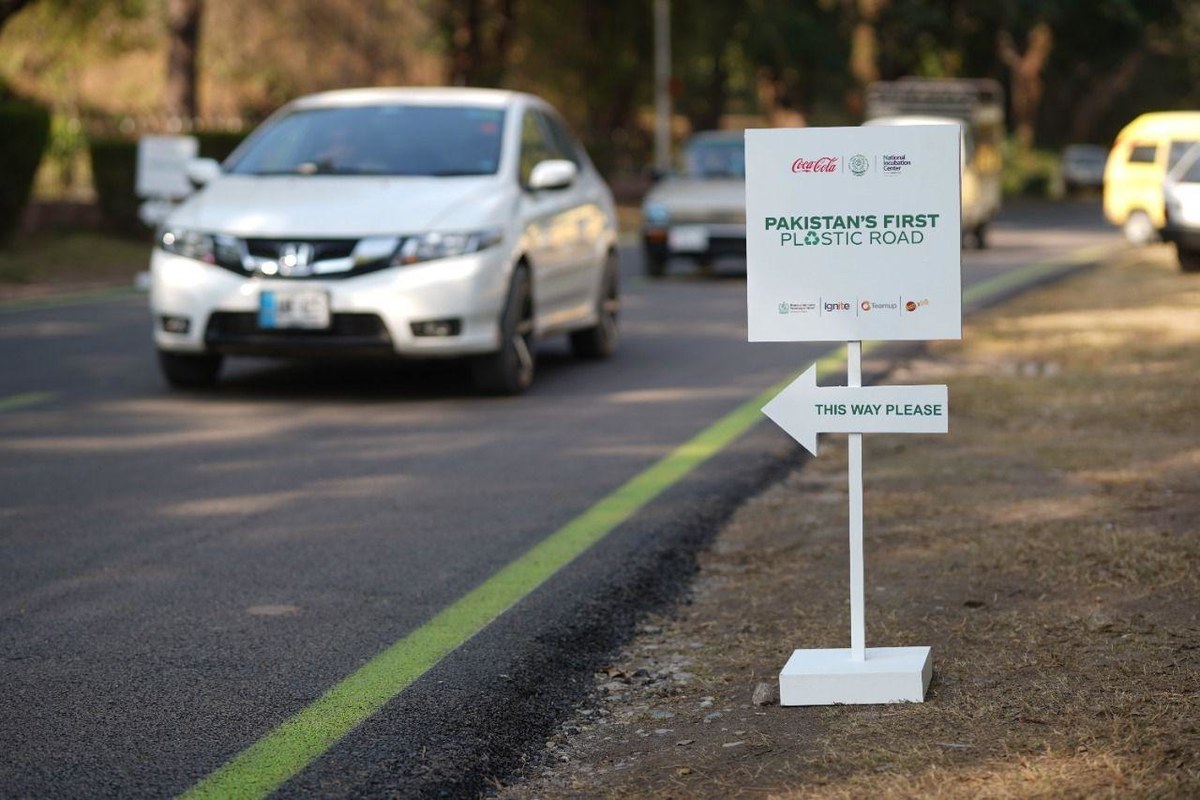
Utilizing an innovative solution that is gaining traction around the world, Coca-Cola Pakistan and Afghanistan partnered up with technology hub Teamup and the Capital Development Authority to use plastic waste to re-carpet roads, recycling almost 10 tons of plastic waste to pave a kilometer-long patch of Ataturk Avenue in Islamabad at a cost of Rs21 million.
“As part of our global sustainability and environmental goals and vision, together with TeamUp, we focused on creating & developing a bituminous mixture that can provide longer-lasting and smoother roads than we have today,” Coca Cola said in a press release. “With an ever-increasing road network of over 270,000 kilometers, this project has the potential to change the way we view plastic waste.”
The project aligns with the World Without Waste initiative and also with the UN’s Sustainable Development Goals of the future. The Coca-Cola Company in 2018 launched the product packaging policy ‘World Without Waste’ whereby the Company will lead the industry to collect and recycle every bottle or can it sells by 2030.
“This plastic road project will set the stage for the future of innovation,” Chairman Capital Development Authority (CDA) Amer Ali Ahmed said. “What is particularly exciting is how this opens us up to the possibility of now making this a reality across the nation.
“This road belongs to all Pakistanis, and all the people who care about progress,” Fahad Ashraf, VP for Coca-Cola Pakistan and Afghanistan, said.
Plastic roads are made either entirely of plastic or of composites of plastic with other materials. Plastic roads are different from standard roads in that standard roads are made from asphalt concrete, which consists of mineral aggregates and asphalt. Currently, there are no records of regular roads made purely of plastic but plastic composite roads have existed and demonstrate characteristics superior to regular asphalt concrete roads. Specifically, they show better wear resistance. The implementation of plastics in roads also opens a new option for recycling post-consumer plastics.
India has installed over 60,000 miles of plastic roads. The technology is also gaining ground in Britain, Europe, and Asia. Several countries — South Africa, Vietnam, Mexico, the Philippines, and the United States, among them — have built their first plastic roads recently.
“In Pakistan, TeamUp and the Capital Development Authority have worked with the country's best road engineers to conduct laboratory testing of the road mixture to develop an optimum blend of materials with which this project has been executed,” Coca Cola said.
VP Fahad Ashraf added: “This idea provides a breakthrough solution to bring back plastic waste into the productive economy. And we also want to focus on building a community around the idea and the innovation itself. For any concept to be applied and adopted, the people must first believe in it, and it needs to make social and commercial sense.”