

Saudi aid agency to cover Albanian students’ expenses

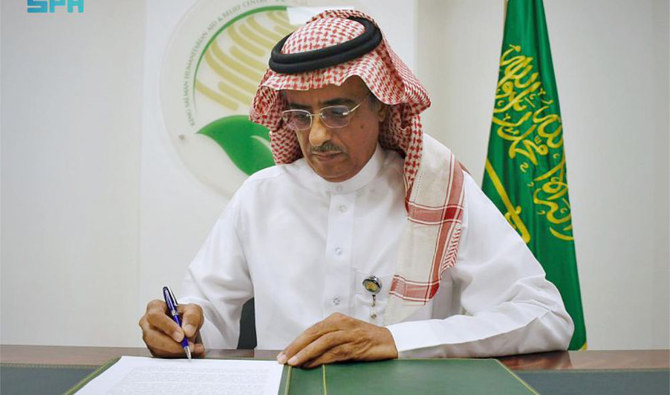
Saudi aid agency has signed an agreement to cover the annual expenses of orphans and needy students in Albanian Islamic sheikhdom schools. (SPA)
Short Url
Updated 01 December 2021
Follow

Saudi aid agency to cover Albanian students’ expenses

  • This agreement comes within the framework of the humanitarian efforts provided by the Kingdom to support the educational process for the most vulnerable and needy groups in various countries

RIYADH: The King Salman Humanitarian Aid and Relief Center has signed an agreement to cover the annual expenses of orphans and needy students in Albanian Islamic sheikhdom schools, the Saudi Press Agency reported.
Under the terms of the agreement, the center will cover tuition fees, housing and transport costs, in addition to securing school uniforms for 154 students in Tirana and Elbasan.
The agreement was signed by the center’s assistant supervisor-general for operations and programs, Ahmed bin Ali Al-Baiz, and the head of the Islamic Sheikhdom of Albania, Sheikh Boyar Sepahyu.
This agreement comes within the framework of the humanitarian efforts provided by the Kingdom to support the educational process for the most vulnerable and needy groups in various countries, as it believes in the importance of education in the advancement of nations and societies.
The two countries are focusing on further boosting their ties.
In October, the Saudi Minister of Islamic Affairs Sheikh Abdullatif Al-Asheikh met the speaker of the parliament of Albania, Lindita Nikolla, in Tirana.

During the meeting, Nikolla stressed the strength and the depth of the relations that bind her country with the Kingdom.
She praised the great development and openness to the world that the Kingdom enjoys thanks to the efforts of its leadership.
Nikolla hoped for further cooperation between the two countries in various fields.
Al-Asheikh stressed the Kingdom’s keenness to build and strengthen ties of friendship and cooperation with Albania in relation to Islamic affairs.


Amr Moussa: Saudi Arabia and Egypt must lead Arabs for true peace

Updated 5 sec ago
Follow

Amr Moussa: Saudi Arabia and Egypt must lead Arabs for true peace

RIYADH: Amr Moussa, former Arab League secretary-general, has called for the establishment of an effective Arab leadership led by Saudi Arabia and Egypt, in partnership with Jordan, to unify regional positions and negotiate on the Palestinian cause and broader regional future.

During a panel discussion at the King Fahd National Library in Riyadh on Thursday evening, Moussa stressed this was “both vital and achievable” and emphasized the primary goal should be the establishment of a fully sovereign and effective Palestinian state: “True peace is only that which protects all parties … we need genuine peace, not a facade or a superficial justification,” he said.

Such a state must be “responsible for security and peace in the Middle East alongside its neighbors,” rather than a fragile entity, he added.

Moussa underlined that achieving this objective first requires the Arab world to demonstrate the capacity for unified and decisive action. “Are we as Arabs truly capable of being ‘we,’ or has that moment passed?” he asked.

He said the firm positions taken by Saudi Arabia and Egypt in rejecting forced displacement and calling for an end to aggression “underscore that it is possible to assert ‘no’ when the Arab stance is justified.”

Warning of the severe consequences of maintaining the status quo, he added: “If things continue this way … there will inevitably be something akin to October 7 again, because injustice breeds resistance.”

He placed full responsibility on Israel, saying it “bears complete responsibility for the chaos and destruction.”

On a practical mechanism to implement a unified Arab stance, Moussa proposed that Saudi Arabia and Egypt take the lead in establishing a diplomatic baseline, representing their “yeses and noes” in consultation with other Arab states. This framework, he said, would counter any attempts to impose unjust solutions under labels such as the new international “Peace Council,” which might “demand Palestinian concessions on Palestinian land.”

On whether peace was possible with the current Israeli government, which he described as “not committed to peace,” Moussa said: “There are other Israelis who speak the language of peace.” He urged efforts to “identify and support them to create a political alternative within Israel.”

He said the first thing Palestinians should do is hold comprehensive Palestinian elections as soon as possible, utilizing technology to ensure all Palestinians took part, including those in Jerusalem, to select a new leadership “with strong negotiating legitimacy.”

Moussa also warned that the challenges “are not limited to Palestine,” saying the Arab world faces interconnected crises in Syria, Yemen, Sudan, Lebanon and Libya, alongside shifts in the international order and the race for space.

“The issue of our future (requires) reviving a new Arab world,” capable of actively shaping that future rather than being marginalized, the former secretary-general concluded.