Pakistan to host OIC foreign ministers’ meeting on Afghanistan next month

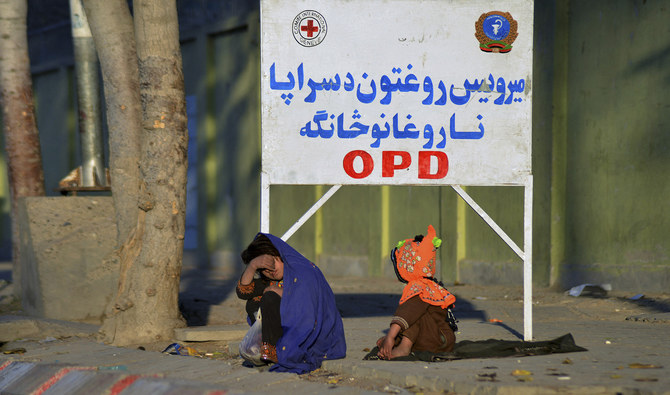
Girls sit on a footpath in front of Mirwais Hospital in Kandahar, Afghanistan, on November 25, 2021. (AFP/File)
Short Url
Updated 30 November 2021
Follow

Pakistan to host OIC foreign ministers’ meeting on Afghanistan next month

  • Saudi Arabia had requested ‘extraordinary session’ of OIC to assess humanitarian situation in Afghanistan
  • Hussain says formalities completed regarding $4.2 billion financial package from Saudi Arabia

KARACHI: Pakistan will next month host an ‘extraordinary meeting’ of the Organization of Islamic Cooperation's (OIC) Council of Foreign Ministers to assess a growing humanitarian crisis in Afghanistan, Pakistani Information Minister Chaudhry Fawad Hussain announced on Tuesday. 

Pakistan had endorsed an initiative by Saudi Arabia to request an ‘extraordinary session’ of the OIC on Afghanistan, and offered to host the conference next month.  

On Monday, Pakistani Foreign Minister Shah Mahmood Qureshi said Pakistan fully endorsed the Saudi initiative and wanted to host the meeting in Islamabad on December 17, 2021. 

Speaking to the media after a cabinet meeting chaired by Prime Minister Imran Khan, Hussain confirmed that the meeting would be held in Pakistan. 

“This meeting is now being held in Pakistan with God’s will,” he said. 

Afghanistan has been plunged into crisis by the abrupt end of billions of dollars in foreign assistance, following the collapse of the Western-backed government and return to power of the Taliban in August. 

Hussain also said all formalities had been completed for the transfer of a $4.2 billion financial package for Pakistan from Saudi Arabia.

On Monday, Pakistan’s central Bank signed an agreement with the Saudi Fund for Development (SFD) to receive $3 billion, which will be placed in the SBP’s account with the aim to improve foreign exchange reserves. Another $1.2 billion will come in the form of deferred oil payments.

Hussain said the support from Saudi Arabia would bring stability to the Pakistani currency, which hit an all-time low against the greenback on Monday.

“With this the value of the dollar against the Pakistani rupee will hopefully go down,” he said.


IMF mission begins talks in Islamabad as Pakistan seeks next program review

Updated 59 min ago
Follow

IMF mission begins talks in Islamabad as Pakistan seeks next program review

  • Finance ministry confirms ‘kick-off meeting’ with visiting IMF delegation
  • Review critical for next tranche under $7 billion bailout program

KARACHI: Pakistan began formal talks with a visiting International Monetary Fund (IMF) delegation on Monday as the country prepares for the next review of its $7 billion bailout program.

The IMF team is in Pakistan to conduct a review under the Extended Fund Facility (EFF) approved in September 2024, a multi-year program aimed at stabilizing the economy after a balance-of-payments crisis, high inflation and dwindling foreign exchange reserves.

Pakistan has so far received roughly $3 billion of the EFF. Successful completion of the latest review could pave the way for the release of the next tranche of funds, subject to IMF board approval.

Separately in 2024, Pakistan also secured about $1.3 billion under the IMF’s Resilience and Sustainability Facility, a climate-focused funding window aimed at strengthening the country’s capacity to manage environmental and disaster-related risks.

“Kick-off meeting with IMF Mission held today,” the finance ministry said on Monday as it shared visuals of Finance Minister Muhammad Aurangzeb and senior officials meeting the delegation in Islamabad.

IMF country representative in Pakistan, Mahir Binici, told Arab News in an emailed statement; 

“An IMF mission led by Ms. Iva Petrova has started discussions with the authorities in Karachi and Islamabad on the third review of Pakistan’s Extended Fund Facility (EFF) arrangement and the second review of the Resilience and Sustainability Facility (RSF).”

The discussions are expected to focus on Pakistan’s fiscal performance, revenue collection targets, structural reform implementation and broader macroeconomic stability measures agreed under the program.

The review comes at a sensitive time for Pakistan’s economy, with rising global oil prices and regional instability adding pressure to inflation and external accounts. Analysts say continued IMF engagement remains crucial for maintaining investor confidence and securing external financing.

Pakistan entered the IMF program to restore macroeconomic stability, strengthen public finances and rebuild foreign exchange reserves. Authorities have repeatedly described the reform agenda as necessary to ensure long-term economic resilience.

Further meetings between technical teams are expected over the coming days.