

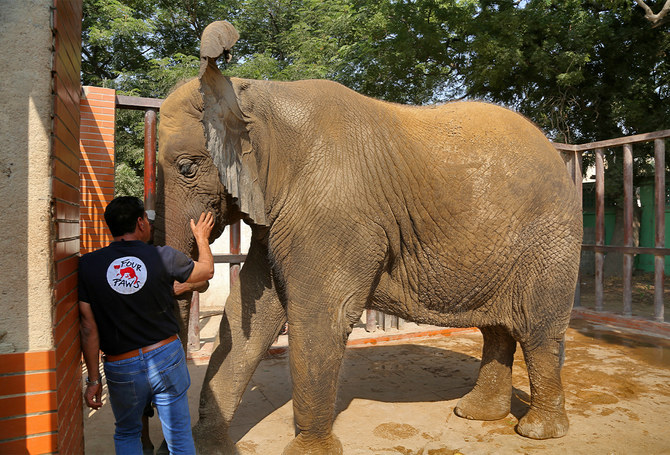

KARACHI: Noor Jehan, one of four elephants at two facilities in the southern Pakistani port city of Karachi, has severe tusk infection and needs immediate surgery, a team of international veterinarians and wildlife experts said on Monday.
The Sindh High Court (SHC) in September granted permission to Dr. Frank Goritz, the head veterinarian at the Leibniz Institute for Zoo and Wildlife Research (IZW), to visit Pakistan to inspect the health of four African elephants: Malika and Sonu at Karachi’s Safari Park, and Noor Jehan and Madhubala at the Karachi Zoo. The order was passed after animal rights activists moved the court following a viral video revealed cracks in Malika’s foot.
A team of veterinarians and wildlife experts from FOUR PAWS, a Vienna-based global animal welfare organization, also assessed the health of Malika and Sonu at Karachi’s Safari Park on Sunday.
On Monday, they examined Noor Jehan and Madhubala at the Karachi Zoo to finalize their assessment report, which will be submitted to the court on Tuesday. According to officials, these are the last four African elephants left in Pakistan.
“One of the elephants has severe tusk infections on both sides and needs to be operated on,” FOUR PAWS veterinarian Dr. Amir Khalil told Arab News.
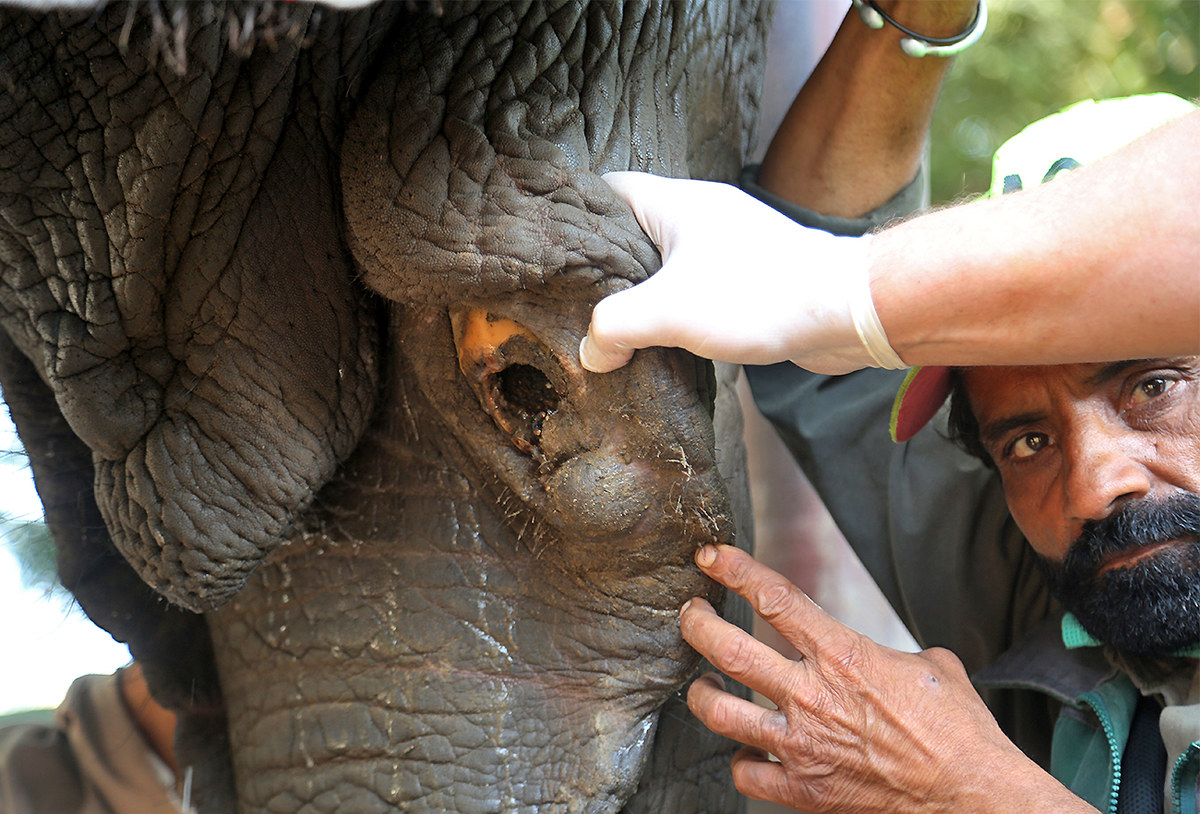
A team of international veterinarians and wildlife experts from FOUR PAWS, a Vienna-based global animal welfare organization, assesses the health condition of elephants at a zoo in Karachi, Pakistan, on November 29, 2021. (AN Photo/S.A. Babar)
Dr. Khalil is leading the visiting team, which includes Dr. Frank Göritz and Prof Thomas Hildebrandt from the Leibnitz Institute and Dr. Marina Ivanova from FOUR PAWS.
The developments come months after Kaavan, called the “world’s loneliest elephants,” was released from a ramshackle, now-closed zoo in Islamabad. Animal rights activists had campaigned against the plight of 35-year-old Kaavan, the last remaining Asian elephant in the country, who had lived alone since the death of his mate eight years earlier.
Kaavan was transferred to Cambodia late last year in a blaze of publicity after his plight caught the attention of US superstar Cher, who helped raise funds for the jumbo relocation.
On Monday, the team of experts took blood and urine samples and conducted a number of tests on the elephants.
In their report to be submitted to the court on Tuesday, the vets are expected to recommend a number of steps for the wellbeing of the animals, including medical treatment for 17-year-old female African elephant Noor Jehan.
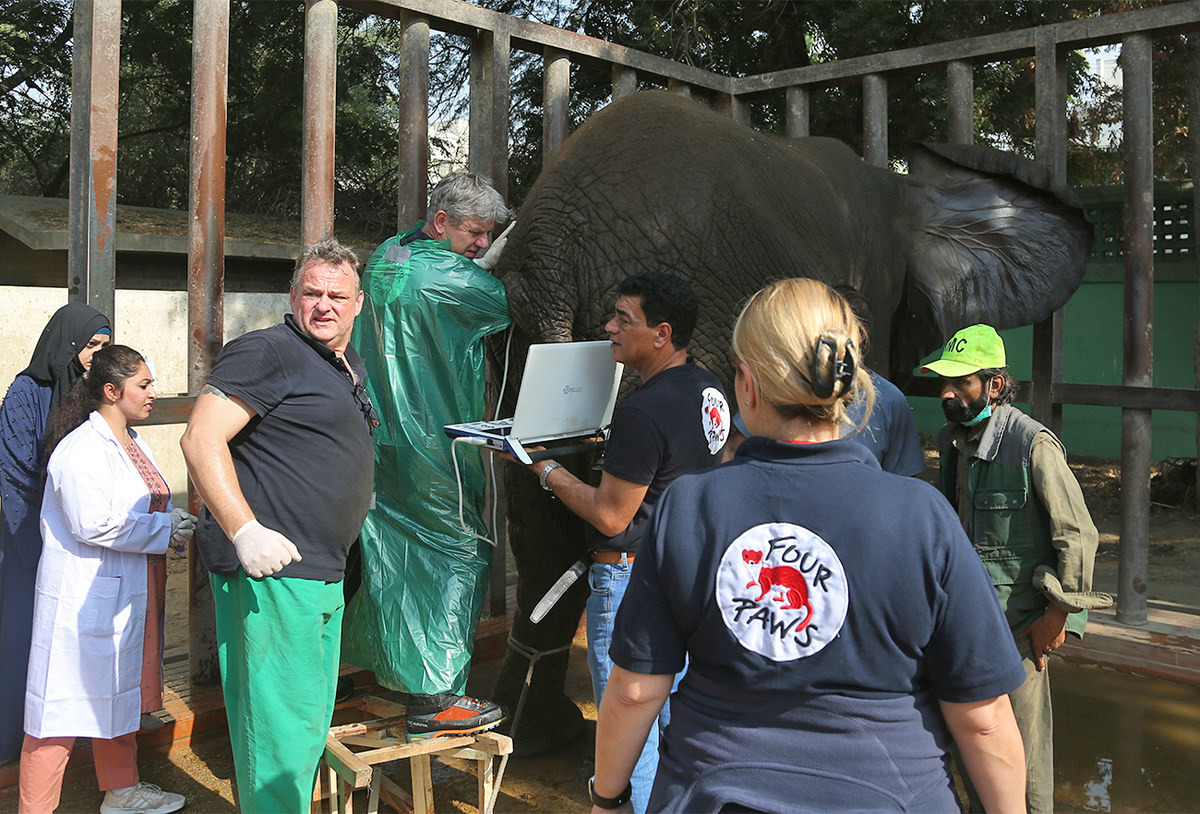
A team of international veterinarians and wildlife experts from FOUR PAWS, a Vienna-based global animal welfare organization, assesses the health condition of elephants at a zoo in Karachi, Pakistan, on November 29, 2021. (AN Photo/S.A. Babar)
Noor Jehan’s tusk is broken and needs serious and urgent medical attention by highly qualified vets. With regards to 16-year-old Madhubala, the team has observed that her menstrual cycles had not started though the usual age for a female elephant to start her cycles is 12 years.
“This is a clear sign of stress or malnutrition,” Dr. Khalil observed, recommending re-adjustment of her diet.
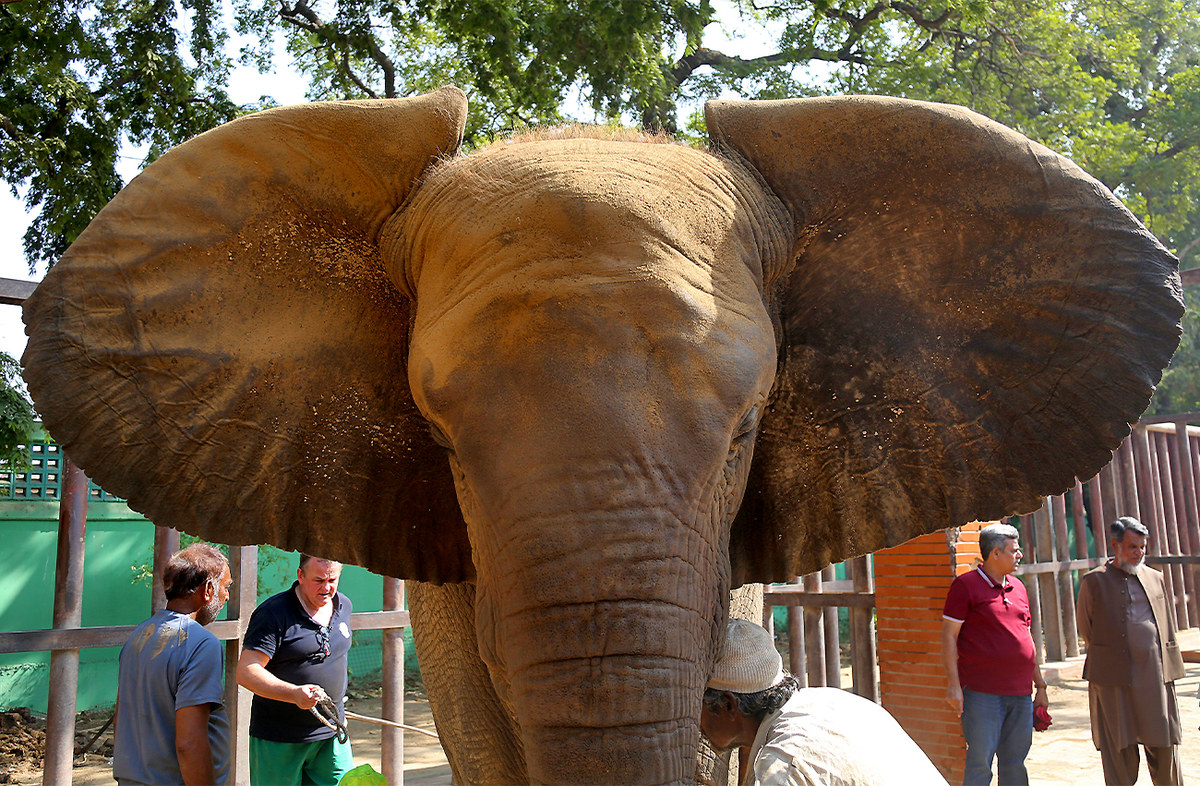
A team of international veterinarians and wildlife experts from FOUR PAWS, a Vienna-based global animal welfare organization, assesses the health condition of elephants at a zoo in Karachi, Pakistan, on November 29, 2021. (AN Photo/S.A. Babar)
The Karachi Zoo elephants were living amid permanent noise because of traffic on nearby roads, while their enclosures lacked vast natural habitat and swimming facilities, the team has noted, recommending that they be shifted to the Safari Park or their present enclosure at Karachi Zoo be expanded and modified.
The team has also recommended training for the elephants and the staff that tends to them, and said the elephant shelter and swimming pool at the Safari Park could be expanded. The team has also stressed the need for capacity-building of staff taking care of the elephants.
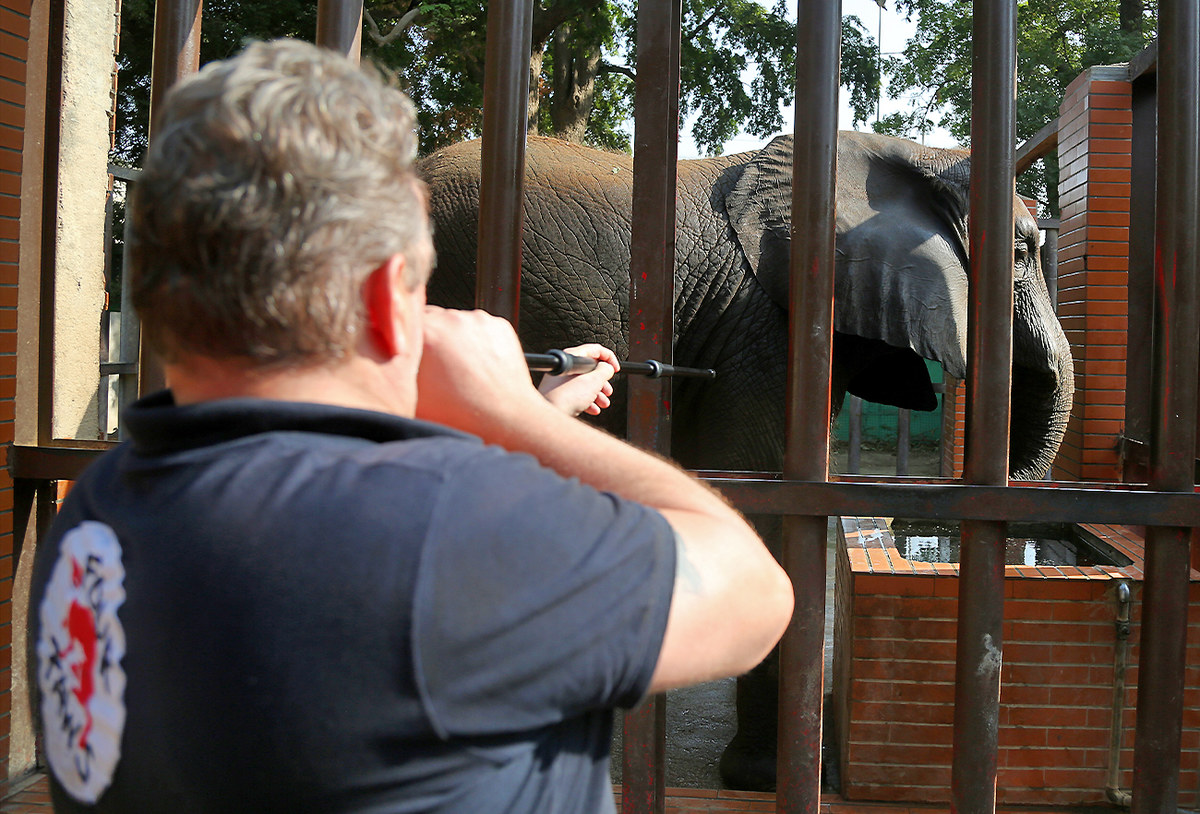
A team of international veterinarians and wildlife experts from FOUR PAWS, a Vienna-based global animal welfare organization, assesses the health condition of elephants at a zoo in Karachi, Pakistan, on November 29, 2021. (AN Photo/S.A. Babar)


