

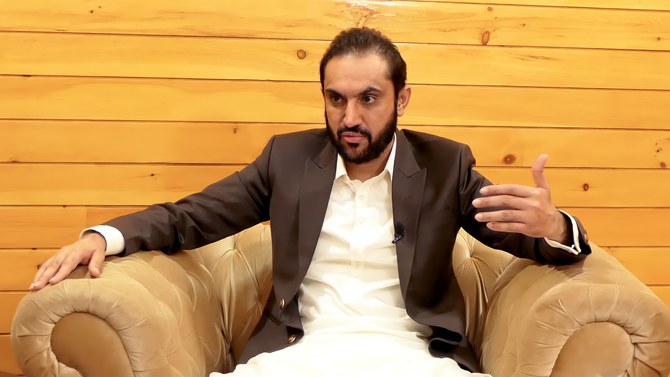

QUETTA: The chief minister of Balochistan, Mir Abdul Quddus Bezinjo, has said his government was speaking to all dissidents who were “unhappy” with the state, including reaching out to Dr. Allah Nazar Baloch, the head of the separatist Baloch Liberation Front (BLF), as a step toward ending a long-running insurgency seeking greater autonomy or independence for the huge, resource-rich province.
The low-intensity insurgency in southwestern Balochistan, a sparsely populated, mountainous, desert province bordering Afghanistan and Iran, has gone on intermittently for decades, with the government launching full-scale military operations as well as targeted interventions to quell it. Locals and rights activists say hundreds of people have been forcibly disappeared by security forces hunting for dissidents. The military vehemently denies committing abuses. Separatist fighters have also been accused of killing civilians and security forces and assassinating teachers.
Critics of the central government complain the province, which makes up 43 percent of Pakistan’s land mass, has received paltry royalties on its vast mineral, oil and gas resources, while remaining one of the country’s poorest regions. Baloch nationalists, many Pakistani politicians and rights activists say the chronic instability in the province is a stubborn reminder of the broader fragility of the Pakistani state and have repeatedly called on the government to urgently deal with years of pent-up grievances.
Now, Balochistan’s new chief minister, who was elected unopposed last month, says his government is ready for the challenge, and is “taking everyone on board” to seek an end to the decades of violence.
“Absolutely, as soon as coming into power, we have focused on this,” Bezinjo told Arab News in an interview in Quetta when asked if his government was talking to separatists and other dissident groups. “Surely they have grievances because of which they have become unhappy, [so] the doors of dialogue should not be closed. We are talking to them, and lots of channels are also open.”
Among those the government was reaching out to is BLF chief Dr. Baloch, Bezinjo confirmed: “Not direct, but indirectly we are trying that we do this [talk to Dr. Baloch] and all the rest, whoever they are, we are trying that we talk to them.”
Dr. Baloch is the only leader of a sizeable separatist group who is believed to be waging a campaign for independence from inside Balochistan; the other two leaders are in exile in Europe, including Brahamdagh Bugti, the Switzerland-based leader of the Balochistan Republican Party, and Hyrbyair Marri, who lives in London and heads the Baloch Liberation Army. The three groups have for years launched attacks on civilians, journalists and government and security personnel.
Bezinjo said it would be premature to disclose “specifics” of the talks, but added: “Many personalities with whom we are in talks, we are hopeful that in a few months they will be in this country, and in this province … Very soon Balochistan’s people will get good news.”
Governments in the past have attempted, and failed, to win over dissidents and the prospects of success for Bezinjo’s campaign are bleak. But the need for peace is more urgent than ever before, especially in the last decade as China has turned its attention toward Balochistan’s wealth of copper, gold, gas and coal deposits and invested billions of dollars in the province.
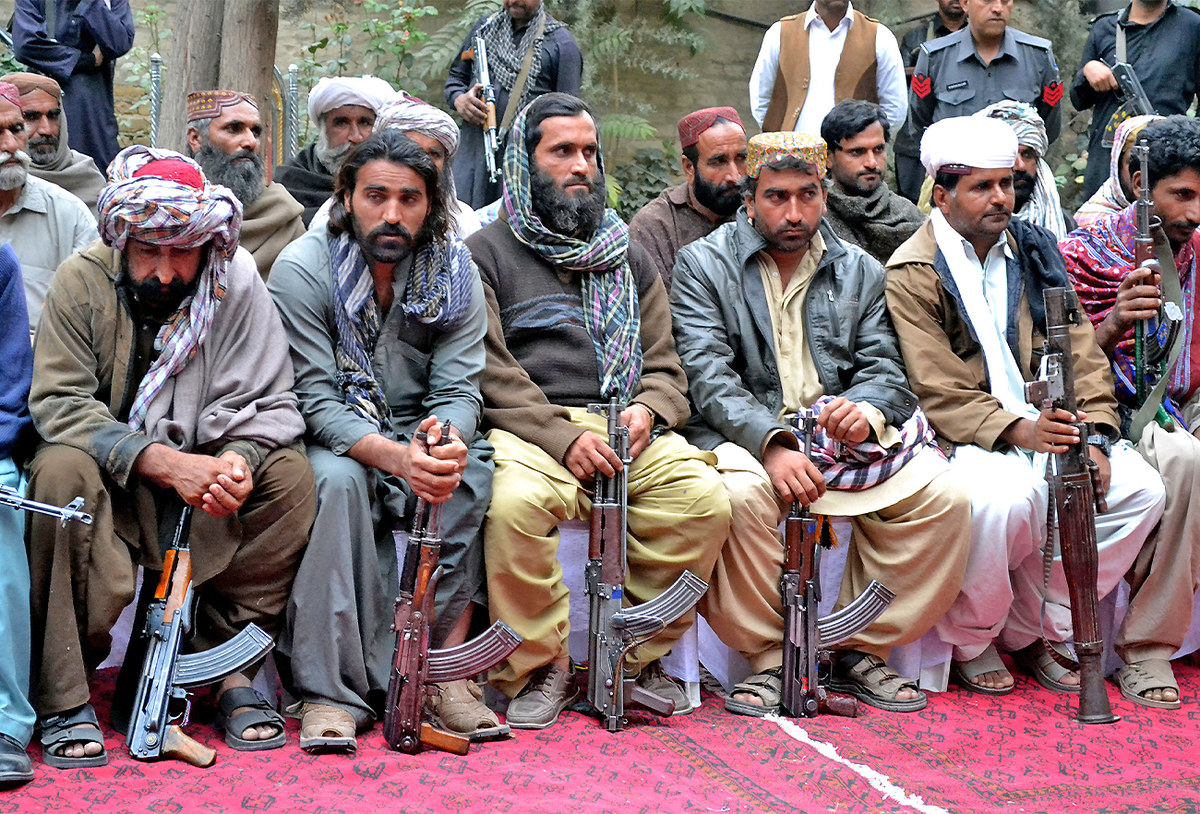
Militants from the band organization Baloch Liberation Army and United Baloch Army, sit before hand over their weapons to the Pakistani government during a surrender ceremony in Quetta, Pakistan, on October 29, 2015. (AFP/File)
Separatist militants have frequently targeted Chinese projects, including its construction in Gwadar, a port on the Balochistan coast, near the entrance to the strategically-important Gulf. And in 2018, the Balochistan Liberation Army attacked the Chinese consulate in the southern port city of Karachi, killing four Pakistani police and civilians.
It was the most high profile attack by the group until June 29 2020, when its fighters launched an assault on the stock exchange, killing four people.
That attack came a day after hundreds of relatives of missing Balochs gathered in Quetta to mark the four thousandth day of their protest against what they say are enforced disappearances by the state. The daily sit-in launched in 2009 entered its 4,509 day today, Monday.
The Pakistan military denies it is involved in enforced disappearances. In 2019, it issued a statement sympathizing with the families of missing Balochs and said that some may have joined militant groups: “Not every person missing is attributable to the state.”
But the issue of missing persons has continued to spark revolt in Balochistan and arrests and disappearances of alleged separatist sympathizers as well as political and student nationalist leaders have hardened attitudes, particularly among the young.
A federal commission on enforced disappearances set up in March 2011 listed 8,122 cases of missing persons reported nationwide by June 2021, of which 5,880 have been resolved. At least 500 people on the list are from Balochistan.
“We made a cell [in the Balochistan Home Department], it’s been one year and in that around 180 families have approached us,” the chief minister said. “We are investigating whether they are missing or not, but the numbers are not as large as they say.”
Speaking about the outsized role of the Pakistani military in the running of Balochistan, Bezinjo said there was no harm in governments in the province seeking help from the army, particularly against security threats.
“They are our forces, we feel no shame if they come to us [the government], and support us somewhere, in relation to law and order, and other issues,” the chief minister said. “Wherever we felt that we needed the forces, we needed to improve law and order, we certainly requested them, where we felt that we can’t work, the situation was untenable, there we took the army’s support … Sometimes they feel that some steps are needed for the betterment of Balochistan.”
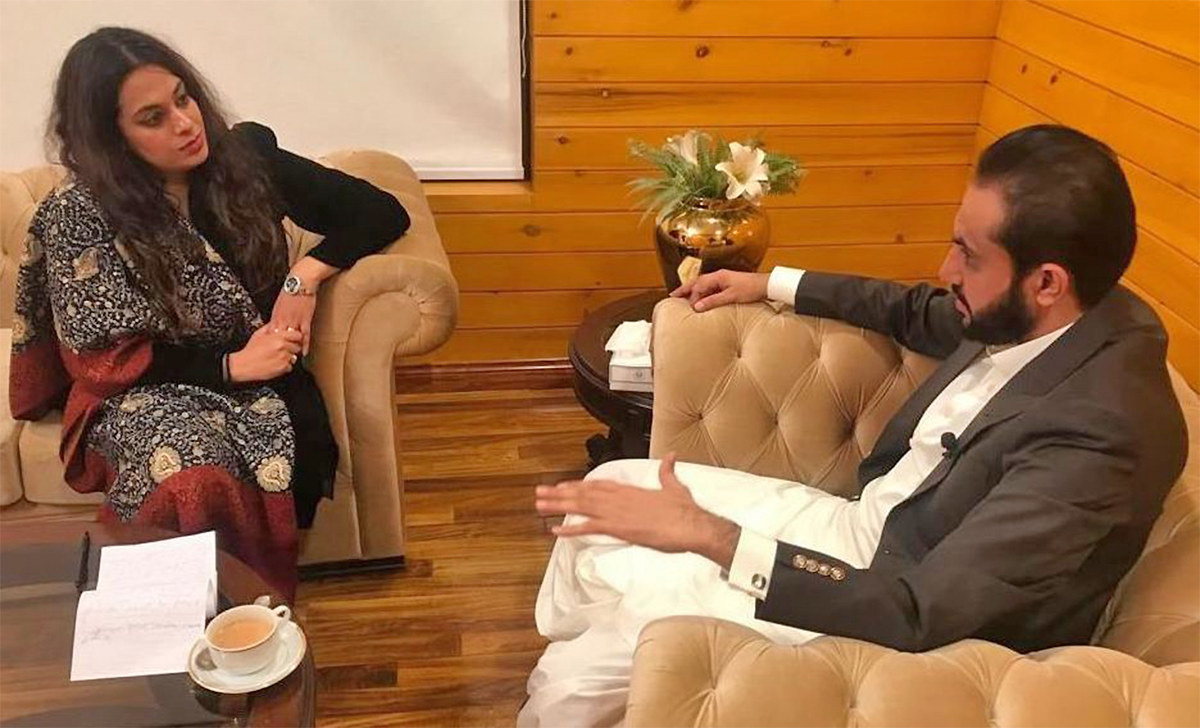
The chief minister of Balochistan, Mir Abdul Quddus Bezinjo, speaks to Arab News in Quetta, Pakistan, on November 27, 2021. (AN Photo)
Bezinjo also spoke about a rise in attacks on security forces in Balochistan in the last three months, and linked it to a change of government in neighboring Afghanistan, where the Afghan Taliban seized Kabul in mid-August.
The militant Tehrik-e-Taliban Pakistan (TTP), which is separate from the Afghan Taliban, has stepped up its campaign against the Pakistani army and paramilitary forces in recent months.
“Whenever things change in Afghanistan, its effect is always seen in Balochistan,” Bezinjo said. “Because of change there [in Afghanistan] a lot of elements have come here [to Pakistan] and taken part in different kinds of terrorism. Things are in front of us, we can see for a few months that the law and order situation has deteriorated quickly.”
But Bezinjo was hopeful that new development schemes in the province would improve overall tensions, especially the announcement by the federal government of a “Southern Balochistan Project,” under which 199 projects worth Rs601 billion are to be executed.
Currently, Balochistan has the worst development indicators in the country, with over 50 percent people living below the poverty line and 92 percent of provincial districts classified as “highly deprived” by the United Nations.
“If these [Southern Balochistan] projects become functional on the ground in a timely fashion, then we are hopeful that Inshallah things will improve a lot and we will have a lot of support in the development sector,” Bezinjo said.
And while he lamented that past central governments had not paid due attention to Balochistan, he said the government of Prime Minister Imran Khan was taking special interest in the province’s development.
“If the federal [government] does not give us proper space, proper development funds, then we can never develop Balochistan,” the chief minister said. “If they want to strengthen this pillar then they will have to enlarge their heart.”


