

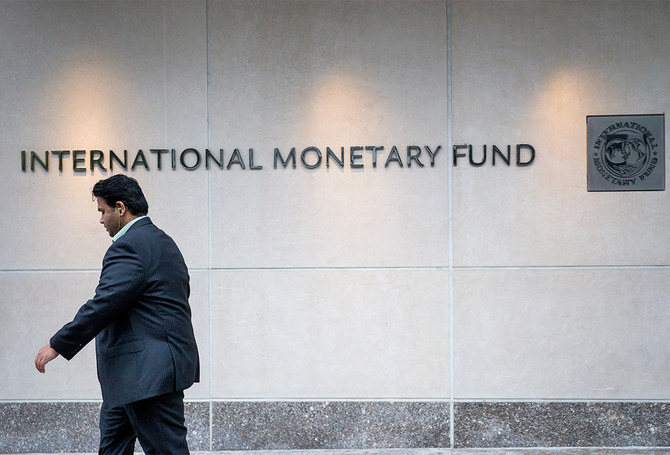

KARACHI: Pakistan’s finance chief said on Monday the country would take “prior action” by meeting five conditions laid out by the International Monetary Fund (IMF) for the revival of a $6 billion bailout package.
The international financial institution announced earlier in the day it had reached a staff level agreement with Pakistani authorities almost 50 days after the two sides started negotiating with each other ahead of the release of another loan tranche.
The agreement still awaits approval of the IMF executive board, following the implementation of fiscal and institutional reforms.
The fund said in its statement on Monday the completion of the review process would help Pakistan get 750 million special drawing rights, or about $1 billion, under the extended fund facility initiated in July 2019.
However, the South Asian state needs to meet five conditions before the IMF board meeting since it will not only ensure the release of the next loan instalment but also unlock funding from other multilateral lenders.
The country’s finance chief Shaukat Tarin said during a media briefing in Islamabad the government would meet the IMF demands by introducing supplementary finance bills, more popularly known as mini-budgets in Pakistan.
“People asked but I did not tell them, but let me now give indication that there will be prior actions,” he said, adding: “The five IMF conditions include general sales tax reforms [by ending exemption for all sectors and introducing a uniform 17 percent rate] which will be done in the form of supplementary finance bill.”
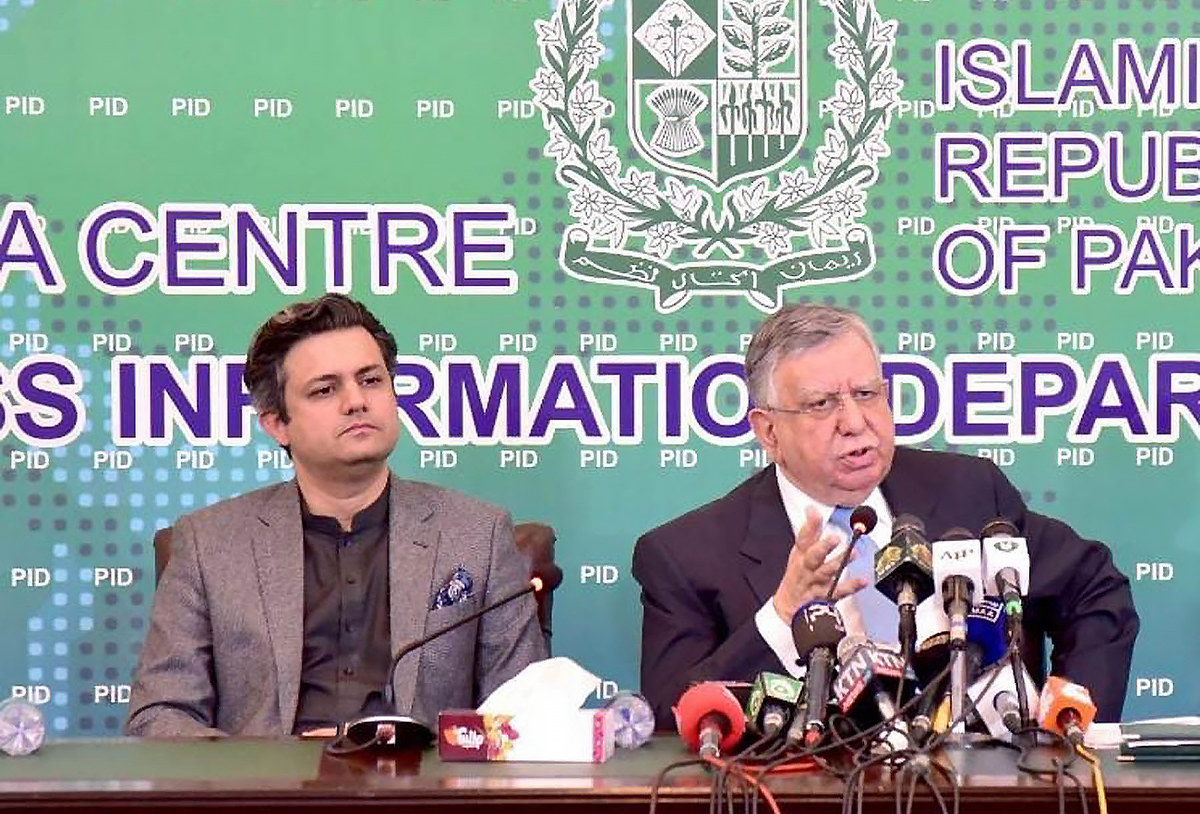
Pakistan's minster for energy, Hammad Azhar (left) and finance chief, Shaukat Tarin (right), addresses a press conference in Islamabad, Pakistan, on November 22, 2021. (PID)
He announced the petroleum development levy (PDL) would also be “increased by Rs4 per month to Rs30,” and the government would get a bill related to the autonomy of State Bank of Pakistan approved by parliament.
Other than that, the IMF wants to see the audit report of Pakistan’s COVID-19 expenditure.
Tarin said Pakistan would meet its PDL revenue target of about Rs356 billion which had been lowered from Rs600 billion.
He informed the country was also bound to provide details of the beneficial owners of the coronavirus vaccine supplying companies.
The finance chief also maintained the State Bank autonomy was in Pakistan’s interest since it would allow the central bank to independently set the monetary policy and exchange rate, as per the government’s agreement with the IMF.
Responding to questions about the revenue collection target, he said it had been increased from Rs5.8 trillion to Rs6.1 trillion.
The prolonged dialogue between the government and the IMF had exerted pressure on Pakistan’s currency which posted historic lows while the stock market also reacted negatively.
While it was expected that the national currency and stocks would look more vibrant after the two sides reached the agreement, the markets displayed little enthusiasm.
“Stocks fell after the State Bank of Pakistan announced it had raised the key policy rate by 150 basis points to 8.75 percent due to high inflation,” Ahsan Mehanti, chief executive of Arif Habib Corporation, commented.
“Slump in global equities and crude oil price, foreign outflows, dismal data on large scale manufacturing growth at 1.2 percent in September 2021 and surge in government bond yields played catalyst role in the bearish close,” he continued.
The Pakistani rupee also gave little response and only gained 0.27 percent from Rs175.24 to Rs174.77 against the United States dollar.
“The higher-than-expected hike in policy rate and yet another approval from the IMF board have offset the expected gains after the staff level agreement,” Samiullah Tariq, director research at Pakistan Kuwait Investment, said.
However, analysts hope for greater rupee appreciation following the IMF executive board meeting which is likely to take place in January 2022.


