Saudi company signs MOU to invest in $12 billion real estate project in Pakistan 

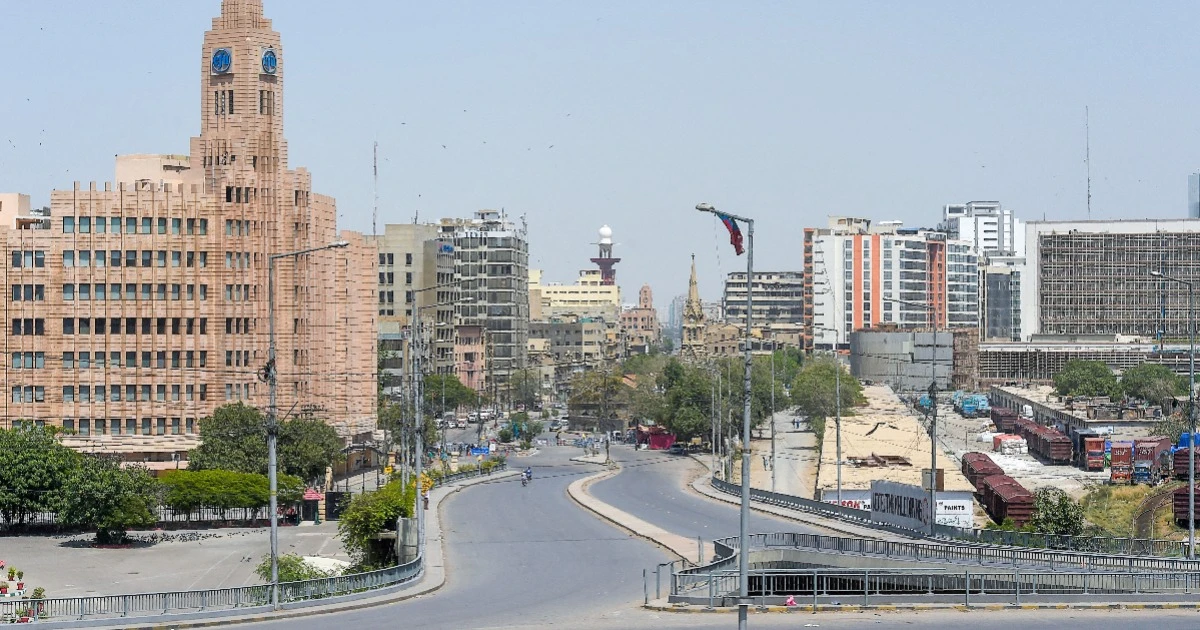
A general view of a business district in Karachi, Pakistan, on April 3, 2020. (AFP/File)
Short Url
Updated 15 November 2021
Follow

Saudi company signs MOU to invest in $12 billion real estate project in Pakistan 

  • Sarh Attqnia Company will partner with Javedan Corporation for an urban development project on banks of Lahore’s Ravi river
  • ‘Join us,’ Riyadh-based investor tells other Saudi companies to invest in Pakistan

KARACHI: A Riyadh-based engineering and construction firm has signed an investment agreement in a $12 billion real estate project in the eastern city of Lahore with a Pakistani business consortium, officials said on Monday. 
An MOU between Sarh Attqnia Company (SAC) and the Pakistani party, Javedan Corporation, was signed in Karachi on Sunday for the construction and development of the first phase of upcoming ‘Ravi City’ project to be built on 2,000 acres of land along the banks of the historic river Ravi. 
The agreement comes hot on the heels of the recently held Riyadh investment conference during the three-day visit of Pakistani Prime Minister Imran Khan to Saudi Arabia last month.
“Investment conference was held in Riyadh where large Saudi companies participated... Fortunately, we got in touch with one of the big developers’ company- Sarh Attqnia- which was looking for some opportunities for development here (in Pakistan) as a partner,” Arif Habib, Chairman of Arif Habib Group of which the Javedan Corporation is a subsidiary, said at the signing ceremony of the agreement. 
Habib said the Saudi company would contribute “financially and technically as well.”
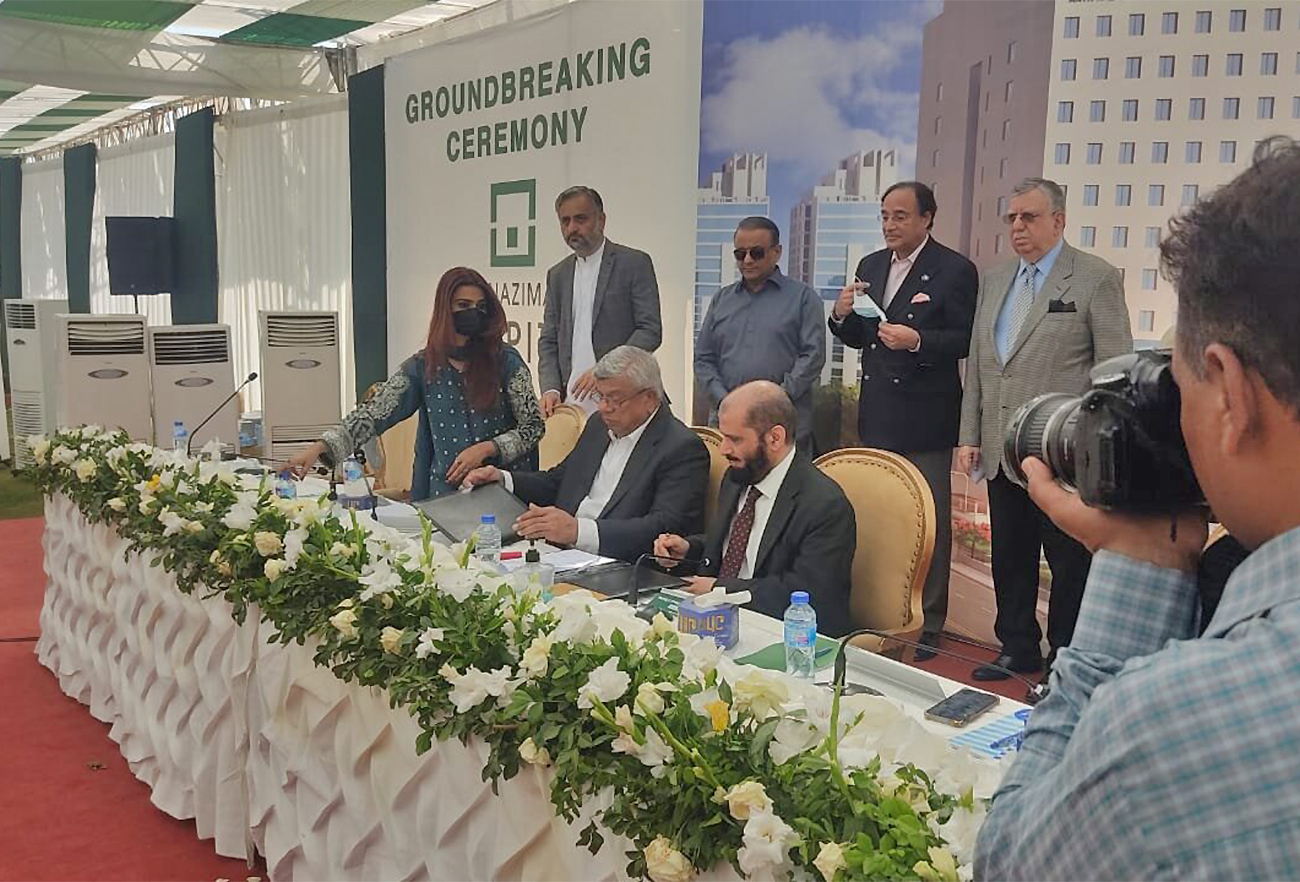


Arif Habib, Chairman of Javedan Corporation and Khalid Abdulaziz AlMogbel, Chairman of Sarh Attqnia Company sign MOU in Karachi, Pakistan, on November 14, 2021. (AN Photo)

It is not yet clear what the investment contribution of SAC will be. The total project value, according to Ravi Urban Development Authority (RUDA), is approximately $12 billion. 
The new project will be developed on both banks of the Ravi alongside a 46 km stretch contiguous to Lahore district’s northern and western boundaries through RUDA.
In May this year, RUDA had auctioned the first phase of the project, Sapphire Bay, to a consortium of 10 business partners consisting of large corporate groups of Pakistan. 
Habib, whose group owns majority shares in the project, and is responsible for the land’s development and marketing, told Arab News that the final agreement would be signed in a matter of weeks.
“The definite agreement will be signed in two weeks’ time after completion of their (SAC’s) internal process,” Habib said. 
Speaking at the signing event on Sunday, SAC chairman Khalid Abdulaziz AlMogbel expressed his confidence in Pakistan’s economy and vowed to invite other Saudi investors to Pakistan. 
“We are really very confident about Pakistan’s economy and we would like to invite other Saudi investors to join us,” AlMogbel said and added: “Pakistan and Saudi Arabia are brothers, and we are working for long-term strategic cooperation for other projects.” 
AlMogbel said his company was also looking for other investment opportunities in sectors including health care. 
“We have other objectives in Pakistan to help in health care services sector,” he added. 
The Saudi company is active in fields of infrastructure projects, building projects, manufacturing, and real estate development. The company has also commenced projects in the energy sector including oil services and gas projects both on and offshore. 

Pakistan, global crypto exchange discuss modernizing digital payments, creating job prospects 

Updated 05 December 2025
Follow

Pakistan, global crypto exchange discuss modernizing digital payments, creating job prospects 

  • Pakistani officials, Binance team discuss coordination between Islamabad, local banks and global exchanges
  • Pakistan has attempted to tap into growing crypto market to curb illicit transactions, improve oversight

ISLAMABAD: Pakistan’s finance officials and the team of a global cryptocurrency exchange on Friday held discussions aimed at modernizing the country’s digital payments system and building local talent pipelines to meet rising demand for blockchain and Web3 skills, the finance ministry said.

The development took place during a high-level meeting between Finance Minister Muhammad Aurangzeb, Pakistan Virtual Assets Regulatory Authority (PVARA) Chairman Bilal bin Saqib, domestic bank presidents and a Binance team led by Global CEO Richard Teng. The meeting was held to advance work on Pakistan’s National Digital Asset Framework, a regulatory setup to govern Pakistan’s digital assets.

Pakistan has been moving to regulate its fast-growing crypto and digital assets market by bringing virtual asset service providers (VASPs) under a formal licensing regime. Officials say the push is aimed at curbing illicit transactions, improving oversight, and encouraging innovation in blockchain-based financial services.

“Participants reviewed opportunities to modernize Pakistan’s digital payments landscape, noting that blockchain-based systems could significantly reduce costs from the country’s $38 billion annual remittance flows,” the finance ministry said in a statement. 

“Discussions also emphasized building local talent pipelines to meet rising global demand for blockchain and Web3 skills, creating high-value employment prospects for Pakistani youth.”

Blockchain is a type of digital database that is shared, transparent and tamper-resistant. Instead of being stored on one computer, the data is kept on a distributed network of computers, making it very hard to alter or hack.

Web3 refers to the next generation of the Internet built using blockchain, focusing on giving users more control over their data, identity and digital assets rather than big tech companies controlling it.

Participants of the meeting also discussed sovereign debt tokenization, which is the process of converting a country’s debt such as government bonds, into digital tokens on a blockchain, the ministry said. 

Aurangzeb called for close coordination between the government, domestic banks and global exchanges to modernize Pakistan’s payment landscape.

Participants of the meeting also discussed considering a “time-bound amnesty” to encourage users to move assets onto regulated platforms, stressing the need for stronger verifications and a risk-mitigation system.

Pakistan has attempted in recent months to tap into the country’s growing crypto market, crack down on money laundering and terror financing, and promote responsible innovation — a move analysts say could bring an estimated $25 billion in virtual assets into the tax net.

In September, Islamabad invited international crypto exchanges and other VASPs to apply for licenses to operate in the country, a step aimed at formalizing and regulating its fast-growing digital market.