TAIPEI: Taiwan on Tuesday said China is seeking to take control of the island by wearing down its military capabilities and influencing public opinion, while avoiding an all-out military conflict that could likely draw in the United States.
Taiwan’s Defense Ministry said in a biennial report that Beijing is employing “gray zone” tactics to ratchet up pressure on the self-governing island republic which China claims as its own territory.
China has been stepping up its threats to use force to against Taiwan by holding military exercises and sending planes close to the island.
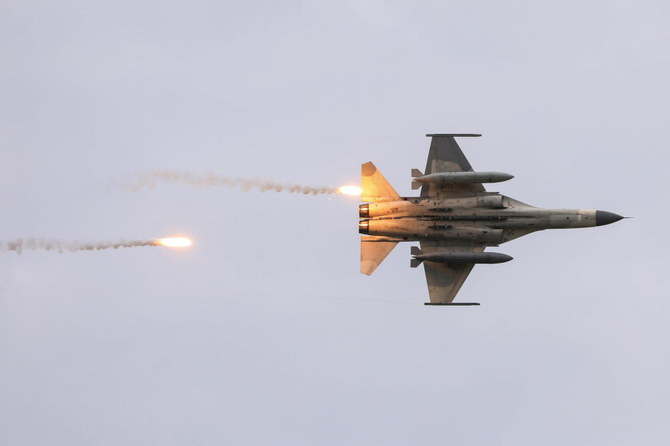
During China’s National Day weekend in early October, China dispatched 149 military aircraft southwest of Taiwan in strike group formations, causing Taiwan to scramble aircraft and activate its air defense missile systems.
The report said that reflects Beijing’s effort to degrade Taiwan’s air force through wear and tear and heavy requirements on its personnel. It said the strategy also includes cyberwarfare, propaganda and a campaign to isolate Taiwan internationally to force it to accept China’s terms without engaging in a shooting war.
China and Taiwan separated during a civil war in 1949. While the US cut formal diplomatic relations with Taipei in 1979 in order to recognize Beijing, Washington is committed by law to ensure the island can defend itself and to treat all threats toward it as matters of grave concern.
Asked in a recent CNN town hall whether the US would come to Taiwan’s defense if attacked, US President Joe Biden said, “Yes, we have a commitment to do that.” US officials immediately moved to clarify that there had been no change in the US posture toward Taiwan.
While Taiwan relies on the US for much of its military hardware, President Tsai Ing-wen has been pushing for a revitalization of its domestic defense industry, including the production of conventionally powered submarines.


![]()

Taiwan: China seeking to degrade country’s military and morale
Short Url
https://arab.news/6n7wk
Taiwan: China seeking to degrade country’s military and morale
- Beijing is employing ‘gray zone’ tactics to ratchet up pressure on the self-governing island republic
- China has been stepping up its threats to use force to against Taiwan by holding military exercises


Latest updates


© 2026 SAUDI RESEARCH & PUBLISHING COMPANY, All Rights Reserved And subject to Terms of Use Agreement.