

Riyadh weapons galore leaves visitors wanting more

1 / 5
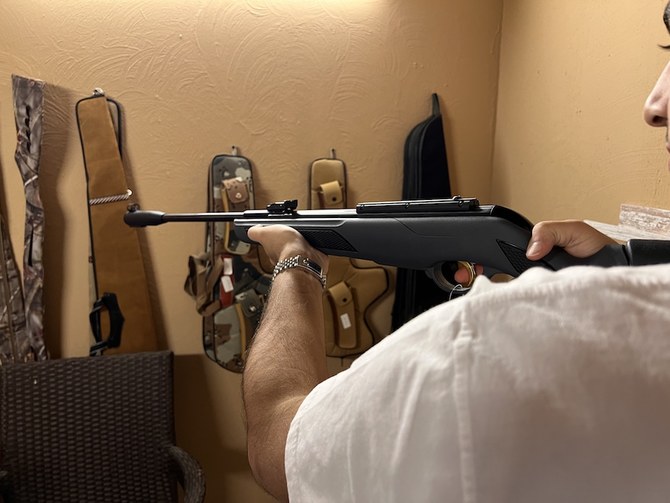
The Museum of Weapons, a major participant in the Riyadh Season, is taking visitors through the arms that were used to defend the first, second and third Saudi states. (AN Photo/Zaid Khashogji)
2 / 5
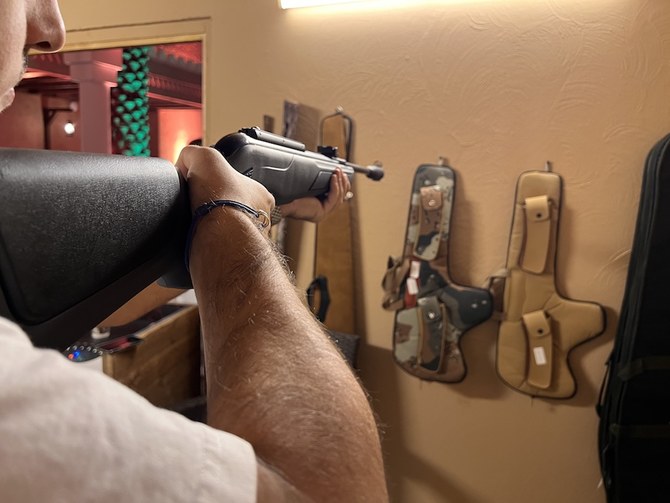
The Museum of Weapons, a major participant in the Riyadh Season, is taking visitors through the arms that were used to defend the first, second and third Saudi states. (AN Photo/Zaid Khashogji)
3 / 5
The Museum of Weapons, a major participant in the Riyadh Season, is taking visitors through the arms that were used to defend the first, second and third Saudi states. (AN Photo/Zaid Khashogji)
4 / 5
The Museum of Weapons, a major participant in the Riyadh Season, is taking visitors through the arms that were used to defend the first, second and third Saudi states. (AN Photo/Zaid Khashogji)
5 / 5
The Museum of Weapons, a major participant in the Riyadh Season, is taking visitors through the arms that were used to defend the first, second and third Saudi states. (AN Photo/Zaid Khashogji)
Short Url
Updated 10 November 2021
Follow

Riyadh weapons galore leaves visitors wanting more

  • One of the shields on display was last worn by King Saud bin Abdulaziz Al-Saud, the first son of King Abdulaziz to become King of Saudi Arabia

RIYADH: The Museum of Weapons, a major participant in the Riyadh Season, is taking visitors through the arms that were used to defend the first, second and third Saudi states.

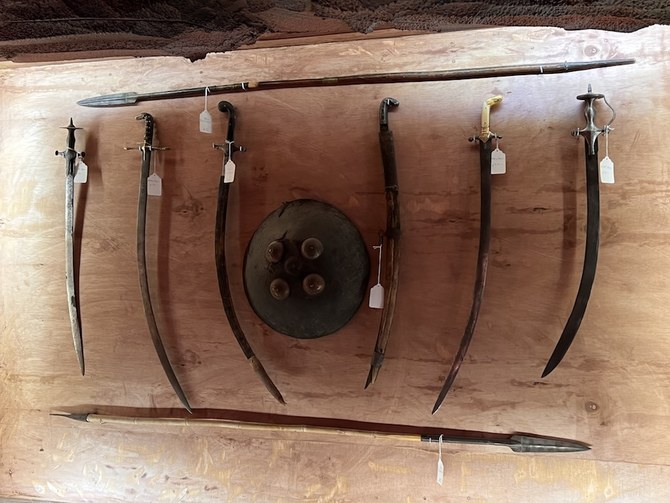
From old wick rifles that were manually filled with gunpowder to swords made in Damascus, Persia, Yemen and India, these vintage tools all arrived in the Arabian Peninsula to be used in its wars. 

Located in Riyadh’s Janadriyah Cultural and Heritage Festival venue, the museum is hosting popular exhibits, including one titled “Baroud,” meaning gunpowder, where a cave gallery is displaying some of the first explosive weapons used to win battles in all three Saudi states.

The weapons on display were also used in Arabian battles fought in the Levant, Egypt and during the First and Second World Wars. 

Mohammaed Al-Kamaan, who founded the weapons museum in 1997, shared with Arab News why he decided to participate in this year’s Combat Field’s gun exhibition, one of the 14 zones in Riyadh Season 2021.

“Our message here at the museum is one that is national, cultural and historical in nature. We want to show people our history; in the guns, weapons and tools we used, the armor the knights wore in battle and the swords wielded by the founders of the first and second Saudi states’ and the founder of modern-day Saudi Arabia, King Abdulaziz.” 

As visitors stopped to take in the vast collection of original guns on display, Al-Kamaan took the time to explain their historical significance. As he gave his explanations, his joy in guiding the visitors was clear.

“Truly everyone who enters the museum is astounded,” he said. “From local Saudis to residents and visitors from abroad, they really appreciate the historical importance of these artifacts that led to the unification of the Kingdom of Saudi Arabia.”

He added: “My father was a companion of King Faisal, God rest their souls, and he inherited 18th, 19th and 20th century weapons passed down through generations. So when my father passed away, I inherited them and spent the last 30 years of my life collecting and recording their historical significance.”

Powerful figures like Saud bin Abdulaziz Al-Saud, Turki bin Abdullah Al-Saud and Abdulaziz bin Abdulrahman — as he was known before unifying modern-day Saudi Arabia — were among those who used such weapons in battle.

“Many of the wick rifles and modern flintlocks used to unify the Kingdom were manufactured in these lands by local gunsmiths,” Al-Kamaan said, adding: “And this started as early as the first Saudi state in 1744, also known as the Emirate of Diriyah.”

These local gunsmiths were found all over the Arabian desert.

Places like Al-Ahsa, east of the Kingdom, and Najran to the south, Hijaz to the west and Hail in the north were “the most well-known places for manufacturing weapons and firearms during the three Saudi states.”

Although guns were available, King Abdulaziz preferred close-quarter combat using swords, according to the weapons collector. 

“The swords sourced from Damascus were slightly altered to fit our style of battle,” he said. “King Abdulaziz always picked the sword as his weapon of choice in battle.”

The founder of Saudi Arabia loved swords so much that he would name them, with some favourites being “Yaqoot,” meaning ruby, “Sweileh,” and “Raqban,” said Al-Kamaan.

“The ‘Shalfa’ you see here is different from the regular spear. While the spear comes as one piece, the Shalfa has three components to it: The head, body and ‘jub’ where the blade enters.” 

All of these tools and weapons were used at the same time.

One of the shields on display was last worn by King Saud bin Abdulaziz Al-Saud, the first son of King Abdulaziz to become King of Saudi Arabia. It protected him in battle from many of the weapons gathered in the gallery, such as the Shalfa and various foreign swords. 

“This is not our first time hosting a gallery of this kind, but we normally operate with the Kingdom’s cultural institutions. Soon we plan to open our own physical museum,” Al-Kamaan said.

Other than the museum, the Combat Field zone is also hosting stores selling air guns, gas guns with licenses from the interior ministry, and other gear that complement hunting in Saudi Arabia.

Operating from Oct. 23 until March 16, 2022, the minimum entry age for this zone is 12, with entry tickets costing 55 riyals ($14.66) on weekdays and 110 riyals on weekends.

Other attractions at the mega military expo include battle games, paintball, laser tag, and a tech zone with robot battles and virtual reality fights.


Makkah’s urban shift enhances the city’s quality of life

Updated 08 February 2026
Follow

Makkah’s urban shift enhances the city’s quality of life

  • By harmonizing its religious heritage with modern urban development, Makkah is proving that a city can honor its past while vigorously embracing the future

MAKKAH: Islam’s holiest city is currently witnessing a qualitative urban shift, one that seamlessly blends its profound spiritual sanctity with a modern, vibrant lifestyle. By integrating cultural, educational, and entertainment initiatives, Makkah is redefining the visitor experience and significantly enhancing the quality of life for its residents, directly supporting the goals of Saudi Vision 2030.

The city’s transformation was recently highlighted by the success of the Makkah winter season. The event attracted approximately 400,000 visitors — over 60% of whom were locals — demonstrating a strong domestic demand for high-quality public spaces.

The season revitalized community interaction, driving a 35% increase in visits to recreational sites and creating more than 1,200 temporary jobs for the local workforce.

Central to this urban renaissance is the Hira Cultural District. Since opening its doors in January 2023 near the historic Mount Hira, the district has become a definitive landmark that bridges Islamic history with contemporary identity.

Makkah’s Hira Cultural District has become a definitive landmark that bridges Islamic history with contemporary identity. (SPA photo)

Far from being a static monument, the district has cultivated a thriving creative economy. Its craftsmanship program, which features over 100 artisans, has generated up to SAR 3 million in sales and attracted 130,000 visitors to live workshops. These interactive spaces allow visitors to engage directly with the region’s heritage, moving beyond passive observation to active participation.

A living legacy 

The shift extends to Makkah’s broader ecosystem of museums and cultural sites, which are now positioned as key pillars of cultural tourism. Facilities like the Revelation Exhibition use cutting-edge technology and multilingual content to narrate the story of the Holy Quran’s revelation, offering an immersive experience that complements the spiritual journey of pilgrims.

These efforts align with the “Makkah: A Living Legacy” campaign, which seeks to document the city’s historical narrative and preserve its collective memory. Recent months have seen a surge in educational workshops for university students and tour guides, ensuring that the human element of Makkah’s history is conveyed with accuracy and depth.

City’s transformation recently highlighted by the success of the Makkah winter season. (SPA photo)
 

Economic and social impact 

The results of this integrated approach are tangible. Specialized museums and restored historic sites now attract up to 1.6 million annual visitors. Crucially, this cultural enrichment is encouraging pilgrims to linger longer, increasing the average duration of stay by 18%.

By harmonizing its religious heritage with modern urban development, Makkah is proving that a city can honor its past while vigorously embracing the future, offering a holistic experience that nourishes both the soul and the community.