Islamabad’s Lok Mela brings artisans from across Pakistan to showcase indigenous crafts

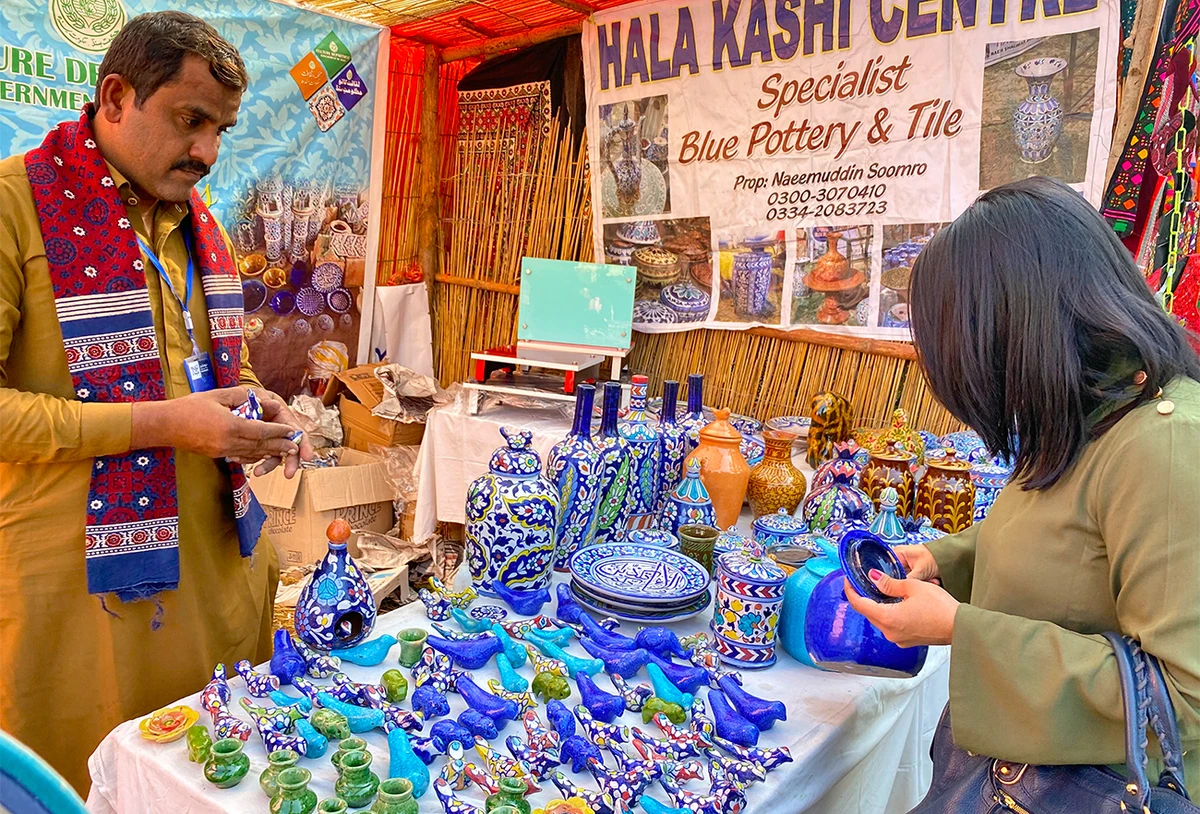
A vendor speaks to a customer at his blue pottery and tile stall at Lok Mela at the Lok Virsa Cultural Center and Heritage Museum in Islamabad, Pakistan, on November 6, 2021. (AN Photo)
Short Url
Updated 07 November 2021
Follow

Islamabad’s Lok Mela brings artisans from across Pakistan to showcase indigenous crafts

  • Week-long fair includes pavilions representing each of Pakistan’s four provinces and other regions
  • Craftspeople, sculptors, artistes woo visitors with their unique work and performances

ISLAMABAD: As autumn brings crisp sunny days to Pakistan’s capital, artisans from all over the country gather in Islamabad to showcase their indigenous crafts at the Lok Mela, organized each year by the Lok Virsa Cultural Center and Heritage Museum. 
The fair, which has been held every year for the past four decades, brings together craftspeople, jewelry makers, painters, sculptors, wood workers, potters, dancers and musicians from al provinces and regions of Pakistan country. This year’s Lok Mela 2021 will run from November 1-7. 
Kalu Abro, 33, from rural Sindh who attends the fair every year, told Arab News the fair was a family affair for him and the culmination of a year of hard work. 
“For us it’s a family business, we have our stall here and at the bigger stalls, you will see our handmade carpets, which my brother oversees,” Abro said, as he sold eye-catching hand-beaded, embroidered bags of various sizes, from children’s backpacks to weekend travel bags. “We come every year with the support of the government, which encourages us to make our craft, and though this year is a little slow, it was still worth coming.” 
Abro said the Sindh government helped his family travel to Islamabad for the fair every year. 
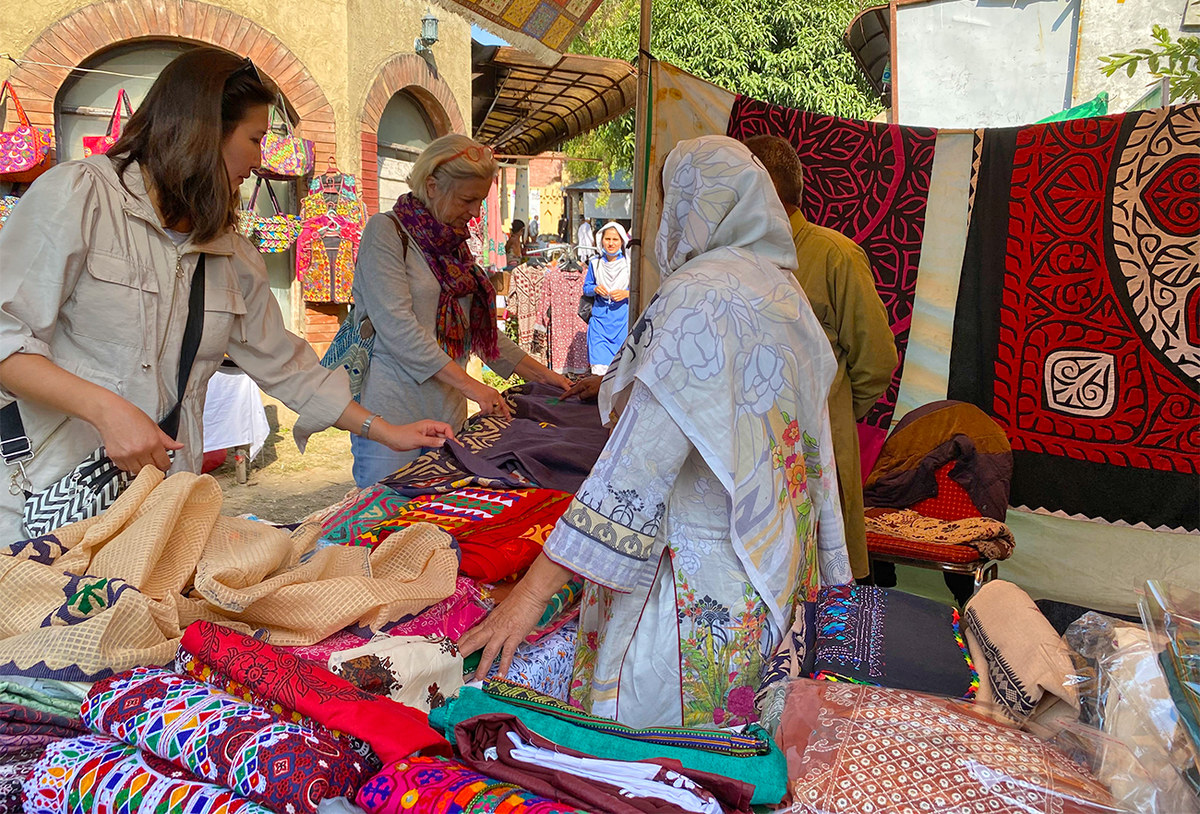


Visitors stop by a fabric stall operated by artisans from Multan in Punjab province at Lok Mela at the Lok Virsa Cultural Center and Heritage Museum in Islamabad, Pakistan, on November 6, 2021. (AN Photo)

Further down in the Punjab pavilion, Sadaf Nisar worked live on a piece of beaded Qur’anic verse wall hangings, an art form she says is unique to her hometown of Rawalpindi in Pakistan’s Punjab province. Nisar took up the craft after her father, who practiced it for 40 years. The father and daughter first attended the Lok Mela in 1991. 
“I keep coming because I am proud of this craft and it is not known enough,” Nisar said, “and it is a source of pride that I am following in my father’s footsteps and sharing our craft here.” 
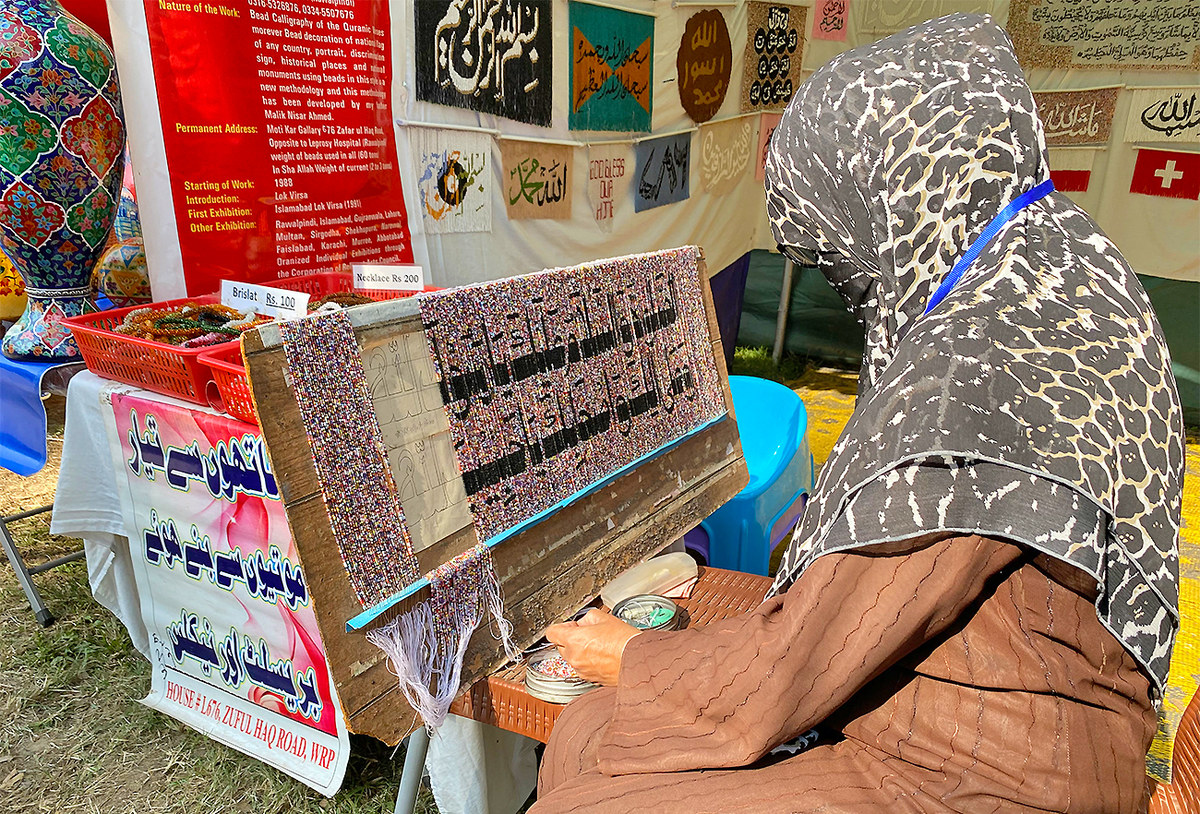


Artisan Sadaf Nisar works on a unique beaded Quranic verse art piece, an art that originated in Rawalpindi in Punjab province, at Lok Mela at the Lok Virsa Cultural Center and Heritage Museum in Islamabad, Pakistan, on November 6, 2021. (AN Photo)

From Hunza in Gilgit-Baltistan, Dil Shawar has returned to the fair after a year’s gap due to the coronavirus pandemic, and was selling traditional beaded hats and textiles worn in her region. 
“This is a chance for us to make up for a year of loss thanks to corona, the mela has slowed down, but people didn’t know this was happening this year — that being said whoever came bought quite a lot, thankfully,” Shawar said as she laughed. 
She also described the fair as a networking opportunity. 
“You see people here you know; you can make business connections, it’s like a chain where we support one another and build business together,” Shawar said. “It’s always hard work to come out here but you have to be positive and be positive as a community, and a chain of business.” 
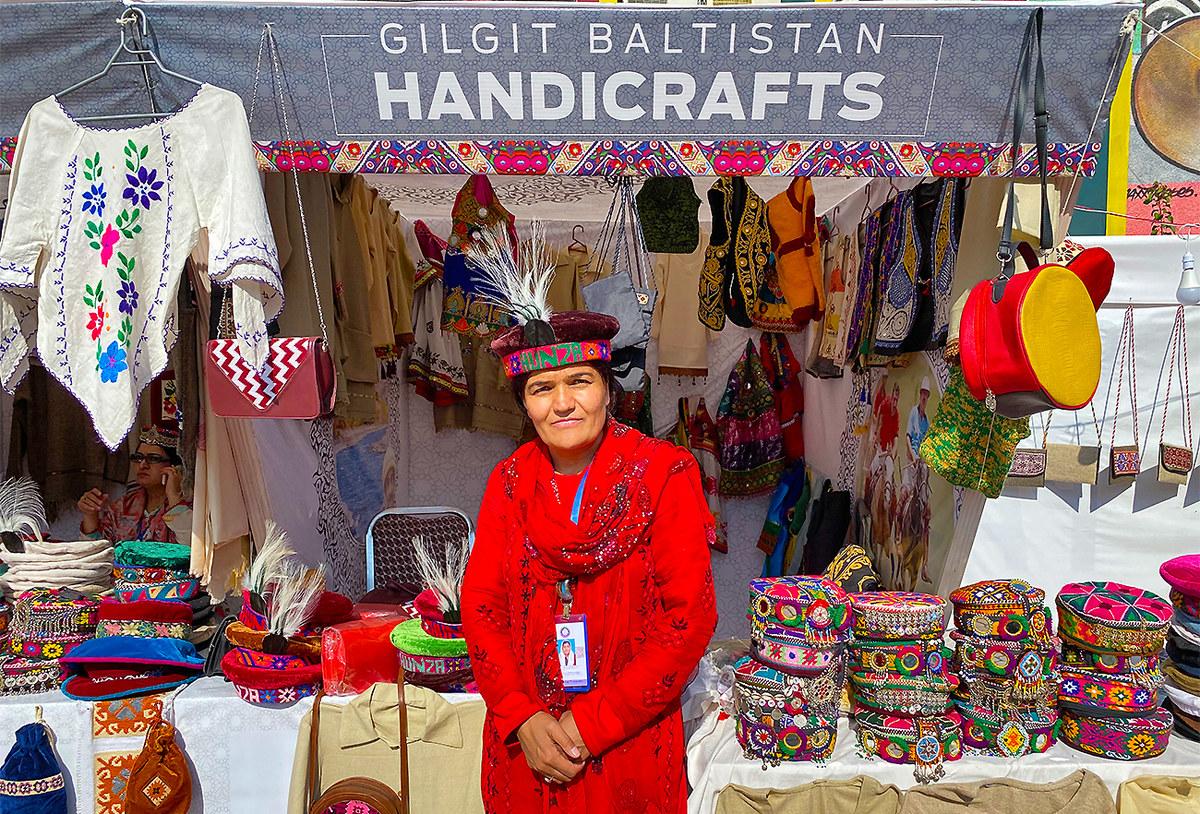


Dil Shawar from Hunza in Gilgit-Baltistan province stands in front of her stall where she sells handmade hats and embroidered items at Lok Mela at the Lok Virsa Cultural Center and Heritage Museum in Islamabad, Pakistan, on November 6, 2021. (AN Photo)

For 21-year-old Jehanarra Aziz, who hails from Pakistan’s cultural heart of Lahore, the fair is an event she looks forward to attending each year. 
“I do not get to come every year since I live in Lahore, but anytime I get to be here around the same time, usually in winter, fall time, I make sure to stop by,” said Aziz, who was at the fair with her family members. “You get to learn so much while of course shopping a lot.” 
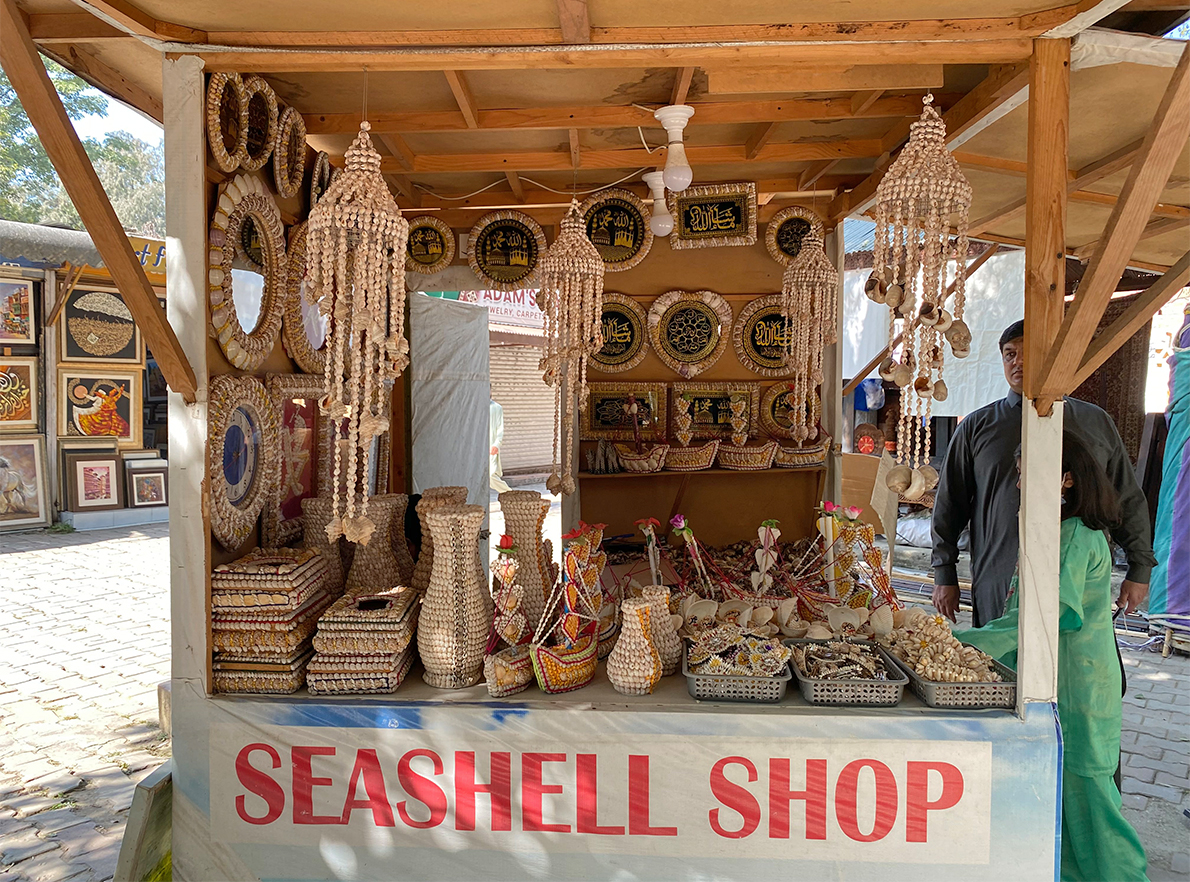


A shop features decor items, made up of sea shells, at Lok Mela at the Lok Virsa Cultural Center and Heritage Museum in Islamabad, Pakistan, on November 6, 2021. (AN Photo) 

For Sara Amjad, 30, who resides in Islamabad, the fair is a rare opportunity to see performances, in addition to the art and craft. 
“There are no other events like this one that I personally know of where you get the chance to hear folk music and see traditional folk dances,” Amjad said. “I buy a lot, I eat a lot, and I enjoy getting the chance to see people perform their cultural dances here.” 
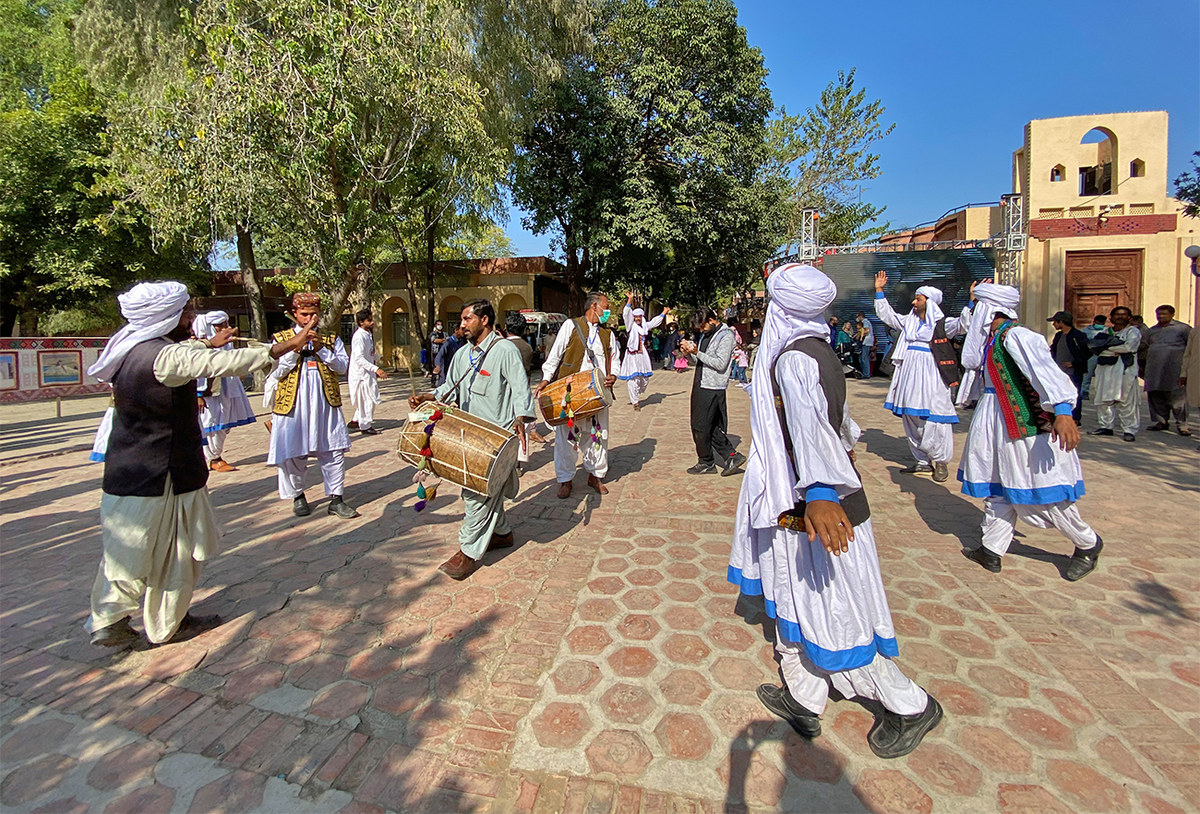


Individuals from Pakistan's Balochistan province perform the traditional two-clap dance Dochaapi at Lok Mela at the Lok Virsa Cultural Center and Heritage Museum in Islamabad, Pakistan, on November 6, 2021. (AN Photo)


Pakistan’s National Assembly speaker to attend Khaleda Zia’s funeral in Dhaka

Updated 10 sec ago
Follow

Pakistan’s National Assembly speaker to attend Khaleda Zia’s funeral in Dhaka

  • Ayaz Sadiq will convey Pakistan’s condolences to Zia’s family, interim government
  • Visit comes amid warming ties between Islamabad and Dhaka after years of strain

ISLAMABAD: Pakistan’s National Assembly Speaker Sardar Ayaz Sadiq is due to travel to Dhaka on Wednesday to attend the funeral of Bangladesh’s former prime minister Khaleda Zia, a move that highlights a recent thaw in relations between the two South Asian countries after decades of unease.

Zia, Bangladesh’s first female prime minister and a key political figure for decades, died on Tuesday at the age of 80 after a prolonged illness, her Bangladesh Nationalist Party (BNP) said. Her death prompted messages of condolence from leaders across the region, including Pakistan’s prime minister.

“The Speaker of Pakistan’s National Assembly, Sardar Ayaz Sadiq, will depart for Dhaka, Bangladesh, on Wednesday,” Pakistan’s National Assembly said in a post on social media platform X on Tuesday. “The National Assembly Speaker will attend the funeral prayers of Bangladesh’s former prime minister, Begum Khaleda Zia.”

“The Speaker will also convey condolences to Khaleda Zia’s family on behalf of the government, parliament and the people of Pakistan,” it added. “Speaker Sardar Ayaz Sadiq will also meet senior officials of Bangladesh’s interim government.”

Sharif had earlier described Zia as a “committed friend of Pakistan,” praising her role in Bangladesh’s political life and expressing solidarity with the Bangladeshi people during what he called a difficult moment.

Zia, who served three terms as prime minister, led the BNP and remained a central figure in Bangladeshi politics despite years of ill health and imprisonment under the government of her longtime rival, Sheikh Hasina. She was released last year following Hasina’s ouster after a violent uprising.

Pakistan and Bangladesh were part of the same country until Bangladesh’s secession following a bloody civil war in 1971, an event that has long cast a shadow over bilateral ties. Relations remained largely strained for decades, shaped by historical grievances and political mistrust.

However, Islamabad enjoyed comparatively warmer ties with Dhaka during Zia’s tenure than under Hasina.

Engagement between Islamabad and Dhaka has increased since Hasina’s removal and the formation of an interim administration, with both sides signaling interest in improving political, diplomatic, economic and security ties.