
MANILA: With the global spotlight still cast on the COVID-19 outbreak, a Filipino paramedic on a mission with Doctors Without Borders in Africa is drawing attention to another health crisis that continues to unfold in the shadow of the pandemic: Severe malnutrition.
Nurse Rodel Lambatin joined an MSF mission to tackle malnutrition in northeast Nigeria in February 2020, right when the pandemic broke out and was already worsening the fragile situation. He was stationed in Maiduguri, in Borno State.
“I have to say, this was one of my hardest missions so far,” Lambatin told Arab News in a recent phone interview. “About 30 percent of the total bed occupancy in Maiduguri caters to malnourished children ... some of them as young as one month old.”
It was not Lambatin’s first MSF mission in Africa. Since joining the organization in 2017, he has served in Nigeria and South Sudan.
MSF told Arab News that his deployment in Borno State was due to the Philippine paramedic’s “solid experience,” especially in outreach and hospital activities.
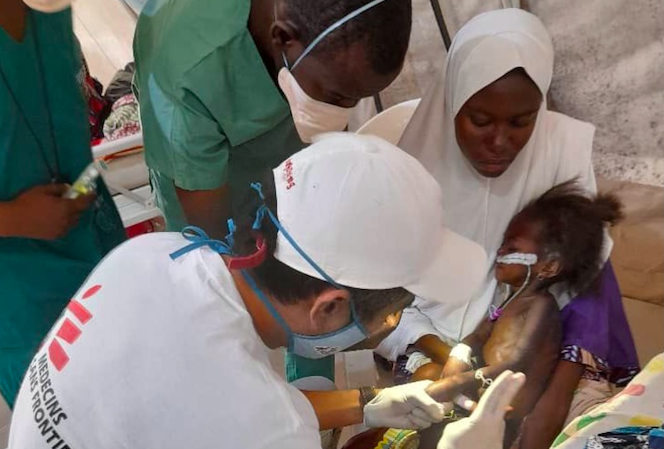
Filipino paramedic Rodel Lambatin helps save a malnourished child at a Doctors Without Borders (MSF) hospital in Maiduguri, Nigeria.
Nigeria has the second-highest number of children affected by malnutrition globally, according to the UN Children’s Fund, with more than 2.5 million suffering from severe acute malnutrition and only two of every 10 affected children able to access treatment.
The primary driver of the widespread malnutrition crisis is its close association with poverty. The situation has worsened in developing countries such as Nigeria due to COVID-19 lockdowns, which left many millions unable to earn daily wages that are vital for feeding their families. Food supply systems have also been disrupted by virus prevention measures.
In September, the number of children Lambatin’s team hospitalized in Maiduguri hit the year’s record high. Most of them were from internally displaced families who had fled violent local conflicts that have been Nigeria’s daily reality for over two decades.
There are currently an estimated 2 million internally displaced persons in the country, and approximately 1.4 million in Borno State — equal to one-third of its population — according to MSF data.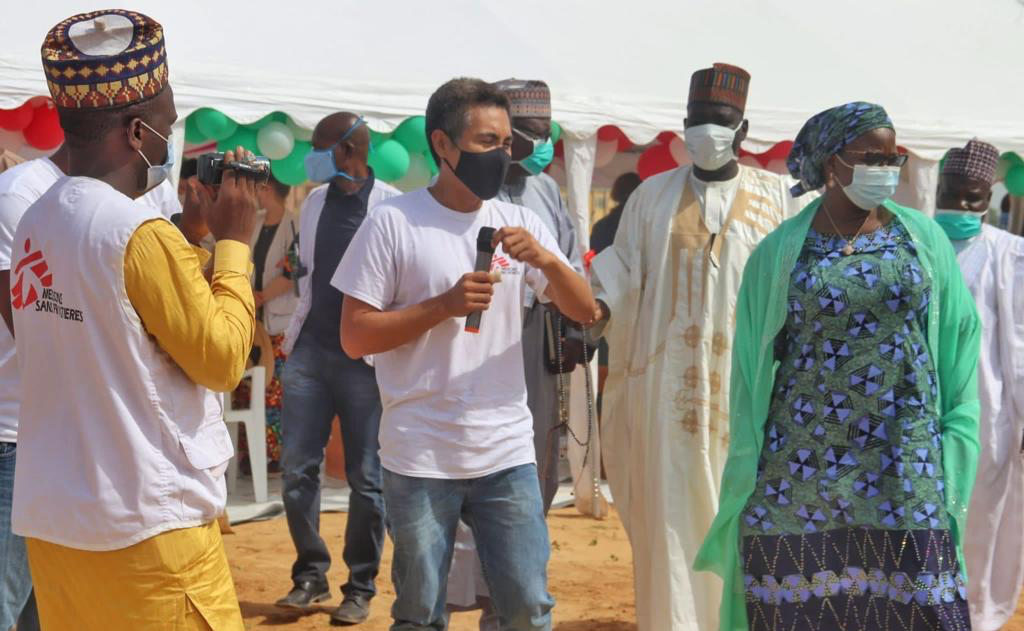
“Many people, especially children, are suffering,” Lambatin said. “Many families do not even realize that malnutrition is an emergency, because it seems normal for them to have a baby with very low body measurements.”
“The most difficult part is when they bring to us a severe case and it’s already too late, so there’s a high chance that the baby will not survive.”
While uncertainty remains over the extent of the pandemic’s impact in most African countries due to limited testing and problems in the attribution of cause of death, in Nigeria it has worsened response to other emergencies.
Long-forgotten diseases have also resurfaced.
“In 2020, we had three deaths from Lassa fever,” Lambatin said, referring to an acute viral hemorrhagic illness, of which an outbreak in Borno State last year was the second in almost five decades, according to World Health Organization data.
“We responded to cholera and measles outbreaks in the state. In the mobile clinics, we also saw cases of malaria, acute watery diarrhea, respiratory tract infections,” he said, adding: “And every year there are meningitis cases as well.”
As his mission in Nigeria has concluded, last week Lambatin started another in Kenema, southeastern Sierra Leone, where he is going to tackle similar problems.
“Malnutrition is one of the components of Lambatin’s work in Sierra Leone,” MSF communications manager Polly Cunanan told Arab News, with the nurse set to serve as the medical director of the organization’s pediatric hospital for a program that aims to lower the west African country’s soaring child mortality rates.