


DUBAI: Living conditions in Lebanon have deteriorated steadily since mid-2019 when the country began experiencing severe economic and financial problems, which have since been exacerbated by the COVID-19 pandemic and the 2020 Beirut port blast.
The meltdown has led to shortages of essential commodities, including fuel, and resulted in an unprecedented power crisis. Consequently, thousands of skilled Lebanese workers, notably medical professionals, have left the country and the health sector is on the brink of collapse.
Under the circumstances, Lebanon’s cancer patients are facing an uphill struggle to access even the most basic medicines and treatments, frequently having to take whatever medication is readily available regardless of the side effects.
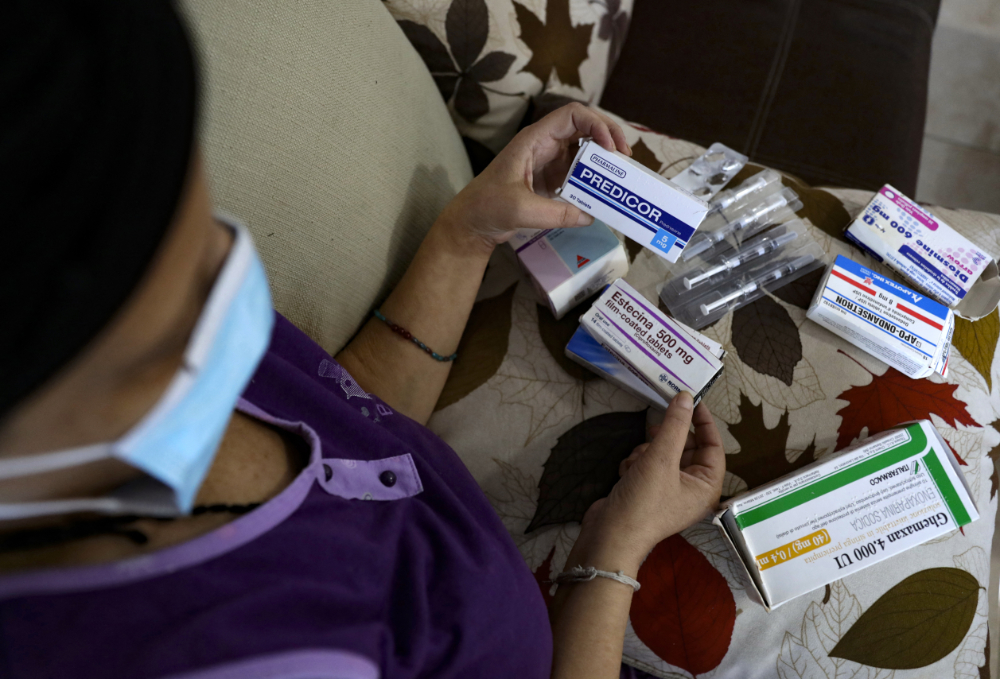
Cancer Support Fund was launched to specifically support Lebanon’s underprivileged adult cancer patients. (AFP)
Enter the Cancer Support Fund. Established in 2018 at the American University of Beirut Medical Center, it has given many a Lebanese in dire straits a timely and vital lifeline.
Hala Dahdah Abou Jaber, CSF’s founder and president, told Arab News the NGO was launched to specifically support Lebanon’s underprivileged adult cancer patients.
Despite the many cancer-related NGOs operating in the country, Abou Jaber says the adult demographic is often underserved, as the majority of charities are targeted at children.
“There was a necessity and an urge to help adult cancer patients, and when we say an adult, it could be a young boy who is 18 or 19, a mother who is 25 or 30, a father who is 50 years old, or simply an 80-year-old woman who also deserves a chance to live,” she said.
The extreme hardship endured by Dina Itani is a case in point. The South Lebanon resident chokes back tears as she recounts how the overlapping crises buffeting her country have disrupted her cancer treatment
On top of fighting the disease, she and her family must also contend with chronic shortages of vital medication.
A sudden onset of eyesight deterioration about two years ago made Itani realize that something was wrong with her health. When an ophthalmologist could not find anything wrong with her eyes, he requested a brain scan, which detected a tumor.
She underwent surgery to remove the tumor, but a biopsy showed the lump was cancerous. Itani was told she would have to undergo further treatment to prevent the cancer from spreading. “I have melanoma cancer,” Itani told Arab News.
“It’s a type of skin cancer but in my case, it’s appearing in my internal organs. I underwent brain surgery in Beirut. For a year now I have been redoing diagnostic imaging every three months.”
Despite treatment, Itani’s cancer soon spread to the bone in her right arm, forcing her to undergo another surgery to install a metal plate. She was also put on a course of immunotherapy with a drug called Opdivo. “They gave me the injection every 15 days,” she said.
However, the medical subsidies allotted through Lebanon’s social security system were not enough to cover the cost of Opdivo.
According to Drugs.com, an independent medicine information website, the price of the intravenous solution ranges from $1,189 per 4ml to $7,087 per 24ml infusion in the US. Based on Lebanon’s current minimum wage, it would be almost impossible for the average household to cover such a cost.
“The CSF helps us a lot because we can’t bear the cost of this medication,” Itani said. “It’s very expensive, even for those who are financially comfortable.”
The CSF supports its patients by covering the financial costs of treatments, screenings and occasionally even transport.
“The funds received go directly to the AUB account and there is accountability. Everything we receive goes to help a needy patient,” Abou Jaber said.
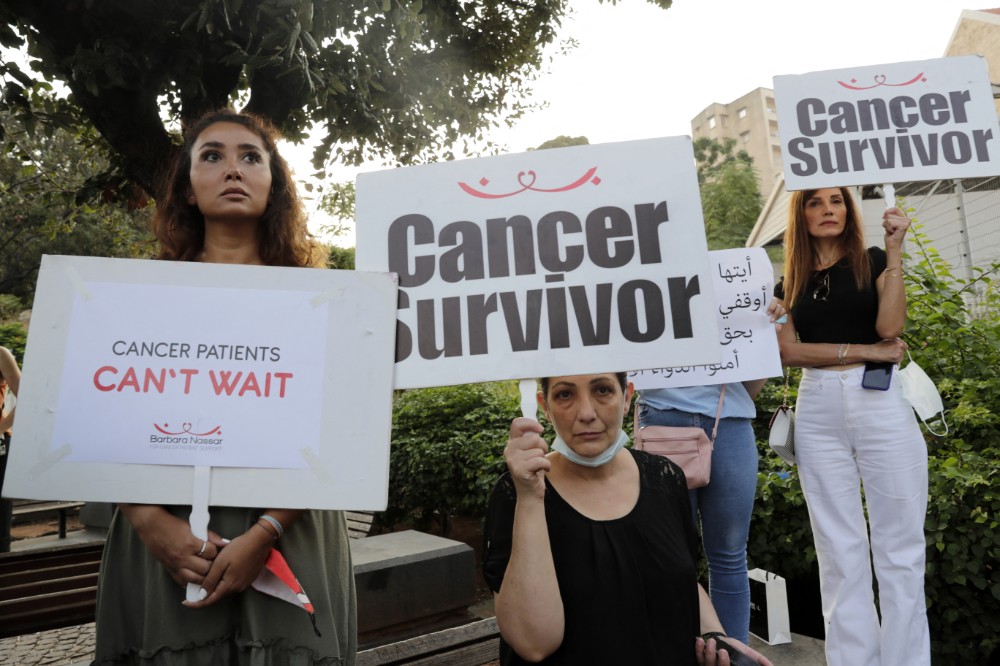
Lebanon’s cancer patients are facing an uphill struggle to access even the most basic medicines and treatments. (AFP)
The money to cover the needs of patients primarily comes from private donors, international NGOs, pharmaceutical companies, sponsors and contributors, and fundraising events.
“The number of patients supported since the establishment of the fund is 600, with more than 2,000 hospital encounters,” Dr. Ali Taher, the CSF’s co-founder, told Arab News.
The fund has been able to support an average of 70 patient admissions daily at the infusion center for chemotherapy, but Taher added: “We have had some medication shortages both in intravenous and oral forms, and this has affected patient cycles and the number of admissions required.”
According to Taher, delays in treatment can mean the difference between curing a patient of their cancer or their condition becoming terminal.
“Pausing the screening tests as well as the related treatments can definitely jeopardize the outcome,” he said. “You can start seeing advanced tumors with poor outcomes instead of early detected tumors with curable outcomes.
“You may also experience disease progression that can become fatal to a certain extent. The severity of the impact of lack of treatment depends on the case and condition and disease evolution of each patient.”
INNUMBERS
11,589 Lebanon’s new cancer cases in 2020.
6,438 Lebanon’s cancer deaths in 2020.
(Source: WHO, GloboCan)
The CSF has supported 220 patients this year alone, but Taher expects the number to increase owing to the severity of the financial crisis.
While the world’s attention has been focused on the COVID-19 pandemic, cancer has not stopped taking its toll. According to the Global Cancer Observatory, there were 11,589 new cancer cases in Lebanon in 2020.
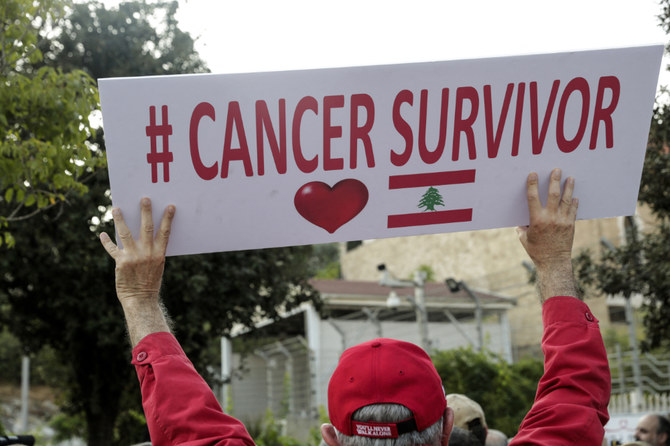
Pharmacies and hospitals in the country have been running short of even the most basic medications for several months. In August, protesters gathered outside the headquarters of the UN Economic and Social Commission for Western Asia in Beirut to demand global assistance.
Fuel shortages have contributed to the plight of the health sector. In August, the AUB Medical Center released a statement warning that its patients were in imminent danger due to the lack of a dependable energy supply to run its ventilators.
READ MORE
Lebanon’s health system on life support as economic woes worsen
The steady depletion of foreign-currency reserves has made it difficult for traders to source essential commodities for a country that imports nearly 80 percent of its goods.
“The CSF today is facing two main challenges: Securing the astronomical cost of treatment and securing the impossible-to-find medications on the Lebanese market,” Abou Jaber said.
“We call on the international community to extend a helping hand to us and to our patients and to find viable solutions.”
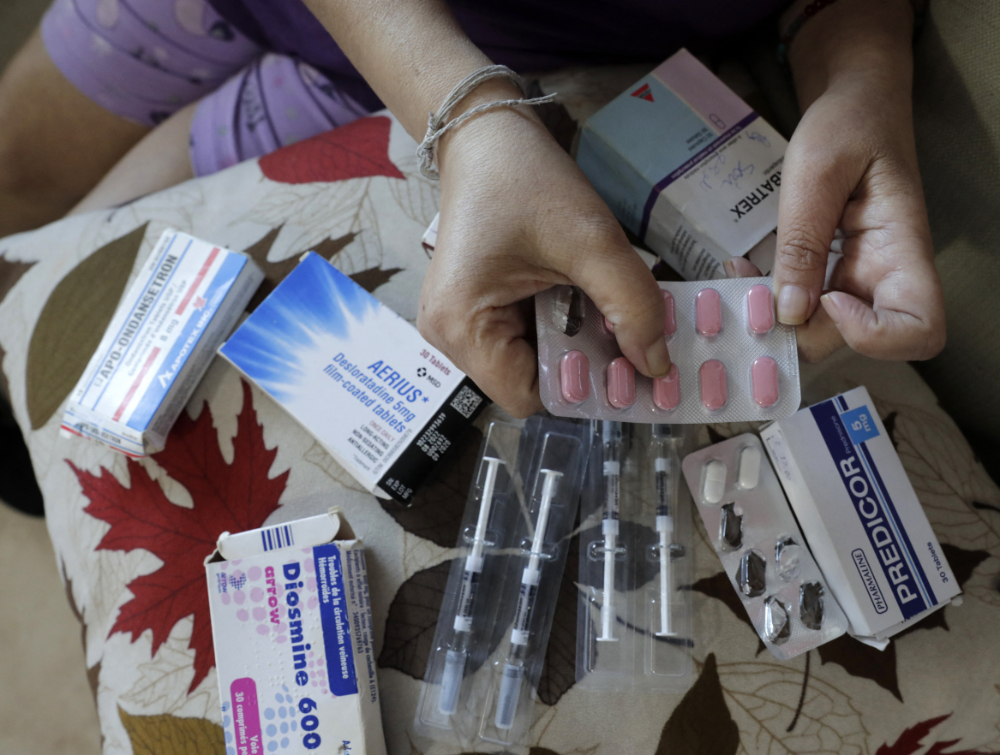
The CSF supports its patients by covering the financial costs of treatments, screenings and occasionally even transport. (AFP)
In the meantime, cancer patients such as Itani are having to make do with whatever medication they can get their hands on.
Despite the life-saving support provided by the CSF, shortages of Opdivo forced Itani’s doctor to prescribe an alternative drug that was more readily available.
“I am experiencing strong side-effects from those pills,” Itani said of the new medicine. “It’s as if the skin on my hands and face is burnt. I felt much better when I was taking the other medication.”
To prevent her condition from growing any worse, Itani has little choice but to continue taking the medicine and to hope that she can outlast Lebanon’s seemingly incurable ills.


