TEHRAN: An Iranian general has said Israel and the United States were likely to have been behind a cyberattack that interrupted the distribution of fuel at service stations.
Tuesday’s attack “technically” resembles two previous incidents whose perpetrators “were unquestionably our enemies, namely the United States and the Zionist regime,” the Revolutionary Guards’ Gholamreza Jalali said.
“We have analyzed two incidents, the railway accident and the Shahid Rajaei port accident, and we found that they were similar,” Jalali, who heads a civil defense unit responsible for cyber activity, told state television late Saturday.
In July, Iran’s transportation ministry said a “cyber disruption” had affected its computer systems and website, according to Fars news agency.
And in May last year, the Washington Post reported that Israel carried out a cyberattack on the Iranian port of Shahid Rajaei in the Strait of Hormuz, a strategic route for global oil shipments.
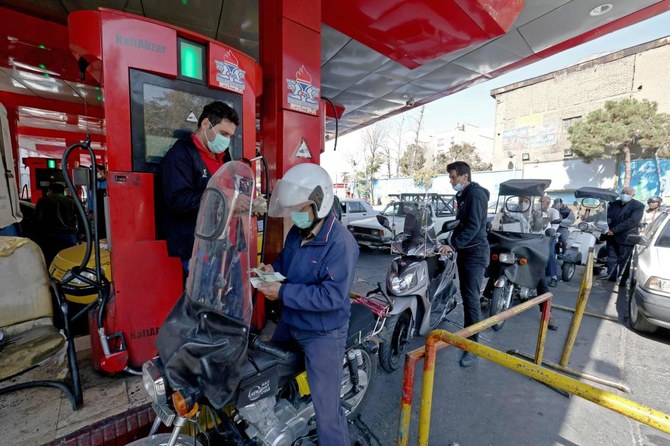
Tuesday’s cyberattack caused traffic jams on major arteries in Tehran, where long queues at petrol stations disrupted the flow of traffic.
The oil ministry later took service stations offline so that petrol could be distributed manually, according to the authorities.
President Ebrahim Raisi on Wednesday accused the perpetrators of trying to turn Iran’s people against the leadership of the Islamic republic.
Around 3,200 of the country’s 4,300 service stations have since been reconnected to the central distribution system, the National Oil Products Distribution Company said, quoted Saturday by state news agency IRNA.
Other stations also provide fuel for motorists, but at unsubsidized rates that make it twice as expensive at around five euro cents ($0.06) per liter, the news agency reported.
In a country where petrol flows freely at what are some of the lowest prices in the world, motorists need digital cards issued by the authorities.
The cards entitle holders to a monthly amount of petrol at a subsidized rate and, once the quota has been used up, to buy more expensive at the market rate.
Since 2010, when Iran’s nuclear program was hit by the Stuxnet computer virus, Iran and its arch-foes Israel and the United States have regularly accused each other of cyberattacks.


![]()

Iran suspects Israel and US behind fuel cyberattack
Short Url
https://arab.news/nwrws
Iran suspects Israel and US behind fuel cyberattack
- Tuesday’s cyberattack caused traffic jams on major arteries in Tehran, where long queues at petrol stations disrupted the flow of traffic


Latest updates


© 2026 SAUDI RESEARCH & PUBLISHING COMPANY, All Rights Reserved And subject to Terms of Use Agreement.