

First Pakistani brand launches virtual clothing amid global NFT craze

Artisans work in a small embroidery factory in Karachi, Pakistan on May 6, 2009. (AFP/File)
Short Url
Updated 29 October 2021
Follow

First Pakistani brand launches virtual clothing amid global NFT craze

  • Non-fungible tokens are digital assets that use blockchain technology to record ownership of online items
  • Rastah’s entry into the NFT space will be marked by an auction of their digital piece next week

RAWLPINDI: High-end streetwear brand Rastah has become Pakistan’s first fashion outlet to venture into the world of non-fungible tokens (NFTs) with the upcoming release of their digital outfit.

NFTs are a type of digital asset which use blockchain technology to record the ownership of online items such as images, videos, trading cards or land in virtual worlds. First launched in 2015, NFTs exploded in popularity earlier this year. According to NFT market tracker DappRader, sales volumes of NFTs surged to $10.7 billion in the third quarter of 2021.

The fashion world has also embraced NFTs, with luxury accessories brand Jimmy Choo recently launching virtual collectables and American designer Rebecca Minkoff showing an entire NFT collection during New York Fashion Week 2021. In India, one of the most coveted designers Manish Malhotra, sold NFTs of digital sketches of some of his most recognizable creations at $4,000 per image earlier this month.

Rastah’s entry into the NFT space will be marked by an auction of their digital piece from the upcoming “Love & Fear” collection on the Foundation Rastah site on Nov. 5. The garment, produced in collaboration with Lahore-based design house DMTLabs will also come in the physical form.
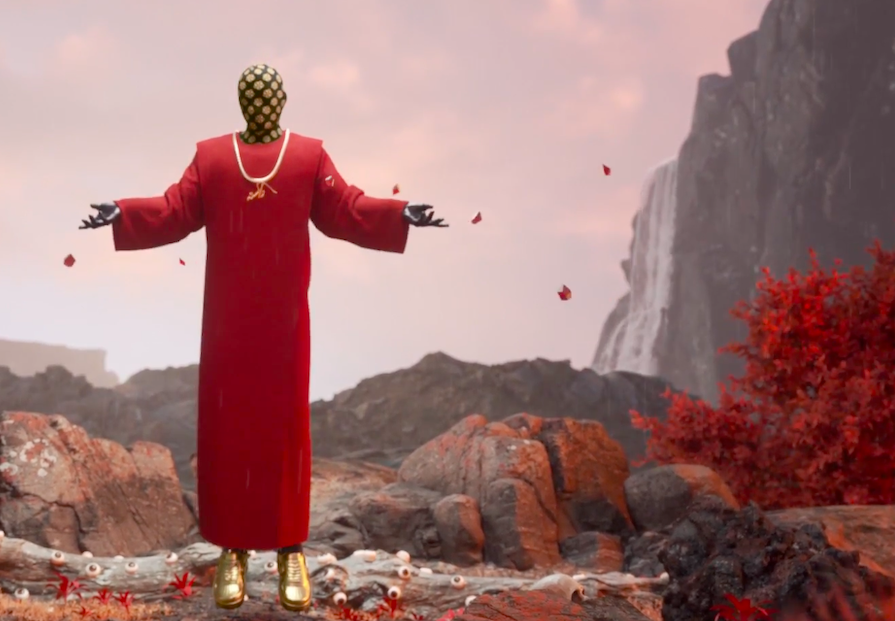


A digital fashion item designed by Rastah, Pakistan’s first fashion outlet to venture into the world of non-fungible tokens (NFTs). (Photo courtesy: Rastah)

“It’s an immense moment of pride for us to be able to accompany this digital NFT with an actual physical piece,” Rastah cofounder Zain Ahmad told Arab News over the phone. 

“The inspiration to make the NFT came from the DNA of our brand which focusses on working with artisans and providing them access to a global marketplace,” he said.

For the brand, entering the NFT space was an act entering the global stage and form of “rebellion.”

“Rebellion in the sense that you have these artisans and designers who are not connected to the Internet or to the outside world,” Ahmed added. “For us to create an NFT Rastah is saying ‘hey, we’re here, and we’re going to be part of the discourse.’“

He sees the introduction of NFTs also as a way of empowering the artisans who work with the brand and making them earn more.
 
“We see a future of NFTs where we work with our designers to create physical pieces and we will also create an NFT for that piece with all of the money going to the artisan,” he said. “This is only the start of us expanding into the NFT space.”

Rastah’s collaborator DMTLabs sees big opportunities for designers in NFTs.

“There is a massive opportunity for fashion in the NFT world, this is the first time that a Pakistani brand is entering into the NFTs,” DMTLabs founder Sadat Mirza said. “We are very excited to represent this landmark moment.”

“Our goal is to empower creators and brands into the digital creative future with sustainable solutions and deliver future-proof digital assets and visual experiences.”
 
Zain Naqvi, one of the founders of Alter, the NFT auction space which made headlines earlier this year by facilitating the sale of one of Pakistan’s most viral memes, “Friendship ended with Mudasir,” told Arab News the launching of digital fashion items through NFTs is “logical growth.”

“Before Rastah there have been other fashion brands benefiting from stepping into the NFT space. For example, Vogue Singapore and Vogue China have done covers of their magazines that were NFT’s. You did not see anything on the physical magazine but the moment you turned your phone on it was an augmented reality (AR) projection of the cover,” Naqvi said.

“I think it’s the perfect marketing tool to build on the work and connect with millennials and the next generation.”


Pakistan says multilateralism in peril, urges global powers to prioritize diplomacy over confrontation

Updated 8 sec ago
Follow

Pakistan says multilateralism in peril, urges global powers to prioritize diplomacy over confrontation

  • The country tells the UN international security system is eroding, asks rival blocs to return to dialogue
  • It emphasizes lowering of international tensions, rebuilding of channels of communication among states

ISLAMABAD: Pakistan warned the world community on Monday that multilateralism was “in peril” amid rising global tensions, urging major powers to revive diplomacy and dialogue to prevent a further breakdown in international security.

Speaking at a UN Security Council briefing, Pakistan’s ambassador to the UN, Asim Iftikhar Ahmad, said the world was drifting toward confrontation at a time when cooperative mechanisms were weakening.

His comments came during a session addressed by Finland’s foreign minister Elina Valtonen, chairing the Organization for Security and Co-operation in Europe (OSCE), the world’s largest regional security body.

Formed out of the 1975 Helsinki Final Act, the OSCE was designed during the Cold War to reduce tensions, uphold principles of sovereignty and human rights and promote mechanisms for peaceful dispute resolution.

“Today, the foundational ethos of international relations, multilateralism, cooperation and indivisible security, as envisaged in the preamble of Helsinki Final Act, is perhaps facing its biggest challenge in decades,” Ahmed said. “The OSCE, too, is navigating a difficult geopolitical landscape, with conflict raging in the heart of Europe for nearly four years, depletion of trust and unprecedented strains on peaceful co-existence.”

He said a return to the “Helsinki spirit” of dialogue, confidence-building and cooperative security was urgently needed, not only in Europe but globally.

“This is not a matter of choice but a strategic imperative to lower tensions, rebuild essential channels of communication, and demonstrate that comprehensive security is best preserved through cooperative instruments, and not by the pursuit of hegemony and domination through military means,” he said. “Objective, inclusive, impartial, and principle-based approaches are indispensable for success.”

Ahmed’s statement came in a year when Pakistan itself fought a brief but intense war after India launched missile strikes at its city in May following a militant attack in Indian-administered Kashmir. New Delhi blamed Pakistan for the assault, an allegation Islamabad denied while calling for a transparent international investigation.

The Pakistani diplomat said the international system was increasingly defined by bloc politics, mistrust and militarization, warning that such trends undermine both regional stability and the authority of multilateral institutions, including the UN itself.

He urged member states to invest more in preventive diplomacy and the peaceful settlement of disputes as reaffirmed by the Council in Resolution 2788.

Ahmad said Pakistan hoped the OSCE would continue reinforcing models of cooperative security and that the Security Council would back partnerships that strengthen international law and the credibility of multilateral frameworks.

The path forward, he added, required “choosing cooperation over confrontation, dialogue over division, and inclusive security over bloc-based divides.”